Quick summary: As AI takes over more of our thinking — remembering, calculating, writing, deciding — we risk a form of cognitive dependence: not evolutionary regression, but a gradual weakening of skills we simply stop practicing. The fix isn’t rejecting AI, but using it as a partner while deliberately continuing to exercise human judgment, creativity, and reasoning.
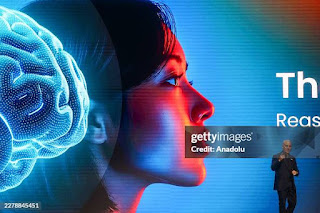
For millions of years, our human ancestors survived because they solved problems. They hunted, navigated unfamiliar landscapes, remembered water sources, built tools, developed languages, and created civilizations. Every challenge demanded thought, creativity, memory, and adaptation. The human brain became the most sophisticated biological computer on Earth because it was continuously exercised by necessity.
Today, for the first time in history, humanity is entering an era where technology is beginning to think on our behalf.
Artificial Intelligence can write articles, solve mathematical problems, generate computer programs, create artwork, translate languages, diagnose diseases, and even make strategic decisions. While this technological revolution promises unprecedented productivity, it also raises a profound scientific question:
If machines increasingly perform our thinking, what happens to the human brain?
Evolution Rewarded Thinking
Evolution does not reward intelligence for its own sake. It rewards survival.
Throughout the evolution of human ancestors over millions of years—and especially during the roughly 300,000 years of modern humans—the brain expanded and became increasingly sophisticated because those with better planning, communication, memory, and problem-solving abilities were more likely to survive and reproduce.
Every generation faced new challenges.
Finding food
Escaping predators
Understanding nature
Building communities
Inventing tools
Developing agriculture
Creating science
The brain was constantly being trained by real-life complexity.
The Modern Brain Faces a Different Environment
Today’s environment is fundamentally different.
Instead of remembering directions, we rely on GPS.
Instead of performing calculations, we use calculators.
Instead of memorizing information, we search online.
Instead of writing from our own thoughts, many people ask AI to generate content.
Technology has become an extension of the human brain.
This phenomenon is known in cognitive science as cognitive offloading—the tendency to rely on external tools to reduce mental effort. While this improves efficiency, excessive dependence may reduce the regular practice of memory, attention, reasoning, and independent problem-solving.
Like muscles, cognitive abilities improve with use and may weaken when they are rarely exercised.
The “Use It or Lose It” Principle
Neuroscience shows that the brain possesses remarkable plasticity.
Neural connections strengthen through repeated use and weaken when neglected.
This principle is well established in research involving:
Memory
Language learning
Mathematical reasoning
Motor skills
Musical training
When technology consistently replaces mental effort, the brain receives fewer opportunities to build and reinforce these networks.
The concern is not that the human brain will suddenly become biologically smaller, but that our everyday cognitive performance could gradually decline if we stop exercising key mental abilities.
Intelligence Is More Than Information
AI has access to vast amounts of information.
Humans possess something different.
Wisdom
Moral judgment
Empathy
Creativity
Intuition
Ethical reasoning
Emotional intelligence
Social understanding
These qualities arise from lived experiences, relationships, emotions, and values—not simply from data.
A civilization that delegates every decision to algorithms risks becoming efficient but less thoughtful.
The Education System Faces a Historic Challenge
For centuries, education focused on teaching students how to solve problems.
If AI solves every assignment, writes every essay, and answers every question, students may begin learning how to use AI instead of how to think independently.
The danger is not AI itself.
The danger is becoming passive consumers of intelligence rather than active creators of knowledge.
Schools and universities must therefore shift their focus toward:
Critical thinking
Scientific reasoning
Creativity
Debate
Practical experimentation
Ethical decision-making
Interdisciplinary learning
These are areas where human cognition remains indispensable.
Will Human Evolution Reverse?
Some people fear that AI could reverse the evolution of the human brain.
From a scientific perspective, this claim remains speculative.
Biological evolution occurs over many generations through changes in reproductive success. There is currently no evidence that AI is causing humans to evolve genetically toward smaller or less capable brains.
However, cultural evolution happens much faster than biological evolution.
If future generations rarely practice memory, calculation, navigation, writing, or deep reasoning because technology performs these tasks, society could experience a decline in important cognitive skills—even if our biology remains unchanged.
In other words, the greater risk is not evolutionary regression but cognitive dependence.
The Mental Health Dimension
Continuous dependence on digital technology also influences attention and behavior.
Researchers are increasingly studying links between excessive digital engagement and:
Reduced attention spans
Information overload
Decision fatigue
Increased anxiety
Digital addiction
Reduced patience for deep work
AI may amplify these trends if people become accustomed to receiving immediate answers instead of engaging in prolonged thinking.
A Civilization That Stops Thinking
History shows that civilizations advanced because people questioned accepted beliefs.
Every major breakthrough—from the wheel to electricity, from vaccines to space exploration—was born from curiosity, persistence, and human imagination.
If future generations become satisfied with machine-generated answers instead of asking deeper questions, innovation itself could slow.
Progress requires questioning.
Machines provide answers.
Civilizations grow because humans ask better questions.
The Right Relationship with AI
The objective should never be to reject Artificial Intelligence.
The objective should be to use AI as a partner rather than a substitute.
AI should handle repetitive tasks, process large datasets, and enhance productivity.
Humans should continue to exercise judgment, creativity, ethical reasoning, imagination, and original thought.
Technology should amplify human intelligence—not replace it.
Final Thoughts
Artificial Intelligence may become one of humanity’s greatest inventions.
Yet history teaches us that every powerful technology transforms the people who use it.
The greatest challenge of the AI age may not be building machines that think like humans.
It may be ensuring that humans never stop thinking for themselves.
The future of civilization will not be determined by how intelligent our machines become.
It will be determined by whether human intelligence continues to evolve alongside them.
Leave a Reply