Category: Technology & Society

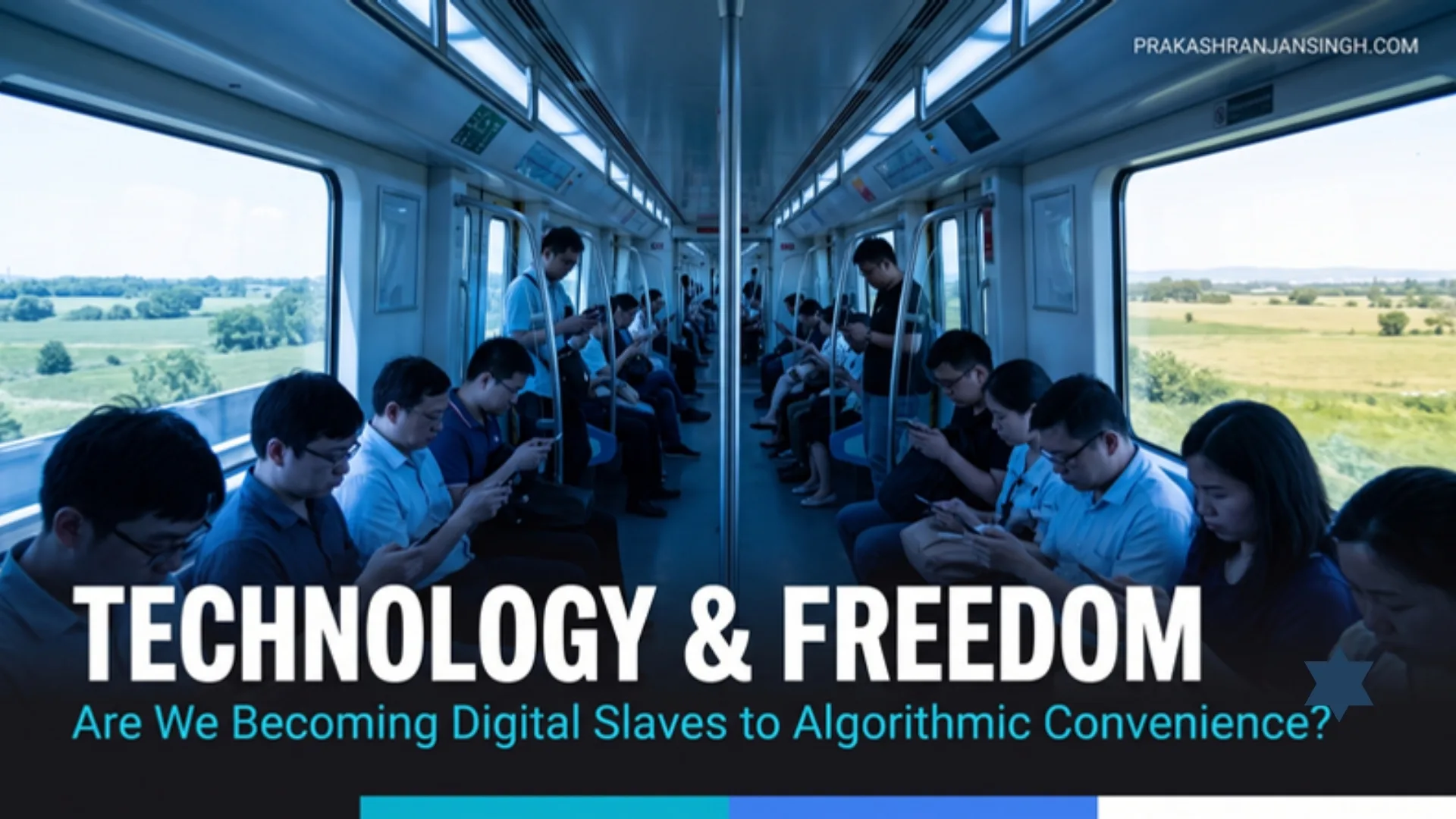
  • When Technology Controls Our Freedom: Are We Ready for a World Where Algorithms Decide for Us?

    When Technology Controls Our Freedom: Are We Ready for a World Where Algorithms Decide for Us?

    Digital eye symbolizing algorithmic control over human choices

    Legal freedom means little if algorithms quietly decide what we see, believe, and choose — the real test of freedom in the digital age is whether our attention and decisions still belong to us.
    Freedom is one of the greatest achievements of human civilisation. But what happens when we remain legally free while our choices are increasingly controlled by technology?

    Freedom is not merely the right to vote, speak, travel, work or express an opinion. True freedom also means having the independent ability to think, choose, disagree and change our mind without invisible forces manipulating our behaviour.

    And this is where the technological revolution presents humanity with a new and uncomfortable question:

    Are we using technology—or is technology slowly learning how to use us?

    The Invisible Control We Don’t Notice

    Social media has transformed communication. A thought posted in one corner of the world can reach millions within minutes. Technology has democratised information, created economic opportunities and connected people like never before.

    But there is another side.

    Every click, pause, search, like, comment, share and scrolling pattern can reveal something about our preferences and behaviour. Algorithms can then use these patterns to decide what information appears in front of us.

    We often believe that we are freely choosing what to watch.

    But increasingly, someone else is deciding what we get the opportunity to watch.

    That distinction is extremely important.

    If an algorithm repeatedly shows us content that confirms our existing beliefs, we may gradually become more certain that our opinion is unquestionably correct. If it repeatedly exposes us to anger, fear, controversy or outrage, we may spend more time consuming exactly that content.

    The technology does not necessarily need to force us.

    It only needs to influence what we see.

    From Addiction to Behavioural Influence

    The most powerful technology of the future may not be the technology that controls machines.

    It may be the technology that understands human psychology.

    Social media platforms compete for our attention. Attention has become an economic resource. The longer we remain on a platform, the more opportunities there are to show advertisements, collect behavioural information and influence engagement.

    This creates a dangerous possibility.

    A person may open an application intending to spend five minutes and remain there for an hour.

    A person may see a provocative post, react emotionally and share it before verifying the facts.

    A person may develop hatred towards another group simply because the algorithm continuously exposes them to material designed to generate anger.

    And the individual may still believe:

    “I made my own choice.”

    Perhaps technically they did.

    But how independent was that choice?

    The Greatest Threat May Not Be Censorship

    Traditional censorship is relatively easy to identify.

    Someone tells you, “You cannot read this.”

    But algorithmic influence can work differently.

    It may simply ensure that you never encounter an alternative viewpoint.

    You are not necessarily prevented from speaking.

    You are simply surrounded by information that repeatedly reinforces one particular way of thinking.

    This creates what may be called a digital echo chamber.

    Two citizens can live in the same country, experience the same event and yet see completely different versions of reality because their digital environments are different.

    That is a serious challenge for democracy.

    Can Technology Influence Elections?

    Elections are ultimately about human choices.

    But if technology can influence what millions of voters see, what they believe, what they fear and what they discuss, then technology can potentially influence the environment in which electoral choices are made.

    Artificial intelligence makes this challenge even more complicated.

    Deepfakes can make people appear to say things they never said. Synthetic voices can imitate real individuals. AI-generated images and videos can create convincing but completely fictional events. Automated accounts can amplify particular narratives at enormous speed.

    A fabricated video released just before an election may spread to millions before the truth catches up.

    By the time a fact-check appears, the psychological damage may already have been done.

    Therefore, the future challenge may not simply be:

    “Who won the election?”

    It may also become:

    “Who influenced the information environment in which voters made their decisions?”

    That is a much deeper question.

    Technology alone cannot simply “reverse” an election result in a mechanical sense. Elections remain governed by laws, institutions, voters and electoral processes. But sophisticated technology can potentially influence public opinion and electoral behaviour, making the protection of information integrity an increasingly important democratic issue.

    A New Kind of Power Is Emerging

    Historically, power was concentrated in governments, armies, financial institutions and large corporations.

    Today another form of power is emerging:

    the power to influence human attention and behaviour at scale.

    Imagine a future where a handful of extremely powerful technology companies possess enormous amounts of behavioural data and increasingly sophisticated artificial intelligence.

    They may know:

    What attracts our attention.

    What makes us angry.

    What makes us afraid.

    What products we desire.

    What political subjects interest us.

    What opinions we are likely to accept.

    Which messages are most likely to persuade us.

    When we are emotionally vulnerable.

    This creates a concentration of power that humanity has never experienced in quite the same way.

    The concern is not that every technology company will misuse such power.

    The concern is:

    What happens if one day somebody does?

    The Billionaire Question

    Technology companies are often created by extraordinary entrepreneurs who have transformed civilisation.

    But technological power should not automatically become social and political power.

    No individual, irrespective of wealth, intelligence or technological capability, should possess disproportionate influence over the choices of millions of citizens.

    The danger is not necessarily an evil billionaire sitting in a room deciding everyone’s future.

    The more realistic danger is much more subtle:

    A system designed to maximise engagement gradually becomes a system capable of influencing society.

    Nobody may have planned the final outcome.

    Yet the outcome can still be dangerous.

    Artificial Intelligence Changes the Scale

    Human beings can persuade hundreds or thousands of people.

    AI can potentially generate personalised content for millions.

    Imagine a future system capable of creating a different political message for every individual based on their personality, fears, interests and previous online behaviour.

    One person could receive a message appealing to economic concerns.

    Another could receive a message based on nationalism.

    Someone else could receive a message based on religion, social insecurity, employment or personal anxiety.

    The message could be perfectly tailored to the individual.

    This is no longer conventional mass communication.

    It is mass personalisation of influence.

    And that is where society must become extremely careful.

    Freedom Requires More Than Laws

    Governments can create data-protection laws, election regulations, AI rules and transparency requirements.

    These are necessary.

    But laws alone cannot protect freedom if citizens lose the ability to think independently.

    The ultimate defence against technological manipulation is an educated and psychologically resilient population.

    We need to teach children not only how to use technology but also:

    how technology can influence them.

    Digital literacy should therefore include:

    Understanding algorithms.

    Identifying misinformation.

    Recognising emotional manipulation.

    Verifying information before sharing.

    Understanding deepfakes.

    Protecting personal data.

    Questioning viral narratives.

    Listening to opposing viewpoints.

    Maintaining the ability to disconnect.

    We Need a New Definition of Freedom

    In the industrial age, freedom meant liberation from physical and political control.

    In the digital age, we may need another dimension:

    Freedom from invisible manipulation.

    A person should have the freedom to decide what information enters their mind.

    A citizen should have the ability to distinguish fact from engineered perception.

    A voter should be able to make an electoral decision without being secretly targeted through psychological profiling.

    A child should be able to grow up without an algorithm determining what captures their attention every waking hour.

    And society should never reach a stage where a small group of people can effectively influence the collective mind of humanity.

    Technology Must Remain Our Servant

    Technology is neither good nor bad by itself.

    Artificial intelligence can improve healthcare, education, agriculture, banking, scientific research and governance. Social media can connect families, empower small businesses and give ordinary citizens a voice.

    The question is not whether we should stop technological progress.

    We cannot—and we should not.

    The question is whether technological progress will remain compatible with human freedom.

    We need transparency in algorithms, stronger privacy protection, safeguards against manipulation, responsible AI development, independent oversight and greater public awareness.

    Most importantly, technology must remain accountable to society.

    The Final Choice Is Ours

    The greatest danger may not be that machines become more intelligent than humans.

    The greater danger may be that humans become less independent because machines become better at influencing them.

    A civilisation can possess the fastest computers, most powerful AI and most advanced communication networks—and still lose something precious if its citizens gradually surrender their ability to think independently.

    We should therefore ask ourselves a simple question every time we react to something online:

    “Did I choose this—or was I carefully guided toward choosing it?”

    That question may become one of the most important questions of the digital age.

    Because freedom does not disappear only when somebody takes it away.

    Sometimes freedom disappears when we voluntarily surrender control of our attention, our emotions and ultimately our choices.

    The technology revolution has given humanity extraordinary power.

    Now humanity must prove that it also has the wisdom to control that power.

    The future of freedom may depend not on whether artificial intelligence becomes intelligent, but on whether human beings remain free.

    Related Reading

  • The AI Paradox: Are We Building Smarter Machines While Making Our Own Brains Less Active?

    The AI Paradox: Are We Building Smarter Machines While Making Our Own Brains Less Active?

    Quick summary: As AI takes over more of our thinking — remembering, calculating, writing, deciding — we risk a form of cognitive dependence: not evolutionary regression, but a gradual weakening of skills we simply stop practicing. The fix isn’t rejecting AI, but using it as a partner while deliberately continuing to exercise human judgment, creativity, and reasoning.

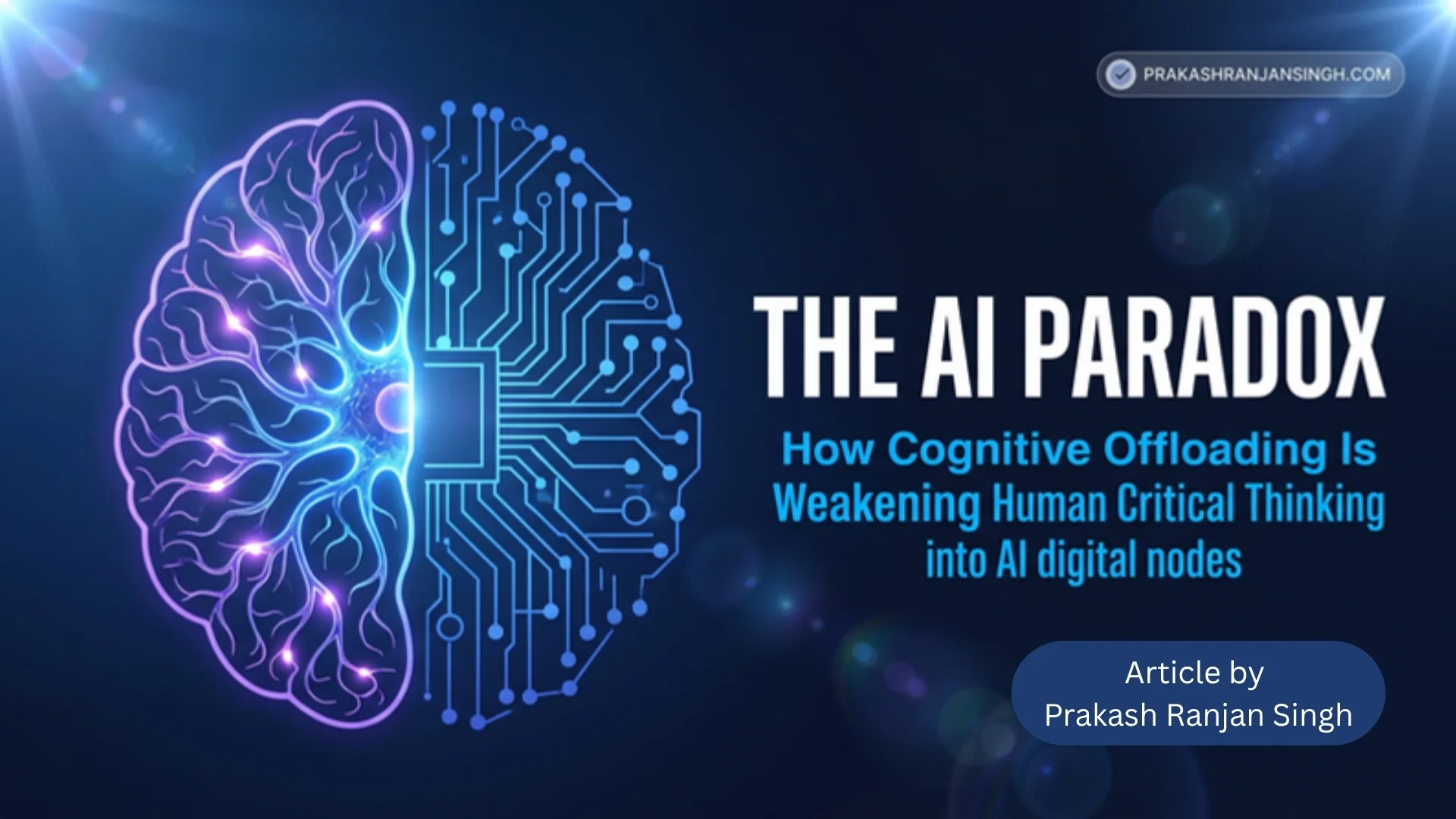
    Human brain silhouette overlaid with digital circuit patterns representing AI and cognition

    For millions of years, our human ancestors survived because they solved problems. They hunted, navigated unfamiliar landscapes, remembered water sources, built tools, developed languages, and created civilizations. Every challenge demanded thought, creativity, memory, and adaptation. The human brain became the most sophisticated biological computer on Earth because it was continuously exercised by necessity.

    Today, for the first time in history, humanity is entering an era where technology is beginning to think on our behalf.

    Artificial Intelligence can write articles, solve mathematical problems, generate computer programs, create artwork, translate languages, diagnose diseases, and even make strategic decisions. While this technological revolution promises unprecedented productivity, it also raises a profound scientific question:

    If machines increasingly perform our thinking, what happens to the human brain?

    Evolution Rewarded Thinking

    Evolution does not reward intelligence for its own sake. It rewards survival.

    Throughout the evolution of human ancestors over millions of years—and especially during the roughly 300,000 years of modern humans—the brain expanded and became increasingly sophisticated because those with better planning, communication, memory, and problem-solving abilities were more likely to survive and reproduce.

    Every generation faced new challenges.

    Finding food

    Escaping predators

    Understanding nature

    Building communities

    Inventing tools

    Developing agriculture

    Creating science

    The brain was constantly being trained by real-life complexity.

    The Modern Brain Faces a Different Environment

    Today’s environment is fundamentally different.

    Instead of remembering directions, we rely on GPS.

    Instead of performing calculations, we use calculators.

    Instead of memorizing information, we search online.

    Instead of writing from our own thoughts, many people ask AI to generate content.

    Technology has become an extension of the human brain.

    This phenomenon is known in cognitive science as cognitive offloading—the tendency to rely on external tools to reduce mental effort. While this improves efficiency, excessive dependence may reduce the regular practice of memory, attention, reasoning, and independent problem-solving.

    Like muscles, cognitive abilities improve with use and may weaken when they are rarely exercised.

    The “Use It or Lose It” Principle

    Neuroscience shows that the brain possesses remarkable plasticity.

    Neural connections strengthen through repeated use and weaken when neglected.

    This principle is well established in research involving:

    Memory

    Language learning

    Mathematical reasoning

    Motor skills

    Musical training

    When technology consistently replaces mental effort, the brain receives fewer opportunities to build and reinforce these networks.

    The concern is not that the human brain will suddenly become biologically smaller, but that our everyday cognitive performance could gradually decline if we stop exercising key mental abilities.

    Intelligence Is More Than Information

    AI has access to vast amounts of information.

    Humans possess something different.

    Wisdom

    Moral judgment

    Empathy

    Creativity

    Intuition

    Ethical reasoning

    Emotional intelligence

    Social understanding

    These qualities arise from lived experiences, relationships, emotions, and values—not simply from data.

    A civilization that delegates every decision to algorithms risks becoming efficient but less thoughtful.

    The Education System Faces a Historic Challenge

    For centuries, education focused on teaching students how to solve problems.

    If AI solves every assignment, writes every essay, and answers every question, students may begin learning how to use AI instead of how to think independently.

    The danger is not AI itself.

    The danger is becoming passive consumers of intelligence rather than active creators of knowledge.

    Schools and universities must therefore shift their focus toward:

    Critical thinking

    Scientific reasoning

    Creativity

    Debate

    Practical experimentation

    Ethical decision-making

    Interdisciplinary learning

    These are areas where human cognition remains indispensable.

    Will Human Evolution Reverse?

    Some people fear that AI could reverse the evolution of the human brain.

    From a scientific perspective, this claim remains speculative.

    Biological evolution occurs over many generations through changes in reproductive success. There is currently no evidence that AI is causing humans to evolve genetically toward smaller or less capable brains.

    However, cultural evolution happens much faster than biological evolution.

    If future generations rarely practice memory, calculation, navigation, writing, or deep reasoning because technology performs these tasks, society could experience a decline in important cognitive skills—even if our biology remains unchanged.

    In other words, the greater risk is not evolutionary regression but cognitive dependence.

    The Mental Health Dimension

    Continuous dependence on digital technology also influences attention and behavior.

    Researchers are increasingly studying links between excessive digital engagement and:

    Reduced attention spans

    Information overload

    Decision fatigue

    Increased anxiety

    Digital addiction

    Reduced patience for deep work

    AI may amplify these trends if people become accustomed to receiving immediate answers instead of engaging in prolonged thinking.

    A Civilization That Stops Thinking

    History shows that civilizations advanced because people questioned accepted beliefs.

    Every major breakthrough—from the wheel to electricity, from vaccines to space exploration—was born from curiosity, persistence, and human imagination.

    If future generations become satisfied with machine-generated answers instead of asking deeper questions, innovation itself could slow.

    Progress requires questioning.

    Machines provide answers.

    Civilizations grow because humans ask better questions.

    The Right Relationship with AI

    The objective should never be to reject Artificial Intelligence.

    The objective should be to use AI as a partner rather than a substitute.

    AI should handle repetitive tasks, process large datasets, and enhance productivity.

    Humans should continue to exercise judgment, creativity, ethical reasoning, imagination, and original thought.

    Technology should amplify human intelligence—not replace it.

    Final Thoughts

    Artificial Intelligence may become one of humanity’s greatest inventions.

    Yet history teaches us that every powerful technology transforms the people who use it.

    The greatest challenge of the AI age may not be building machines that think like humans.

    It may be ensuring that humans never stop thinking for themselves.

    The future of civilization will not be determined by how intelligent our machines become.

    It will be determined by whether human intelligence continues to evolve alongside them.

    Related Reading

  • The Leadership Pipeline Crisis: How Artificial Intelligence Could Reshape Human Experience, Creativity, and Economic Growth

    The Leadership Pipeline Crisis: How Artificial Intelligence Could Reshape Human Experience, Creativity, and Economic Growth

    The Leadership Pipeline Crisis: Is AI Quietly Eliminating the Way Experts Are Made?

    AI is automating the very entry-level, repetitive tasks that have always taught beginners how to become experts and eventually leaders, and if that apprenticeship pipeline shrinks without deliberate redesign, organizations risk a future shortage of experienced leadership, institutional memory, and mentorship — unless training pathways are rebuilt around working with AI, not just replaced by it.

    Artificial Intelligence (AI), robotics, and automation are transforming the global economy at an unprecedented pace. They are increasing productivity, reducing operational costs, improving accuracy, and enabling innovation across industries. However, alongside these remarkable benefits, an important long-term challenge deserves greater attention: the possible erosion of entry-level employment, which has traditionally served as the foundation for developing skilled professionals, experienced managers, innovators, and future leaders.

    Throughout history, expertise has not emerged overnight. Every accomplished engineer, doctor, scientist, banker, entrepreneur, judge, teacher, or administrator began as a novice, gradually acquiring knowledge through years of practical experience. If technology increasingly performs the routine tasks that once introduced people to their professions, society may eventually face a shortage of experienced professionals capable of leading organizations, making complex judgments, and mentoring future generations.

    This concern is not merely about employment; it is about preserving humanity’s system for cultivating knowledge, leadership, creativity, and institutional memory.

    How Does Human Expertise Actually Develop?

    Research in psychology, neuroscience, and organizational behavior consistently shows that expertise develops through repeated practice, problem-solving, feedback, and real-world experience.

    The journey from beginner to expert generally follows several stages: learning fundamental concepts, performing supervised routine tasks, handling increasingly complex situations, developing independent judgment, mentoring others, and becoming a strategic leader. Each stage builds upon the previous one. Removing the earliest stages could weaken the entire developmental pathway.

    Unlike AI systems, human intelligence develops through continuous adaptation, emotional learning, social interaction, ethical reasoning, and accumulated experience.

    Why Do Entry-Level Jobs Matter So Much?

    Many entry-level roles involve repetitive work that AI can increasingly automate. Yet these positions have traditionally served purposes beyond productivity. They help individuals understand organizational culture, learn professional ethics, develop communication skills, build decision-making abilities, gain confidence, learn teamwork, observe experienced mentors, and develop resilience through mistakes. These experiences cannot always be replaced by formal education alone.

    The professional workforce functions like a flowing river: students become trainees, trainees become junior professionals, junior professionals become specialists, specialists become managers, managers become executives, and executives become national leaders.

    If the inflow of trainees declines substantially without effective alternatives, fewer people may accumulate the experience needed for future leadership roles.

    Is AI Shrinking the Apprenticeship Model?

    Historically, apprenticeship has been central to professional development — junior lawyers drafted documents, junior accountants prepared financial records, junior software engineers fixed bugs, junior bankers processed transactions, junior journalists covered local stories, and junior researchers collected data.

    Increasingly, AI systems can perform many of these routine tasks. While this boosts efficiency, it may also reduce opportunities for beginners to learn through practical work unless organizations deliberately redesign training pathways.

    What Does This Mean for Future Leadership?

    Leadership is rarely developed in classrooms alone. Successful leaders typically possess technical competence, emotional intelligence, crisis management experience, team leadership, ethical judgment, and long-term strategic thinking — qualities refined through years of practical responsibility.

    If fewer people gain that experience, organizations could face a narrower pool of future leaders. Whether this becomes a widespread shortage depends on how education, employers, and governments adapt.

    What Are the Psychological Consequences?

    Employment provides more than income. Psychologists recognize that work contributes to identity, self-esteem, social belonging, purpose, achievement, and personal growth.

    If large numbers of young people struggle to enter meaningful careers, some may experience increased uncertainty, frustration, or reduced confidence. However, outcomes will vary widely depending on economic conditions, education, social support, and the availability of new forms of work.

    Could This Also Affect Creativity and Innovation?

    Creativity flourishes when individuals encounter diverse challenges. Routine work often teaches process improvement, customer behavior, operational efficiency, and practical problem solving. Many groundbreaking innovations originated from people who deeply understood everyday work.

    If fewer individuals gain practical exposure, some forms of innovation could diminish. At the same time, AI may also enable new kinds of creativity by allowing people to focus more on higher-level design, research, and invention.

    What Are the Broader Economic Implications?

    Economic growth depends upon several forms of capital: physical, financial, technological, and human. Human capital remains one of the strongest drivers of long-term productivity.

    If technological progress significantly outpaces investment in developing human capabilities, economies could experience slower leadership development, greater skill mismatches, higher inequality, reduced social mobility, and slower diffusion of expertise. Conversely, if societies successfully retrain workers and redesign education, AI could increase productivity while supporting continued economic growth.

    Experienced professionals preserve organizational knowledge — historical mistakes, crisis management, ethical standards, customer relationships, and industry evolution. This “institutional memory” is transmitted through mentoring and collaboration. A weakened pipeline of experienced workers could make it harder for organizations to preserve this knowledge over generations.

    Many developed countries already face aging populations. As experienced workers retire, younger generations must replace them. If fewer young professionals enter and progress through traditional career paths, succession planning may become more difficult in sectors such as healthcare, engineering, public administration, education, and finance.

    Is This All Risk, or Are There Real Opportunities Too?

    Technology has historically displaced some jobs while creating others. AI is expected to generate demand for roles involving AI supervision, human-AI collaboration, cybersecurity, robotics maintenance, data governance, ethics and compliance, healthcare, renewable energy, advanced manufacturing, and creative industries. The challenge is ensuring that these new roles include structured pathways for beginners to gain experience.

    What Should Policymakers Actually Do?

    To preserve human expertise while embracing AI, governments, educational institutions, and businesses could consider expanding apprenticeship and internship programs, designing AI-assisted training rather than AI-only automation, investing in lifelong learning and reskilling, rewarding companies that create structured entry-level opportunities, embedding leadership development into education, encouraging mentorship between experienced professionals and young employees, measuring human capital development alongside productivity gains, and supporting entrepreneurship and innovation among young people.

    Artificial Intelligence represents one of humanity’s greatest technological achievements. Its ability to improve productivity, healthcare, education, science, and economic efficiency is extraordinary. Yet technological progress should not come at the cost of weakening the human systems that cultivate experience, wisdom, leadership, and creativity.

    The future challenge is not choosing between humans and AI, but designing economies where AI amplifies human potential rather than replacing the developmental journey through which professionals become experts and experts become leaders.

    If governments, industries, and educational institutions consciously preserve opportunities for learning, mentoring, and practical experience, AI can become a powerful partner in human progress. If these pathways are neglected, societies may eventually face a shortage of experienced leadership, slower human capital formation, and increased economic pressures.

    The defining question of the AI era is therefore not simply how intelligent our machines become, but whether our institutions continue to nurture the intelligence, judgment, creativity, and leadership of the people who will shape the future.

    Related Reading

  • The Invisible Hand of Social Media Algorithms: Are We Losing Control of Human Thought?

    The Invisible Hand of Social Media Algorithms: Are We Losing Control of Human Thought?

    The Invisible Hand of Social Media Algorithms: Are We Outsourcing Our Thinking?

    Social media algorithms don’t control humanity directly — the risk is subtler: by repeatedly showing emotionally charged content that keeps people engaged, they gradually narrow exposure to diverse viewpoints and strengthen confirmation bias, and the strongest safeguard isn’t quitting technology but building critical thinking and digital literacy.

    The rise of social media has transformed the way people communicate, learn, express opinions, and participate in society. Billions of people now rely on digital platforms as their primary source of news, entertainment, and social interaction. While these technologies have democratized access to information, they have also introduced a subtle but powerful force that shapes human thinking—the social media algorithm.

    Algorithms are designed to maximize user engagement by showing content that users are most likely to watch, like, comment on, or share. Although this improves the user experience from a business perspective, it also creates an environment where people’s emotions, beliefs, and decisions can be influenced in ways they may not consciously recognize.

    This growing dependence raises an important question: Could humanity gradually surrender its independent thinking to artificial intelligence-driven recommendation systems?

    How Do Social Media Algorithms Actually Work?

    Every click, search, like, comment, share, and even the amount of time spent viewing a post is recorded. These digital footprints help algorithms create highly detailed behavioral profiles of users.

    Instead of presenting a balanced variety of viewpoints, algorithms often prioritize content that is most likely to capture attention. Emotional content—especially material that evokes anger, fear, excitement, or outrage—typically generates higher engagement and is therefore more likely to be promoted.

    Over time, users begin seeing more of what aligns with their previous interests and reactions. This creates a personalized digital environment that may gradually narrow their exposure to diverse perspectives.

    What’s the Psychology Behind Algorithmic Influence?

    Human beings naturally seek information that confirms their existing beliefs, a tendency known in psychology as confirmation bias.

    Social media algorithms unintentionally strengthen this bias by repeatedly presenting similar content. As users consume more of one type of information, they become increasingly confident that their viewpoint represents the majority opinion.

    This process can gradually create echo chambers where similar opinions dominate, polarization between different social groups, emotional rather than rational decision-making, and increased resistance to alternative viewpoints. The result is not necessarily misinformation alone, but a reduction in balanced and independent thinking.

    How Does Emotional Manipulation Actually Play Out?

    Algorithms do not possess emotions, but they learn which emotions keep people engaged.

    Research in behavioral science suggests that emotionally charged content spreads faster than neutral information. Consequently, sensational headlines, controversial opinions, and dramatic narratives often receive greater visibility than calm, evidence-based discussions.

    Continuous exposure to emotionally stimulating content may contribute to increased anxiety and stress, social anger and hostility, fear-driven public reactions, and reduced patience for nuanced discussions. While these effects vary among individuals, the overall digital environment can encourage emotional rather than reflective responses.

    What About Public Opinion and Democratic Processes?

    In recent years, observers have debated the role of social media in influencing public opinion, social movements, and election campaigns in many countries.

    Algorithms themselves do not determine election outcomes or social movements. However, they can amplify particular messages, increase the visibility of certain narratives, and rapidly spread information—or misinformation—to millions of people.

    When combined with targeted political advertising, coordinated online campaigns, or large-scale misinformation efforts, algorithmic amplification can significantly shape public discourse. This highlights the importance of digital literacy, transparency, and responsible platform governance.

    What’s the Real Risk of Algorithmic Dependence?

    One of the greatest long-term concerns is not that algorithms “control” humanity directly, but that people may increasingly outsource their attention, opinions, and decisions to automated recommendation systems.

    Potential risks include reduced independent critical thinking, increased societal polarization, manipulation through emotionally targeted content, declining trust in institutions and experts, weakening of healthy public debate, and greater vulnerability to misinformation.

    If left unchecked, societies may become increasingly reactive, with public opinion shifting rapidly according to digital trends rather than careful reasoning.

    How Can People Protect Their Independent Thinking?

    Technology itself is neither inherently good nor bad; its impact depends on how it is designed and used.

    Individuals can strengthen their independence by reading information from multiple credible sources, verifying important claims before sharing them, following people with diverse viewpoints, limiting excessive social media consumption, developing critical thinking and media literacy, and reflecting before reacting emotionally to viral content.

    Educational institutions should also teach digital literacy as a core life skill, enabling future generations to recognize algorithmic influence and evaluate information objectively.

    What Responsibility Do Tech Companies Have?

    Technology companies play a central role in shaping digital experiences. Greater transparency regarding recommendation systems, stronger protections against coordinated misinformation, and giving users more meaningful control over what they see can help reduce harmful outcomes.

    Balancing innovation, freedom of expression, user engagement, and public well-being remains one of the defining challenges of the digital age.

    Social media algorithms are among the most powerful technological inventions of the twenty-first century. They have connected people across the globe, expanded access to information, and created unprecedented opportunities for communication.

    At the same time, these systems can influence attention, emotions, and perceptions in ways that deserve careful public discussion.

    The future of humanity should not be determined solely by algorithms designed to maximize engagement. It should be guided by informed citizens capable of critical thinking, respectful dialogue, and independent judgment.

    Technology should remain a tool that empowers human intelligence—not a force that quietly shapes it without our awareness.

    Ultimately, the greatest safeguard against algorithmic influence is not abandoning technology, but strengthening human wisdom.

    Related Reading

  • Will Technology Be Controlled by Humanity, or Will Humanity Be Controlled by Technology?

    Will Technology Be Controlled by Humanity, or Will Humanity Be Controlled by Technology?

    Will Technology Be Controlled by Humanity, or Will It Control Us?

    A handful of tech companies now hold market valuations exceeding entire nations’ economic output, controlling the cloud infrastructure, AI models, and algorithms billions depend on daily, and history shows this concentration pattern isn’t new — it’s the same challenge oil, railways, and telecom once posed, solved through competition law and accountable regulation, not by halting innovation.

    Technology is advancing at an unprecedented pace. Artificial intelligence, cloud computing, biotechnology, robotics, quantum computing, and space technology are transforming every aspect of human life. These innovations are making healthcare more effective, businesses more productive, education more accessible, and communication almost instantaneous. There is little doubt that technology has become one of the greatest drivers of human progress.

    However, every technological revolution also raises an important question: Who controls the technology that increasingly controls our lives?

    Why Is Technological Power So Concentrated Today?

    Today, much of the world’s cutting-edge technological research and innovation is concentrated within a handful of powerful global corporations. These companies possess enormous financial resources, attract the world’s best scientific talent, and invest billions of dollars annually in research and development. Their products and services have become deeply integrated into our daily lives—from the smartphones we use and the search engines we rely on to cloud infrastructure, artificial intelligence, social media platforms, and digital payment systems.

    This concentration of technological power presents both opportunities and risks.

    On the positive side, large technology companies have accelerated innovation at a speed that many governments alone could not achieve. Artificial intelligence is helping doctors detect diseases earlier, autonomous systems are improving industrial efficiency, renewable energy technologies are advancing rapidly, and digital platforms have enabled millions of entrepreneurs to reach global markets. During the COVID-19 pandemic, technology companies played a crucial role in enabling remote work, online education, and digital communication.

    Yet history teaches us that whenever economic or technological power becomes concentrated, societies must carefully examine the long-term consequences.

    How Much Influence Do These Companies Actually Wield?

    Several technology companies today have market valuations that exceed the annual economic output of many developing nations. Such financial strength allows them to influence markets, shape consumer behavior, acquire promising competitors, and invest heavily in future technologies. Their platforms determine what billions of people read, watch, purchase, and discuss every day through sophisticated algorithms.

    Artificial intelligence further amplifies this influence. Recommendation systems can shape public opinion, consumer preferences, and even political discourse. While these systems are designed primarily to maximize user engagement and business objectives, they can unintentionally create information bubbles, reinforce biases, and reduce exposure to diverse viewpoints.

    Another concern is the growing dependence of governments and businesses on privately owned digital infrastructure. Cloud services, cybersecurity systems, satellite communications, AI models, and digital marketplaces are increasingly managed by a relatively small number of corporations. If critical infrastructure becomes overly dependent on a few private entities, societies may become vulnerable to commercial decisions, cyberattacks, or geopolitical conflicts.

    Has Society Faced This Kind of Concentration Before?

    History offers valuable lessons. The Industrial Revolution created enormous prosperity but also led to monopolies and poor labor conditions before regulations were introduced. Similar concerns arose in sectors such as oil, railways, telecommunications, and finance. Eventually, governments developed competition laws, consumer protection measures, and regulatory frameworks to balance innovation with public interest.

    Technology should not be viewed as an exception.

    This does not imply that any single company will inevitably “take over the world.” Modern economies remain shaped by competition, national governments, international cooperation, regulators, researchers, civil society, and consumers. However, if technological power continues to concentrate without adequate oversight, the influence of a few organizations over economic, social, and even political systems could continue to grow.

    What Safeguards Would Actually Help?

    The challenge before humanity is therefore not to stop technological progress but to ensure that its benefits are shared broadly and governed responsibly.

    Several safeguards deserve serious attention: strong competition policies to prevent excessive market concentration, transparent and accountable AI systems, robust data privacy and cybersecurity laws, public investment in scientific research and open innovation, international cooperation on the governance of advanced technologies, digital literacy so citizens understand how algorithms influence decisions, and ethical standards that place human welfare above purely commercial objectives.

    Technology must remain a tool that serves humanity rather than a force that humanity simply adapts to. Innovation should empower individuals, strengthen democratic institutions, and improve quality of life—not create excessive dependence on a handful of organizations.

    The future of civilization will not be determined solely by how advanced our technologies become. It will also depend on whether humanity possesses the wisdom, institutions, and collective responsibility to ensure that technological power remains accountable, transparent, and aligned with the interests of society as a whole.

    The greatest challenge of the twenty-first century may not be creating more powerful technologies—it may be ensuring that no technology, and no institution controlling it, becomes more powerful than humanity itself.

    Related Reading

  • Justice Delayed Is Justice Denied: How Artificial Intelligence Can Transform India’s Judicial System

    Justice Delayed Is Justice Denied: How Artificial Intelligence Can Transform India’s Judicial System

    Justice Delayed Is Justice Denied: How AI Could Transform India's Judicial System

    Millions of Indian court cases sit pending for years because ordinary citizens can’t afford lengthy litigation, and AI offers a practical fix without replacing judges: sorting disputes by complexity, resolving minor cases through AI-assisted mediation at the Panchayat level, and letting AI handle the research and paperwork that currently slows judges down.

    A nation can progress only when its citizens have confidence that justice will be delivered fairly, affordably, and within a reasonable time. The principle “Justice delayed is justice denied” is especially relevant in India today, where millions of cases remain pending before courts at different levels. While the judiciary has made significant contributions to protecting democracy and constitutional values, the ever-increasing burden of litigation has made the justice delivery system slow, expensive, and difficult for ordinary citizens.

    For a common person, seeking justice often becomes a test of patience, financial strength, and emotional endurance. Cases may continue for years or even decades. The cost of legal representation, repeated court appearances, travel expenses, and procedural complexities discourage many people from pursuing their legitimate rights. Those with limited financial resources often find themselves at a disadvantage because they cannot afford experienced legal counsel. In many instances, people abandon their cases midway, not because they are wrong, but because they can no longer bear the financial and psychological burden of prolonged litigation.

    India now stands at a stage where modern technology and Artificial Intelligence (AI) can significantly improve the efficiency, accessibility, and affordability of the judicial system. Rather than replacing judges or advocates, AI should be viewed as an intelligent assistant that strengthens human decision-making while reducing unnecessary delays.

    How Could Cases Be Categorised by Complexity?

    Category I – Simple Civil and Community Disputes. These could include minor neighbourhood disputes, small financial claims, consumer grievances, utility complaints, minor property disagreements, and other issues where legal principles are well established. Such cases could first be referred to AI-assisted digital dispute resolution centres established at Panchayat and Municipal levels. AI could analyse documents, applicable laws, and previous judgments to suggest fair settlements. Human mediators would oversee the process, and if both parties agree, the settlement could become legally enforceable.

    Category II – Moderate Civil Matters. Family disputes, tenancy issues, employment-related disputes, small commercial matters, and similar cases could undergo mandatory AI-assisted mediation before reaching regular courts. Many disputes may be resolved without lengthy litigation.

    Category III – Serious Civil and Criminal Cases. Matters involving substantial property rights, major financial frauds, and significant criminal offences should continue to be heard by regular courts. However, AI can assist judges by rapidly searching precedents, analysing evidence, preparing case summaries, identifying inconsistencies, and managing documentation.

    Category IV – Constitutional and High-Impact Cases. Cases involving constitutional interpretation, terrorism, murder, organised crime, public interest litigation, and matters affecting national security must remain entirely under judicial supervision. AI should only assist in research, documentation, scheduling, and evidence management, while all judicial decisions remain with human judges.

    What Would AI Actually Do as a Judicial Assistant?

    Artificial Intelligence can perform thousands of repetitive legal tasks within seconds. It can automatically organise case files, prepare timelines, identify relevant statutory provisions, search thousands of previous judgments, compare similar cases, detect conflicting evidence, generate draft orders for judicial review, translate legal documents into regional languages, and schedule hearings more efficiently.

    Judges would therefore spend more time analysing legal issues instead of handling administrative paperwork.

    Could Panchayats Become Digital Justice Centres?

    India already has a strong network of Panchayats and Urban Local Bodies. These institutions can become the first point of contact for resolving minor disputes.

    AI-powered digital justice centres can provide citizens with online complaint registration, automated legal guidance in local languages, digital mediation between parties, video hearings where required, instant access to government records, and electronic settlement agreements. Only unresolved disputes would proceed to higher courts.

    Could AI Make Legal Help Affordable for the Poor?

    Perhaps the biggest challenge in India’s justice system is unequal access to quality legal representation.

    Many financially weak citizens cannot afford experienced advocates. AI-powered legal assistants could bridge this gap by helping people understand their legal rights, draft notices and petitions, prepare applications, organise evidence, explain court procedures, estimate litigation costs, identify relevant laws, and prepare for hearings.

    Such systems should function under appropriate legal regulation and human supervision. Representation before courts, especially in complex matters, should continue to involve qualified legal professionals.

    How Could Technology Speed Up Investigations?

    AI can also improve investigations by assisting law enforcement agencies in analysing digital evidence, financial transactions, CCTV footage, mobile data, forensic reports, and electronic records. Better investigations can reduce delays caused by incomplete evidence while respecting legal safeguards and privacy rights.

    What Would Transparent Case Management Look Like?

    Technology can make judicial administration more transparent by enabling intelligent case scheduling, automatic alerts for unnecessary adjournments, real-time tracking of case progress, digital evidence management, video conferencing for routine hearings, online payment of court fees, and electronic service of notices. These measures can reduce administrative delays and improve public confidence.

    What Safeguards Would Be Needed Against AI Bias?

    While AI offers great promise, it also has limitations. AI systems can reflect biases present in their training data, make errors, or fail to understand the nuances of human testimony and social context.

    Therefore, final judicial decisions must always remain with human judges. AI systems should be transparent and regularly audited. Personal data and privacy must be protected. Citizens should be able to challenge AI-assisted recommendations. Human oversight must exist at every critical stage. Technology should support justice, not replace judicial wisdom.

    What Would This Actually Mean for the Nation?

    A well-designed AI-assisted judicial system could deliver numerous benefits: faster disposal of pending cases, significant reduction in litigation costs, greater access to justice for poor and rural citizens, reduced burden on courts, increased transparency and accountability, better investor confidence due to faster contract enforcement, improved ease of doing business, and higher public trust in democratic institutions. A more efficient justice system would also contribute to economic growth, social stability, and national development.

    India has successfully used digital technology in banking, taxation, digital identity, and public service delivery. The judiciary can similarly embrace carefully designed technological reforms while preserving judicial independence and constitutional safeguards.

    Artificial Intelligence should not be viewed as a replacement for judges or advocates but as a powerful tool that enables them to work more efficiently. Routine legal work can be automated, minor disputes can be resolved locally through AI-assisted mediation, and complex cases can receive greater judicial attention.

    The dream of timely, affordable, and accessible justice is achievable if technology is integrated thoughtfully into the judicial process. A citizen should never be denied justice because of poverty, procedural complexity, or endless delays.

    Justice delivered at the right time strengthens democracy, protects individual rights, and reinforces public faith in the rule of law. By responsibly combining human wisdom with Artificial Intelligence, India has an opportunity to build a judicial system that is not only faster and more efficient but also more inclusive, transparent, and truly accessible to every citizen.

    Related Reading

  • The New Rules of Corporate Survival: How Employees Can Thrive in an Age of Layoffs, Artificial Intelligence, and Economic Uncertainty

    The New Rules of Corporate Survival: How Employees Can Thrive in an Age of Layoffs, Artificial Intelligence, and Economic Uncertainty

    The New Rules of Corporate Survival: How Employees Can Thrive in an Age of Layoffs, Artificial Intelligence, and Economic Uncertainty

    Profitability alone no longer guarantees job security: even highly profitable companies are cutting workforces to fund AI and efficiency drives, so surviving in this environment now depends on relevance and adaptability, not seniority — continuous learning, visibility, financial discipline, and a professional identity beyond any single employer.

    The world of work is changing at a pace never witnessed before. Artificial intelligence, automation, global economic slowdowns, geopolitical conflicts, rising business costs, and changing consumer behaviour have fundamentally altered the employment landscape. Across industries, organisations are restructuring, reducing costs, consolidating operations, and increasingly relying on technology to improve productivity.

    During the past few years, some of the world’s largest companies have announced significant workforce reductions despite reporting substantial revenues. These decisions have demonstrated an uncomfortable reality: in today’s corporate world, profitability alone does not guarantee job security. Companies continuously reshape their workforce to remain competitive, improve efficiency, and invest in emerging technologies, particularly artificial intelligence.

    This transformation has created uncertainty among millions of employees. The fear of layoffs, salary stagnation, delayed promotions, and limited career growth has become a common feature of professional life across both developed and developing economies.

    Why Is This Happening?

    Several powerful forces are driving this change. Artificial intelligence is automating routine and repetitive work at an unprecedented scale. Digital transformation enables organisations to deliver the same output with fewer employees. Remote work has expanded the global talent pool, allowing companies to hire skilled professionals from almost anywhere in the world. Investors increasingly demand higher productivity and better returns, compelling management teams to optimise costs continuously. At the same time, global inflation, geopolitical tensions, supply chain disruptions, and economic uncertainty have forced businesses to become more cautious in their hiring decisions.

    The psychological contract between employer and employee has also changed. Earlier, long service often translated into greater job security. Today, organisations increasingly evaluate employees on their current contribution, adaptability, and future potential rather than years of experience alone.

    What Is the Employee’s Survival Strategy?

    In this new environment, survival depends less on seniority and more on relevance.

    Employees should willingly accept additional responsibilities instead of limiting themselves to narrowly defined job descriptions. Individuals who contribute beyond expectations often become indispensable during organisational restructuring.

    Visibility also matters. Hard work that remains unnoticed may not receive the recognition it deserves. Employees should ensure that their contributions, problem-solving abilities, and achievements are communicated professionally through measurable results.

    Building strong interpersonal relationships has become equally important. Modern organisations value collaboration, respect, and emotional intelligence. Teams increasingly work across departments, countries, and cultures. Employees who maintain healthy professional relationships generally perform better during periods of organisational change.

    Maintaining a respectful and constructive relationship with one’s manager is another important factor. Managers often influence performance evaluations, promotions, project assignments, and development opportunities. Professional communication, openness to feedback, and reliability strengthen mutual trust.

    Personal ego has little place in a rapidly changing workplace. Employees who accept constructive criticism, remain solution-oriented, and demonstrate humility often learn faster and adapt more effectively.

    Strict compliance with organisational policies, Standard Operating Procedures, regulatory guidelines, and internal circulars builds credibility. Organisations undergoing transformation prefer employees who consistently minimise operational and compliance risks.

    Accuracy should become a professional habit. Avoidable mistakes not only affect productivity but can also damage customer confidence and organisational reputation. Careful planning, verification, and continuous improvement reduce errors significantly.

    Workplace discipline remains a timeless strength. Punctuality, ethical conduct, accountability, confidentiality, and professionalism create lasting impressions that often influence long-term career prospects.

    Perhaps the most important investment an employee can make is continuous learning. Artificial intelligence should not be viewed merely as a threat but also as a powerful productivity tool. Employees who learn to work alongside AI, improve digital literacy, analyse data, communicate effectively, and solve complex problems will remain valuable even as technology evolves.

    Emotional stability has also become a competitive advantage. Corporate life often involves deadlines, organisational politics, uncertainty, and pressure. Employees who remain calm, think rationally, and avoid emotional reactions are generally trusted with greater responsibilities.

    Adaptability has become the defining characteristic of successful professionals. Employees should be prepared to change roles, learn new technologies, relocate when necessary, and continuously reinvent themselves.

    Finally, every employee should understand the basic labour laws applicable in their country, including employment contracts, notice periods, severance benefits, workplace rights, and grievance procedures. Awareness protects employees from misinformation and helps them make informed decisions during difficult situations.

    Why Is Financial Preparedness Career Insurance?

    Professional uncertainty makes financial discipline more important than ever. Every employee should build an emergency fund capable of covering at least six to twelve months of essential expenses. Excessive debt should be avoided, investments should be diversified, and savings should become a regular habit rather than an occasional exercise.

    Financial resilience reduces panic during periods of unemployment and provides the flexibility to search for better opportunities instead of accepting the first available offer.

    How Do You Build a Career Beyond Your Employer?

    Employees should never allow their professional identity to depend entirely on a single organisation. Maintaining an updated résumé, expanding professional networks, earning relevant certifications, participating in industry discussions, and developing expertise beyond routine responsibilities significantly improve long-term employability.

    A strong professional reputation often creates opportunities before they are formally advertised.

    What Does the Road Ahead Look Like?

    Artificial intelligence will undoubtedly replace certain categories of work, but history suggests that technological revolutions also create new professions, industries, and opportunities. The Industrial Revolution, the computer revolution, and the internet era all disrupted existing jobs while generating entirely new careers.

    The AI revolution is likely to follow a similar pattern. The greatest risk is not artificial intelligence itself—it is the failure to adapt.

    The future workplace will reward employees who combine technical competence with creativity, critical thinking, emotional intelligence, ethical judgment, and continuous learning.

    Conclusion

    Corporate employment is entering a new era where uncertainty has become permanent and adaptability has become essential. The concept of lifetime employment is steadily giving way to lifetime employability.

    Employees cannot control global economic cycles, technological disruption, or corporate restructuring. However, they can control their attitude, professionalism, learning, discipline, relationships, financial planning, and willingness to evolve.

    The future will not belong simply to the strongest or the smartest. It will belong to those who continue learning, remain adaptable, embrace change, and consistently create value. In the age of artificial intelligence, the safest career strategy is not to resist change but to stay ahead of it.

    Related Reading

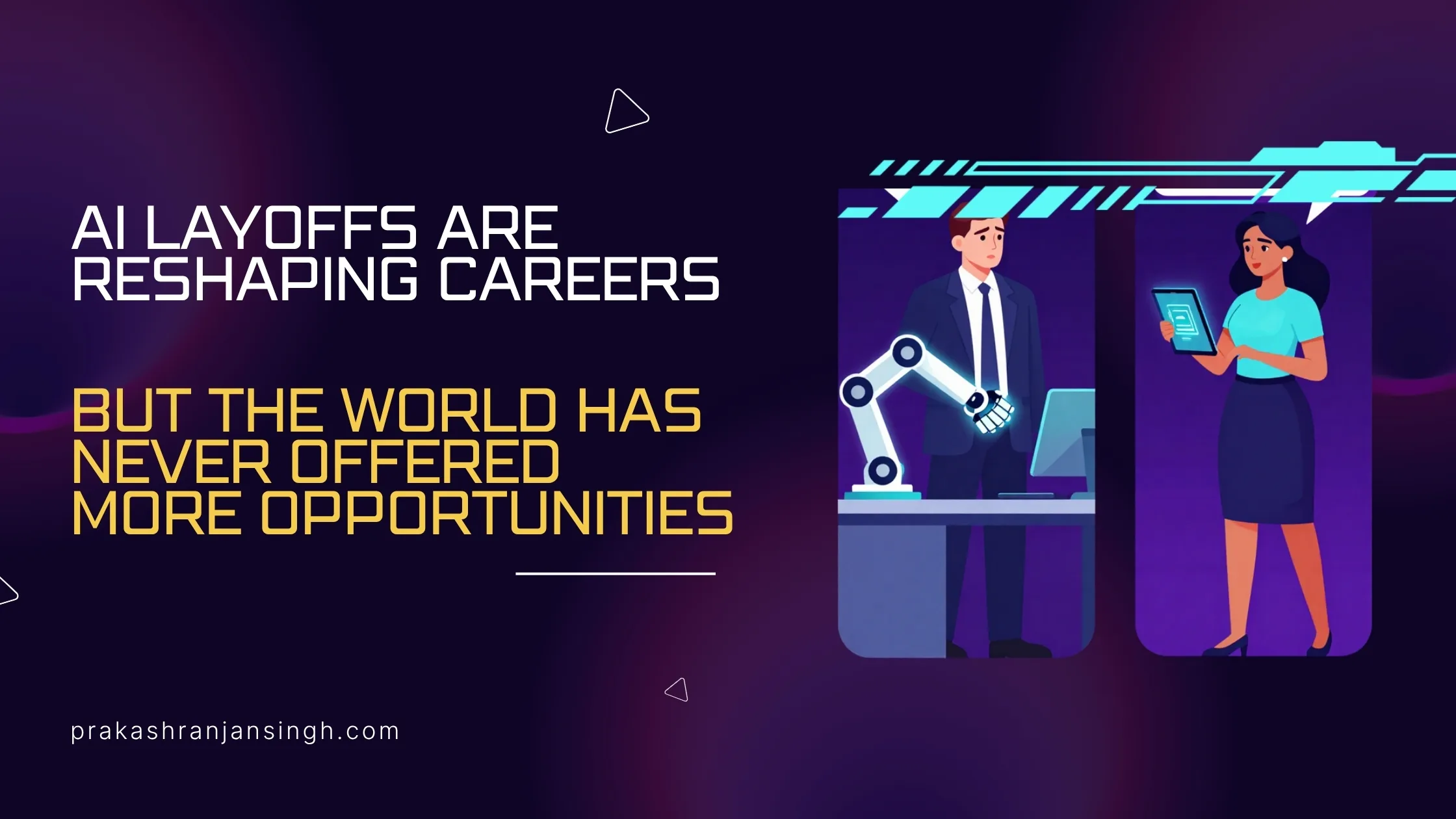
  • AI Layoffs Are Reshaping Careers—But the World Has Never Offered More Opportunities

    AI Layoffs Are Reshaping Careers—But the World Has Never Offered More Opportunities

    AI Layoffs Are Reshaping Careers—But the World Has Never Offered More Opportunities

    AI layoffs at major tech companies have created real fear, but history shows every technological revolution destroys some jobs while creating new ones — remote-first hiring, global talent platforms, and new fields like prompt engineering and AI governance mean the real employability question has shifted from “who will hire me” to “what value can I deliver.”

    Artificial Intelligence has become one of the most disruptive technologies of the 21st century. Across industries, companies are automating repetitive tasks, redesigning workflows, and improving productivity through AI. While these advances are driving innovation, they have also resulted in layoffs and workforce restructuring across several large technology companies as they adapted to changing business priorities and increased investments in AI.

    These headlines have understandably created fear among professionals. Many employees worry that AI will replace their jobs and make their experience obsolete. However, history tells a different story. Every major technological revolution has eliminated some roles while creating entirely new industries and professions. The AI revolution is following the same pattern.

    The biggest mistake a professional can make today is to think that the old employment model will return. Instead of resisting change, individuals must adapt to the new reality. The future belongs to those who continuously learn, upgrade their skills, and remain open to new ways of working.

    How Has Remote Work Changed the Global Job Market?

    One of the most significant transformations is the rapid growth of remote employment. The COVID-19 pandemic accelerated remote work, but even after the pandemic, many organizations discovered that distributed teams could operate efficiently and access talent from across the globe. Today, thousands of companies hire professionals regardless of where they live.

    Several global organizations have adopted remote-first or fully distributed work models, while many other well-known technology and consumer companies have introduced flexible hybrid work policies. These organizations are proving that talent is no longer limited by geography.

    As a result, dedicated remote hiring platforms have flourished, connecting professionals with employers seeking talent from around the world. Every day, thousands of remote positions are posted in software development, customer support, finance, marketing, design, data analytics, cybersecurity, consulting, education, and content creation.

    What Do Employers Actually Look for Now?

    The hiring process itself has also changed dramatically. A traditional résumé alone is often no longer enough. Recruiters increasingly look for evidence of practical ability. They want to see completed projects, portfolios, certifications, code repositories, writing samples, case studies, client testimonials, measurable achievements, and proof that a candidate can solve real business problems.

    This shift demands a new psychology. Instead of asking, “Who will employ me?”, professionals should ask, “What value can I deliver?” The answer to that question determines employability in the AI era.

    Remote work offers numerous advantages. It reduces geographical barriers, eliminates the need for relocation in many roles, saves commuting time, and allows professionals to compete in a global marketplace. Skilled individuals may also diversify their income through consulting, freelancing, or contract work, reducing dependence on a single employer.

    Success in this environment, however, requires more than technical expertise. Personal branding, communication skills, negotiation, networking, consistency in applying for opportunities, and a willingness to continuously learn are equally important. Building a strong professional profile, maintaining an online portfolio, contributing to open-source projects, publishing articles, or showcasing professional achievements can significantly improve visibility among recruiters.

    What Does This Mean Specifically for India?

    For India, this transformation represents a historic opportunity. India has one of the world’s largest pools of educated, English-speaking professionals with strong capabilities in technology, finance, engineering, customer support, and digital services. As organizations increasingly embrace global remote hiring, Indian professionals can contribute to international companies without leaving the country. This can generate employment, increase foreign income, and strengthen India’s position as a global knowledge hub.

    What New Careers Is AI Actually Creating?

    Artificial Intelligence is also creating entirely new career paths. Prompt engineering, AI implementation, cloud computing, cybersecurity, AI governance, machine learning operations, automation consulting, digital marketing, data science, and AI-assisted content creation are among the fastest-growing fields. Rather than eliminating work altogether, AI is changing the nature of work and increasing demand for people who can collaborate effectively with intelligent technologies.

    The greatest challenge, therefore, is not AI itself but human psychology. Fear of change often prevents people from seeing new possibilities. Professionals who spend their time worrying about layoffs may miss the opportunities emerging around them. Those who embrace lifelong learning, remain adaptable, and continuously upgrade their skills will be better positioned to thrive.

    Layoffs should not be viewed as the end of a career. They should be viewed as a reminder that learning never stops. In today’s world, employability depends less on the employer and more on the individual’s ability to create value.

    The AI age is not an age of unemployment—it is an age of transformation. Those who refuse to adapt may struggle, but those who embrace change will discover opportunities that previous generations could never have imagined.

    The message is clear: build skills, create a portfolio, strengthen your communication, develop a global mindset, and never stop learning. The world is no longer your local job market—it is your workplace.

    The future belongs to those who transform uncertainty into opportunity and see every technological disruption not as a threat, but as an invitation to reinvent themselves.

    Related Reading

  • The Great Career Dilemma in the Age of Artificial Intelligence

    The Great Career Dilemma in the Age of Artificial Intelligence

    The Great Career Dilemma in the Age of Artificial Intelligence

    No academic stream — engineering, medicine, commerce, or arts — is safe from AI disruption anymore: the real career advantage now belongs to students who develop continuous learning, adaptability, and human judgment alongside technical skill, not to those who simply picked a popular degree.

    For decades, choosing a career after Class 10 or Class 12 was considered a relatively straightforward decision. Engineering, medicine, commerce, and civil services were regarded as secure paths to success. Today, that certainty has disappeared. Artificial Intelligence (AI) is reshaping industries at an unprecedented pace, forcing students and parents to rethink what constitutes a safe and rewarding career.

    How Is AI Changing Engineering, Medicine, and Commerce?

    A few years ago, Computer Science Engineering was the most sought-after branch in engineering colleges. Admission to this stream was considered a symbol of academic excellence because the software industry promised attractive salaries and abundant employment opportunities. Today, AI-assisted coding tools are automating a significant portion of routine software development. While software engineering is far from obsolete, the demand for programmers who merely write code is gradually declining. The future belongs to engineers who can design intelligent systems, solve complex problems, and continuously learn new technologies.

    The medical profession is also entering a new era. AI can now assist doctors in diagnosing diseases, analysing medical images, and preparing treatment recommendations with remarkable accuracy. This does not reduce the importance of doctors, but it changes their role. Compassion, ethical judgment, patient counselling, and difficult clinical decisions remain uniquely human. The doctor of tomorrow will work alongside AI rather than compete against it.

    Commerce faces similar disruption. Bookkeeping, taxation, auditing, financial analysis, and customer service are increasingly being automated. Accountants, bankers, and financial professionals who rely solely on routine tasks may find their opportunities shrinking. Those who develop strategic thinking, financial planning expertise, regulatory knowledge, and relationship management skills will continue to thrive.

    Are Arts and Humanities Any Safer?

    The Arts and Humanities often appear less threatened because they rely heavily on human interaction, leadership, ethics, culture, governance, psychology, education, and communication. While AI can generate content and analyse data, it cannot easily replace empathy, social understanding, public leadership, or moral reasoning. However, even these fields must embrace AI as a tool rather than ignore it.

    The real lesson is that no academic stream is immune from technological disruption. The distinction between science, commerce, and arts is becoming less important than the ability to learn continuously, adapt to change, and work effectively with AI.

    Where Will the New Opportunities Come From?

    Future employment will increasingly emerge in interdisciplinary fields such as AI ethics, cybersecurity, renewable energy, precision agriculture, biotechnology, robotics, healthcare management, environmental sustainability, elderly care, mental health, education technology, and digital governance. These sectors require technical competence as well as human judgment.

    India’s education system must therefore undergo a fundamental transformation. Career counselling should begin in schools. Students should be encouraged to develop practical skills, creativity, entrepreneurship, communication, financial literacy, and emotional intelligence alongside academic knowledge. Universities should redesign their curricula to prepare graduates for collaboration with AI rather than competition against it.

    The greatest mistake today’s students can make is to choose a career solely because it is currently popular. In the AI era, lifelong learning has become more valuable than any single degree. Success will belong not to those who possess the highest qualifications alone, but to those who remain curious, adaptable, ethical, and capable of solving real human problems.

    The future will not belong exclusively to engineers, doctors, commerce graduates, or humanities students. It will belong to individuals who can combine knowledge with wisdom and technology with humanity. That is the real career path for the twenty-first century.

    Related Reading