Category: Health & Wellness

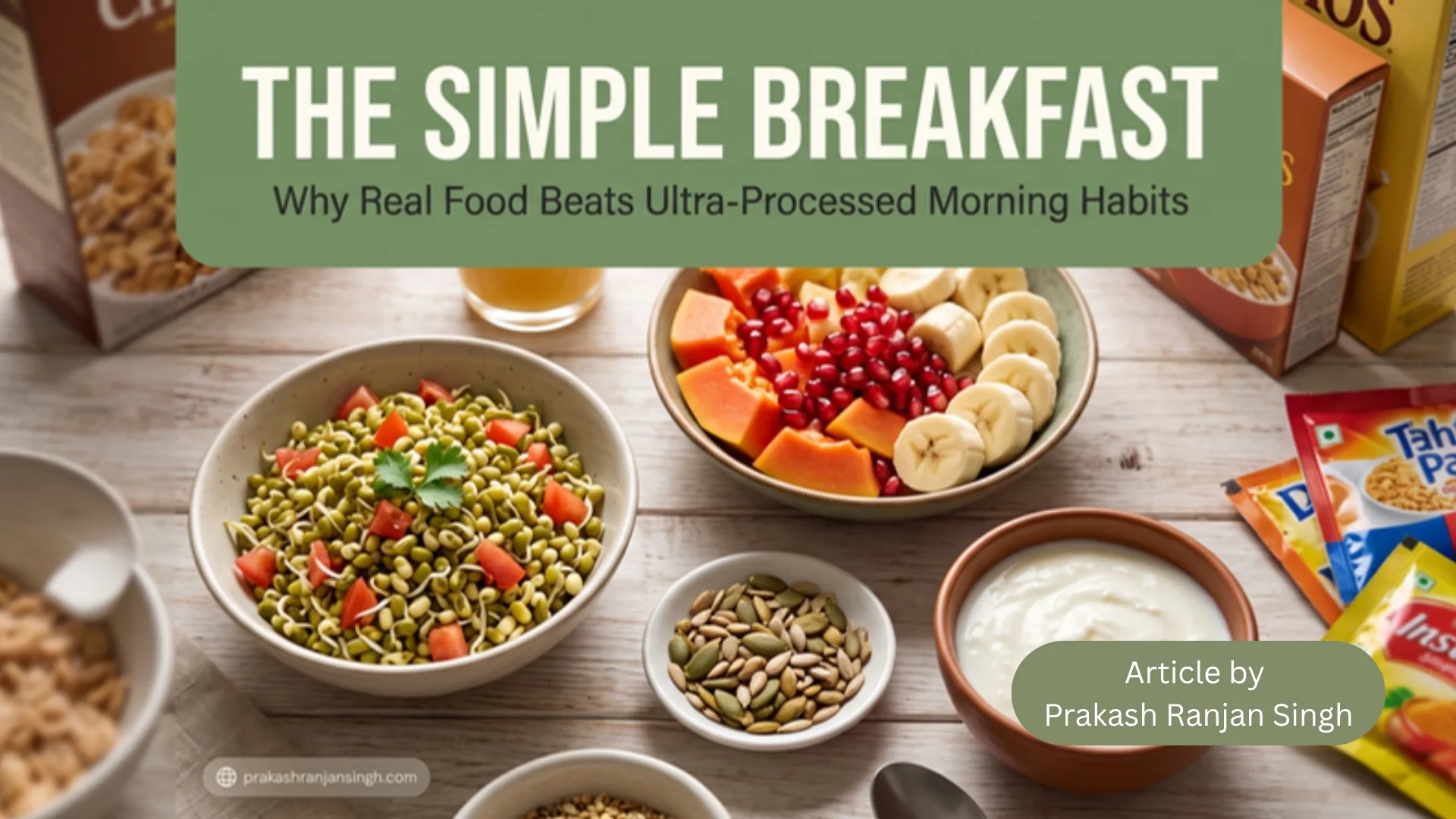
  • 🍌🥛 The Simplest Super Breakfast May Already Be in Your Kitchen

    🍌🥛 The Simplest Super Breakfast May Already Be in Your Kitchen


    What if one of the healthiest breakfasts for a student, professional, homemaker or elderly person costs less than a cup of tea and takes barely two minutes to prepare?

    No expensive health supplements.
    No fancy protein powder.
    No complicated recipe.

    Just one banana + a handful of soaked or mixed dry fruits + one cup of milk—properly combined.

    I have been following this breakfast routine for many years, and I have personally experienced very good effects from it. It keeps me energetic, satisfied and ready to face the day’s work.

    But there is an important lesson behind this simple breakfast:

    Never underestimate the power of a good breakfast.

    Our body remains without food for several hours during sleep. Breakfast is the first opportunity to replenish energy and nutrients and prepare the body and brain for the day ahead.

    🍌 Why banana?

    Banana provides carbohydrates for energy and also supplies potassium and other nutrients. It is inexpensive, easily available and requires no cooking.

    🥛 Why milk?

    Milk provides protein, calcium and several other nutrients. Combined with fruit and nuts, it makes the breakfast more nutritionally substantial than having tea and biscuits or skipping breakfast altogether.

    🥜 Why dry fruits?

    A small handful of almonds, walnuts, raisins, cashews or other nuts and dried fruits adds healthy fats, protein, fibre and micronutrients.

    The combination can provide carbohydrates + protein + healthy fats, making it much more satisfying than a breakfast consisting mainly of refined carbohydrates.

    ⚡ And the biggest advantage?

    Simplicity.

    Students rushing to school or college can prepare it quickly.

    Professionals leaving early for work don’t need to cook an elaborate breakfast.

    A homemaker can have something nutritious even on a hectic morning.

    Older people who prefer simple food can make it part of their morning routine—provided milk and nuts suit them.

    And for people who regularly skip breakfast because of lack of time, this can be a practical alternative.


    ⚠️ But there is one correction we should make

    A healthy breakfast does not mean that everyone can safely “miss lunch.”

    The body needs adequate nutrition throughout the day. Breakfast should not become an excuse to eat poorly later.

    And there is no magic food that guarantees longevity or freedom from disease.

    Long life and healthy ageing come from the total lifestyle: balanced nutrition, regular physical activity, adequate sleep, stress management, healthy weight, avoiding tobacco, limited alcohol, and appropriate medical check-ups.

    So think of this breakfast as a strong foundation—not a miracle cure.


    🌰 My special suggestions

    1. Keep the dry-fruit portion moderate.
    Nuts are nutritious but calorie-dense. A small handful is generally enough.

    2. Prefer unsalted nuts.
    Avoid heavily salted, sugar-coated or fried varieties.

    3. Rotate the nuts.
    Almonds, walnuts, pistachios, peanuts and raisins can be varied rather than eating exactly the same combination every day.

    4. Don’t add unnecessary sugar.
    The banana already provides natural sweetness.

    5. Choose milk according to your needs.
    If you have lactose intolerance or another reason to avoid dairy, an appropriate fortified alternative may work.

    6. Don’t forget water.
    Start the morning hydrated and maintain adequate fluid intake through the day.

    7. Make breakfast a habit, not a punishment.
    The best breakfast is one that is nutritious, affordable, enjoyable and sustainable enough to follow for years.

    ❤️ My personal philosophy

    We spend thousands of rupees on medicines, supplements and health products, but sometimes ignore the basics that our body needs every day.

    Good food.
    Good sleep.
    Regular movement.
    A peaceful mind.
    And disciplined habits.

    Perhaps health does not always require something expensive.

    Sometimes, a banana, a handful of nuts and a glass of milk can be a reminder that good health begins with simple choices.

    I have followed this breakfast routine for years and found it beneficial in my own life.

    What is your regular breakfast?

    Do you believe breakfast is the most important meal of the day—or can a healthy person comfortably skip it?

    Share your experience. Let’s start a healthy discussion. 👇

    #HealthyBreakfast #MorningRoutine #HealthyLifestyle #Nutrition #Wellness #HealthyAging #StudentHealth #WorkLife #SimpleLiving

    Related Reading

  • A 30-Year Family Tradition Meets Modern Medicine: My Personal Journey with Diabetes

    A 30-Year Family Tradition Meets Modern Medicine: My Personal Journey with Diabetes

    Quick summary: I combined a traditional family homeopathic remedy (Syzygium Jambolanum Q) with my prescribed diabetes medication, and over the following three months my blood sugar readings became noticeably more stable. This is a personal experience, not scientific proof of cause and effect, and diabetes treatment should never be changed without a doctor’s supervision.


    This is a personal experience, not a medical recommendation. Diabetes treatment should always be taken under the supervision of a qualified medical professional.

    Some health stories are not written in medical journals. They are lived quietly within families, passed from one generation to another through habits, experiences and beliefs.

    My story with diabetes is one such experience.

    Diabetes has been part of my family history for generations. My grandfather was a homeopathic doctor, and homeopathy was deeply embedded in our family culture. My grandfather, my father and my uncle all suffered from diabetes at different stages of their lives.

    One medicine that remained common in our family was Syzygium Jambolanum Q (Mother Tincture).

    The traditional practice in our family was to take around 10 drops diluted in half a cup of water, twice a day. My father has continued this practice for many years and still uses it.

    But when my generation came along, our approach became different.

    We increasingly relied on modern medicine, regular blood tests and consultations with qualified doctors.

    My Own Diabetes Journey

    I started taking Gluconorm approximately ten years ago, following my doctor’s advice.

    Over the years, I regularly visited my doctor and monitored my blood sugar. Whenever my test results changed, my doctor adjusted the medication accordingly.

    For several years, things remained reasonably manageable.

    But eventually, I noticed that the medication was no longer producing the kind of results we were expecting.

    Last year, I decided to undergo a comprehensive health check-up at Fortis Hospital, New Delhi. My blood sugar levels were on the higher side, and following the examination, the hospital doctor changed my medication and advised me to remain in touch with my local physician.

    I followed that advice.

    However, despite the changes, my sugar levels continued to fluctuate.

    My local doctor subsequently suggested increasing the strength/dosage of Gluconorm. I continued with the prescribed treatment and regular monitoring.

    Still, until around January 2026, the results were somewhat irregular and not as satisfactory as I had hoped.

    Then Came an Unexpected Suggestion From My Father

    My father, who had followed the traditional family practice for decades, suggested something very simple:

    “Why don’t you take Syzygium Jambolanum Q along with your regular medicine?”

    For him, this was not a new experiment.

    It was something that had been part of our family’s approach to diabetes for generations.

    I was initially cautious.

    After all, I had already been relying on modern medical treatment for nearly a decade. I also understood that diabetes is not a condition that should be taken lightly.

    Eventually, I decided to try the combination while continuing my prescribed medicine.

    From around February 2026, I continued taking my regular Gluconorm G1, as advised earlier, while also taking Syzygium Jambolanum Q according to the traditional family practice.

    And then something interesting happened.

    Three Months of Better Numbers

    Over the following three months, my blood sugar readings appeared much more stable.

    My average readings were approximately:

    Fasting: around 100 mg/dL

    After meals: around 135 mg/dL

    For me, these numbers represented a significant improvement compared with the irregular readings I had experienced earlier.

    Naturally, my first reaction was happiness.

    My second reaction was curiosity.

    Was it the homeopathic medicine?

    Was it the allopathic medicine?

    Was it the combination?

    Had my diet, lifestyle or other factors changed?

    Or was it simply the natural fluctuation of diabetes and the effect of the treatment adjustments made earlier?

    I honestly don’t know.

    And that is an important part of my story.

    Personal Experience Is Not Scientific Proof

    It is very easy, after seeing an improvement, to conclude that one particular medicine caused it.

    But personal experience and scientific evidence are not the same thing.

    In my case, several things happened around the same period: my allopathic treatment had already been changed, I was under regular medical supervision, I continued monitoring my sugar levels, and I added a traditional homeopathic preparation.

    Therefore, I cannot scientifically claim that Syzygium Jambolanum Q alone brought my blood sugar under control.

    All I can honestly say is:

    I continued my prescribed diabetes treatment and added the medicine that had been used traditionally in my family, and during the subsequent three months my sugar readings became more stable.

    That is my experience—not a prescription for anyone else.

    What This Experience Taught Me

    Perhaps the most interesting lesson from this journey is not about homeopathy versus allopathy.

    It is about how different generations approach health.

    My grandfather belonged to a generation where traditional systems of medicine were an integral part of family life.

    My father inherited that belief and continued the practice.

    My generation moved increasingly towards modern medicine, diagnostic tests, hospitals and evidence-based treatment.

    But somewhere between these two approaches lies an important question:

    Can we learn from traditional experiences without abandoning scientific evaluation?

    I believe the answer deserves thoughtful discussion.

    We should neither blindly reject traditional practices simply because they are old, nor blindly accept them simply because they worked for someone in our family.

    Every treatment should ultimately be evaluated through safety, evidence, individual medical circumstances and professional medical advice.

    The Most Important Lesson: Don’t Stop Monitoring

    Diabetes can remain silent while gradually affecting different organs of the body.

    That is why I believe regular monitoring is more important than any particular medicine.

    My experience has reinforced several habits:

    Regular blood sugar testing

    Periodic medical check-ups

    Following the prescribed treatment

    Discussing any change in medication with the doctor

    Maintaining awareness of diet and lifestyle

    Never assuming that controlled sugar today means diabetes has disappeared

    Never stopping prescribed medication without medical advice

    And most importantly, I have learned that one person’s experience cannot become another person’s prescription.

    A Conversation Between Two Generations

    There is also something deeply personal about this story.

    My grandfather’s medical practice influenced my father.

    My father inherited his knowledge and beliefs from him.

    And now, decades later, I have found myself bringing a small part of that family tradition into my own modern medical journey.

    Perhaps this is what makes healthcare so fascinating.

    Medicine is not merely about tablets, prescriptions and laboratory reports.

    It is also about experience, generations, beliefs, observation, science and continuous learning.

    My grandfather trusted homeopathy.

    My father continues that tradition.

    I rely primarily on modern medical treatment and medical supervision—but I have also chosen to explore something that has been part of my family for generations.

    For now, my numbers are encouraging.

    But I remain cautious.

    I don’t consider this a victory of homeopathy over allopathy, or allopathy over homeopathy.

    For me, it is simply a real-life experience that has raised an interesting question:

    Can traditional family wisdom and modern medical science coexist—provided that neither is followed blindly?

    Perhaps the real answer lies not in choosing one system against another, but in continuing to ask questions, monitoring outcomes scientifically and putting patient safety above everything else.

    This Is My Story. What Is Yours?

    Have you or someone in your family experienced a similar situation where a traditional remedy was used alongside modern medical treatment?

    Please share your experience, but remember that diabetes medication should not be started, stopped, substituted or changed without consultation with a qualified healthcare professional.

    Related Reading