Category: National Affairs

  • The Shiny Picture May Turn Gloomy: Is India Sleepwalking Towards a Jobs–Debt–Technology Trap?

    The Shiny Picture May Turn Gloomy: Is India Sleepwalking Towards a Jobs–Debt–Technology Trap?

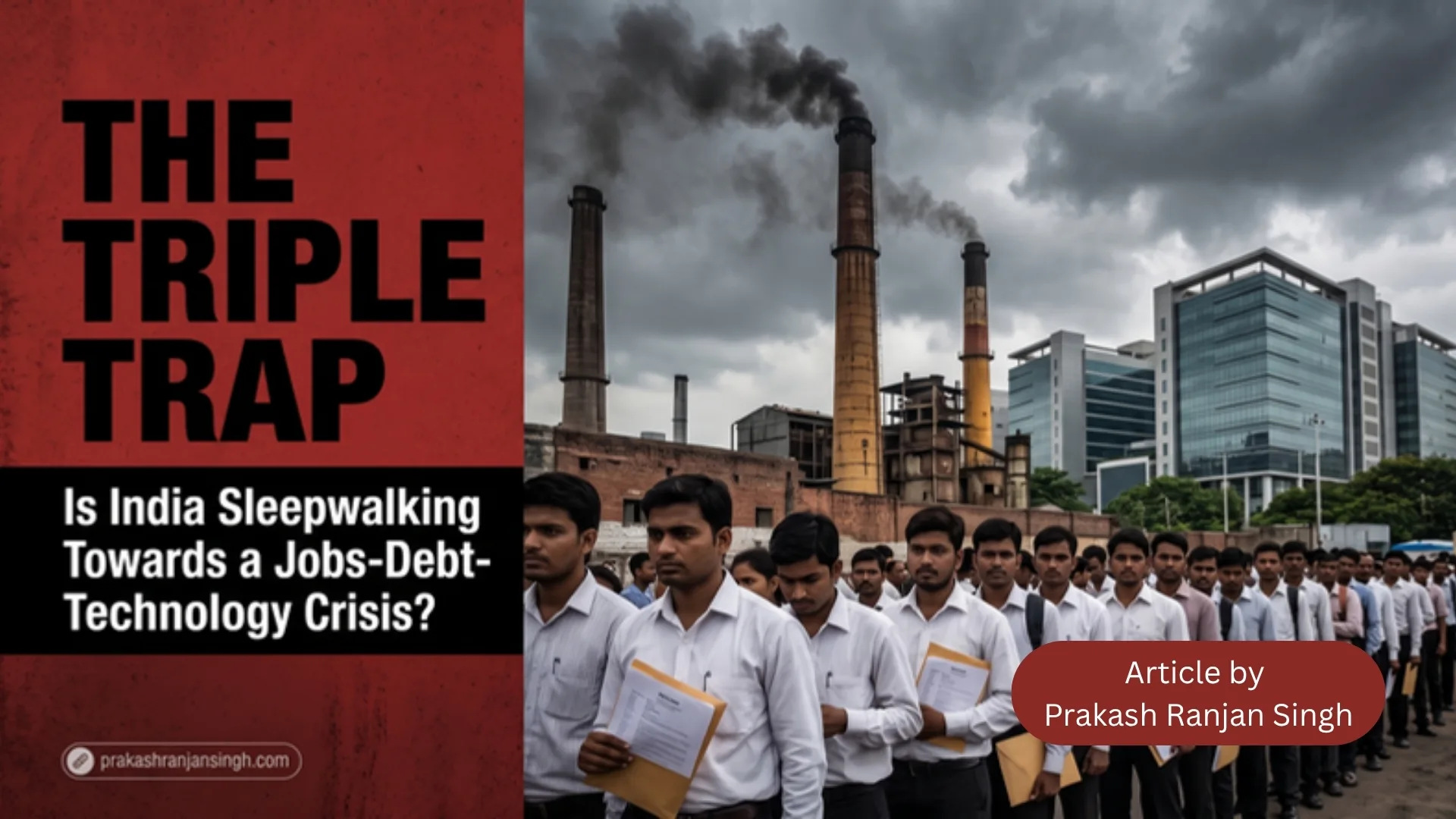
    India jobs, debt and technology trap illustration

    India faces two contradictory economic pictures at once: rapid growth, digital inclusion and a Vision 2047 dream on one side, and rising youth unemployment, easy debt and AI-driven job disruption on the other — and the danger is these problems feeding each other into a larger structural trap.

    India today presents two very different pictures.

    One picture is spectacular: a large and growing economy, expanding digital infrastructure, record-scale financial inclusion, rising consumption, rapid technological adoption, ambitious infrastructure development and the powerful national vision of becoming a developed economy by 2047.

    The other picture is much less comfortable: young people struggling to find stable employment, layoffs in technology and service industries, easy availability of unsecured credit, rising household financial pressure, political competition through cash-transfer promises, automation replacing routine jobs and an increasingly anxious generation trying to maintain a lifestyle through borrowed money.

    The danger is not necessarily that India is facing an immediate economic collapse. The greater danger is that several individually manageable problems may begin interacting with each other and create a much larger structural problem.

    Employment affects income.

    Income affects repayment capacity.

    Repayment capacity affects credit quality.

    Credit quality affects banks and NBFCs.

    Household debt affects consumption.

    Consumption affects business demand.

    Business demand affects employment.

    And employment again affects household debt.

    This is the economic circle that deserves far more attention.

    The most dangerous word is not unemployment—it is unemployability

    India’s demographic advantage has always been described as its greatest economic opportunity.

    But a young population becomes an asset only when the economy can productively absorb its labour.

    The latest Annual PLFS 2025 puts youth unemployment for people aged 15–29 at 9.9% under the usual-status measure, while unemployment among educated persons aged 15 and above was 6.5%.

    These figures should not be interpreted as evidence that India is heading towards mass unemployment. But they should remind policymakers that employment quantity and employment quality are two different things.

    A person may be technically employed and yet earn too little to support a family.

    A graduate may be working in a low-productivity job unrelated to his education.

    A young professional may have a job today but no confidence that the job will exist two years from now.

    And increasingly, the biggest threat is not simply unemployment—it is employability risk.

    Artificial intelligence and automation are changing the economics of routine work. Recent reporting points to significant pressure on traditional IT-BPM hiring, with one industry estimate projecting H1 FY27 hiring to fall by more than 26%.

    This does not mean AI will destroy all jobs. Technology historically eliminates some jobs while creating others. The problem is the transition period.

    If ten traditional jobs disappear today but the five new jobs created tomorrow require skills that the displaced workers do not possess, society experiences unemployment even though the economy is becoming technologically more productive.

    That transition is where policy must concentrate.

    The dangerous combination: fewer jobs and more loans

    There is another development taking place simultaneously.

    Credit has become incredibly easy.

    A young person with a salary account, digital footprint, acceptable credit history and a few clicks can access personal loans, credit cards, consumer finance, BNPL facilities and other forms of borrowing.

    This is financial inclusion when used responsibly.

    But it can become financial vulnerability when credit substitutes for income.

    The distinction is crucial.

    Borrowing for a productive business that generates cash flow can create wealth.

    Borrowing for education that genuinely improves employability can create future income.

    Borrowing for a productive asset may increase earning capacity.

    But borrowing repeatedly to pay rent, household expenses, previous EMIs, vacations, gadgets or lifestyle expenditure creates a completely different cycle.

    The borrower is no longer using credit to create income.

    The borrower is using future income to finance present consumption.

    That is the beginning of a debt trap.

    The RBI itself has highlighted risks surrounding digital lending, unsecured personal loans, BNPL and the limitations of credit assessment based on incomplete data. Its research has noted that FinTech lenders have expanded access to new-to-credit borrowers, particularly in small-ticket personal loans, while also recognising risks from inadequate credit histories and difficulties in assessing counterparty credit risk.

    Therefore, the question should not be:

    “How much credit can we give?”

    The more important question should be:

    “How much debt can this individual realistically service if his income falls by 30% tomorrow?”

    That question is often more important than the credit score itself.

    Credit score is not the same as repayment capacity

    The financial sector has entered an era of algorithmic lending.

    A computer can examine thousands of variables within seconds.

    It can calculate a credit score.

    It can examine repayment history.

    It can analyse bank transactions.

    It can determine eligibility.

    It can generate a sanction letter almost instantly.

    But there is a fundamental danger in confusing data availability with financial understanding.

    A credit score tells us about past behaviour.

    It does not necessarily tell us what will happen to the borrower’s income tomorrow.

    Consider a young employee earning ₹50,000 a month.

    His credit score is excellent.

    He has never missed an EMI.

    He receives a pre-approved loan.

    He takes several loans.

    Six months later his employer downsizes and his salary disappears.

    His credit score did not predict unemployment.

    The algorithm was not necessarily wrong.

    The underlying economic assumption was incomplete.

    Credit appraisal must therefore move from “Can this person borrow?” to “Can this person survive this debt under stress?”

    Banks and NBFCs need stronger cash-flow-based and stress-based assessment, particularly for vulnerable segments.

    The Udyam certificate question deserves serious attention

    India’s formalisation drive is important and should not be weakened.

    The Udyam system has brought millions of enterprises and informal businesses into the formal ecosystem. As of July 2026, the official Udyam/Udyam Assist dashboard showed more than 9 crore registrations/classifications combined and reported employment associated with those registrations.

    But there is an important statistical issue.

    Registration is not the same as economic activity.

    The official system itself describes Udyam registration as online, paperless and based on self-declaration, with no documents or proof required to be uploaded at registration. It also states that intentionally misrepresenting or suppressing information can attract penalties.

    This creates a policy challenge.

    If a person obtains a registration merely to access credit or a government benefit but does not operate a genuine business, then three things can become distorted:

    First—credit appraisal.

    The lender may perceive the borrower as an entrepreneur rather than an individual dependent on irregular income.

    Second—employment statistics.

    Reported employment connected to registrations can look much stronger than actual sustainable employment if inactive or nominal enterprises are counted.

    Third—policy evaluation.

    The government may believe entrepreneurship is expanding faster than genuine economic activity.

    Therefore, India needs a distinction between:

    Registered enterprise → Active enterprise → Revenue-generating enterprise → Profit-generating enterprise → Sustainable employment-generating enterprise.

    These are five different things.

    A registration certificate should never become a substitute for evidence of business activity.

    The political economy of free money

    Another component of this emerging cocktail is the increasing competition among political parties to promise direct financial benefits to specific sections of voters.

    There is nothing inherently wrong with welfare.

    A welfare state has a legitimate responsibility to protect vulnerable citizens.

    The problem arises when welfare changes from social protection to permanent political dependency.

    A cash transfer can help a poor household survive a difficult period.

    But if an economy increasingly depends upon transferring money rather than creating productive income, the long-term question becomes uncomfortable:

    Who will generate the income from which tomorrow’s transfers will be financed?

    Suppose the government gives ₹10,000 to a household.

    The household spends it.

    The money enters the economy.

    That can stimulate consumption.

    But if the underlying productive capacity has not increased, the transfer has not necessarily created sustainable wealth.

    The same money cannot be distributed repeatedly without a corresponding source of revenue.

    Ultimately, government revenue comes from economic activity—businesses, workers, consumption, investments and productive assets.

    Therefore:

    Welfare can protect people from poverty.

    Only productive employment can sustainably lift people out of poverty.

    India must never confuse the two.

    The hidden danger of statistical optimism

    Modern economies are increasingly managed through dashboards.

    GDP.

    Credit growth.

    Digital transactions.

    Udyam registrations.

    Bank accounts.

    UPI transactions.

    Stock-market capitalisation.

    FDI.

    Infrastructure spending.

    Tax collections.

    All of these indicators matter.

    But economic development is ultimately experienced by human beings.

    A family does not experience GDP growth.

    It experiences monthly income.

    A young person does not experience financial inclusion.

    He experiences whether he has a job.

    A borrower does not experience credit expansion.

    She experiences whether she can pay the EMI.

    A graduate does not experience India’s demographic dividend.

    He experiences whether someone is willing to employ him.

    This is why policymakers should increasingly track household financial stress, not merely aggregate economic indicators.

    What happens when technology, debt and unemployment collide?

    Imagine a hypothetical young professional.

    He earns ₹60,000.

    He has a personal loan EMI of ₹15,000.

    A vehicle EMI of ₹8,000.

    Credit-card obligations of ₹7,000.

    Rent of ₹15,000.

    Family expenses of ₹10,000.

    There is virtually no financial cushion.

    Now imagine automation eliminates his job.

    The problem does not stop with unemployment.

    His EMI continues.

    His credit card continues.

    His rent continues.

    His household continues consuming.

    He starts using another credit facility.

    Then another.

    The first loan finances the second loan.

    The second loan finances the third.

    Eventually the borrower is no longer borrowing for consumption.

    He is borrowing to remain solvent.

    Multiply this situation across millions of households and it becomes a macroeconomic issue.

    This is how a private household problem can gradually become a banking problem, a consumption problem and eventually a social problem.

    The next crisis may not look like 2008

    The world should learn from the 2008 global financial crisis.

    But the next crisis need not originate from American housing mortgages.

    It could emerge differently.

    It could be a combination of:

    AI-driven job restructuring + excessive household leverage + weak income growth + easy digital credit + declining job security + political fiscal commitments.

    None of these alone necessarily creates a crisis.

    But together they can create a powerful negative feedback loop.

    And unlike a traditional banking crisis, such a crisis may first appear inside millions of households.

    People stop buying.

    Businesses lose demand.

    Businesses reduce hiring.

    Employees lose income.

    Loan defaults increase.

    Banks become cautious.

    Credit becomes expensive or unavailable.

    Investment slows.

    Consumption falls further.

    The economy enters a vicious cycle.

    India’s banking system must look beyond the credit score

    This is perhaps where the financial sector has the greatest responsibility.

    Digital lending is a tremendous achievement.

    But technology should improve credit appraisal—not replace it.

    A modern credit framework should examine:

    Stable income versus temporary income

    Fixed obligations versus discretionary expenses

    Debt-to-income ratio

    Household-level indebtedness

    Existing loans across institutions

    Employer and industry stability

    Employment tenure

    Cash-flow behaviour

    Business turnover and GST/tax evidence where applicable

    Actual bank-account cash flows

    Stress scenarios

    Dependence on one income source

    Borrower’s emergency savings

    Probability of income interruption

    Most importantly, lenders should ask:

    What happens to this borrower if his income falls by 25%, 40% or 60%?

    A loan that remains serviceable under stress is a healthier loan than one that merely qualifies under today’s income.

    Government also needs an “Employment Stress Index”

    India needs a new economic dashboard.

    GDP alone is insufficient.

    The country should monitor a composite National Employment and Household Financial Stress Index containing:

    Youth unemployment

    Graduate unemployment

    Underemployment

    Median real wages

    Job creation by sector

    Layoffs

    New hiring

    Household debt

    EMI-to-income ratios

    Personal-loan growth

    Credit-card outstanding

    Loan restructuring

    Early-stage delinquencies

    Household savings

    Government welfare commitments

    Automation exposure

    MSME closures

    New enterprise survival rates

    Such an index could provide policymakers with an early-warning signal.

    Because by the time widespread defaults appear in banking data, the economic damage may already have occurred.

    The MSME story needs a reality check

    India cannot become a developed economy merely by creating millions of registrations.

    It needs millions of surviving, productive and growing enterprises.

    The real question is not:

    “How many MSMEs have been registered?”

    It is:

    “How many are still operating after three years?”

    “How many generate taxable turnover?”

    “How many employ people?”

    “How many increase wages?”

    “How many export?”

    “How many survive without repeatedly refinancing debt?”

    That is the difference between enterprise formalisation and enterprise development.

    The biggest mistake would be to underestimate psychological damage

    Economic crises are not merely financial.

    They are psychological.

    A young person who has spent years studying, taken an education loan, secured a job, taken a personal loan, purchased a vehicle and started supporting parents may believe that his life is finally stable.

    Then suddenly comes a layoff.

    The immediate problem is income.

    The deeper problem is identity.

    Then comes anxiety.

    Then debt.

    Then family pressure.

    Then social comparison.

    Then borrowing.

    Then loss of confidence.

    A generation that enters adulthood believing that prosperity is guaranteed but discovers that employment is uncertain can become deeply frustrated.

    That frustration can manifest through political anger, social unrest, risky speculation, excessive consumption, migration or rejection of traditional institutions.

    Therefore, employment is not merely an economic variable. It is a social-stability variable.

    India must not become a consumption economy financed by debt

    There is a fundamental difference between prosperity and consumption.

    If a family buys a refrigerator because its income has increased, that is prosperity.

    If the family buys the refrigerator because a credit-card facility has increased, that is consumption.

    If millions of people increase consumption because productivity and wages are rising, economic growth becomes sustainable.

    If consumption increases primarily because borrowing is increasing faster than income, the economy may look healthy temporarily while household balance sheets become weaker.

    This is why credit growth must always be read alongside income growth.

    Credit growing at 15% while sustainable household income grows at 7% deserves more scrutiny than credit growing at 15% alongside strong income growth.

    What should India do now?

    The answer is not to stop lending.

    It is not to stop welfare.

    It is not to stop technology.

    It is not to stop AI.

    It is not to stop entrepreneurship.

    The answer is to make all of them more intelligent.

    1. Make employment the central economic KPI

    Every major economic policy should answer one question:

    How many sustainable jobs will this create?

    2. Build an AI transition policy

    Instead of simply encouraging AI adoption, India needs a national programme for reskilling workers whose jobs are being automated.

    3. Strengthen credit appraisal

    Credit scores should be one input—not the entire decision.

    4. Introduce household debt stress monitoring

    Banks, NBFCs and regulators need a more complete picture of total household borrowing.

    5. Verify enterprise activity

    Udyam registration should remain easy, but credit and government benefits should increasingly rely on evidence of actual economic activity.

    6. Evaluate welfare scientifically

    Every major cash-transfer scheme should disclose its fiscal cost, funding source, beneficiary outcome and long-term sustainability.

    7. Focus on productive welfare

    Instead of merely transferring money, governments should invest more in skills, apprenticeships, entrepreneurship, healthcare, education and employment infrastructure.

    8. Encourage savings

    India needs to rebuild the culture of emergency savings.

    A household with six months of expenses saved is far more resilient than a household with five pre-approved loan offers.

    9. Create an early-warning system

    The government, RBI, banks, economists and labour-market institutions should jointly monitor employment, credit and household stress rather than analysing them in isolation.

    The real question before Vision 2047

    India’s dream of becoming a developed nation by 2047 is not merely a question of GDP.

    A developed India must mean:

    productive employment, rising real incomes, financially secure households, healthy businesses, sustainable public finances, responsible credit and technological progress that creates more opportunities than it destroys.

    A nation cannot become developed if its young population is highly educated but unemployed.

    It cannot become prosperous if household consumption is increasingly financed through debt.

    It cannot become financially stable if lenders measure creditworthiness without adequately measuring future repayment capacity.

    It cannot become socially stable if political competition continuously expands unfunded expectations.

    And it cannot convert its demographic dividend into national wealth if technology advances faster than human skills.

    The shiny picture can turn gloomy—but it is not inevitable

    India is not doomed.

    The country has enormous strengths: a large domestic market, entrepreneurial energy, digital infrastructure, expanding formalisation, strong institutions in many areas and a huge pool of young people.

    The warning is different.

    India must not become complacent because the headline numbers look impressive.

    The most dangerous economic problems are often invisible before they become visible.

    A person losing a job is a statistic.

    A family taking a second loan is another statistic.

    A small business surviving through refinancing is another statistic.

    A young graduate accepting a low-paying job is another statistic.

    A government announcing another cash-transfer scheme is another statistic.

    A bank sanctioning another unsecured loan is another statistic.

    But when millions of these events happen simultaneously, they stop being isolated statistics.

    They become a national economic story.

    The central challenge before India is therefore not simply how to grow faster.

    It is:

    How to ensure that growth creates enough productive employment, enough household income and enough financial resilience to prevent the next generation from becoming prosperous in appearance but indebted in reality.

    The real test of Vision 2047 will not be how impressive India’s economic dashboard looks.

    It will be whether an ordinary young Indian can answer three simple questions with confidence:

    “Do I have a sustainable job?”

    “Can I live without borrowing for my basic needs?”

    “Will my children have a better economic future than me?”

    If the answer to these questions remains positive, India’s demographic dividend can become its greatest strength.

    If the answers begin turning negative while the country continues celebrating headline growth, registrations, credit expansion and consumption, the shiny picture could gradually become gloomy.

    The time to identify that risk is not after the crisis arrives. It is while the warning signals are still scattered across the economy.

    *Note: Several concerns raised in this analysis are scenarios and policy risks, not claims that India is currently experiencing an economy-wide collapse. Official labour data and RBI financial-stability material show a more nuanced picture, with both significant strengths and areas requiring vigilance. The latest RBI website confirms that its June 2026 Financial Stability Report has been released. *

    Related Reading

  • Are We Truly Free? Freedom of Nation Vs Freedom of a Mind and The Science Behind It

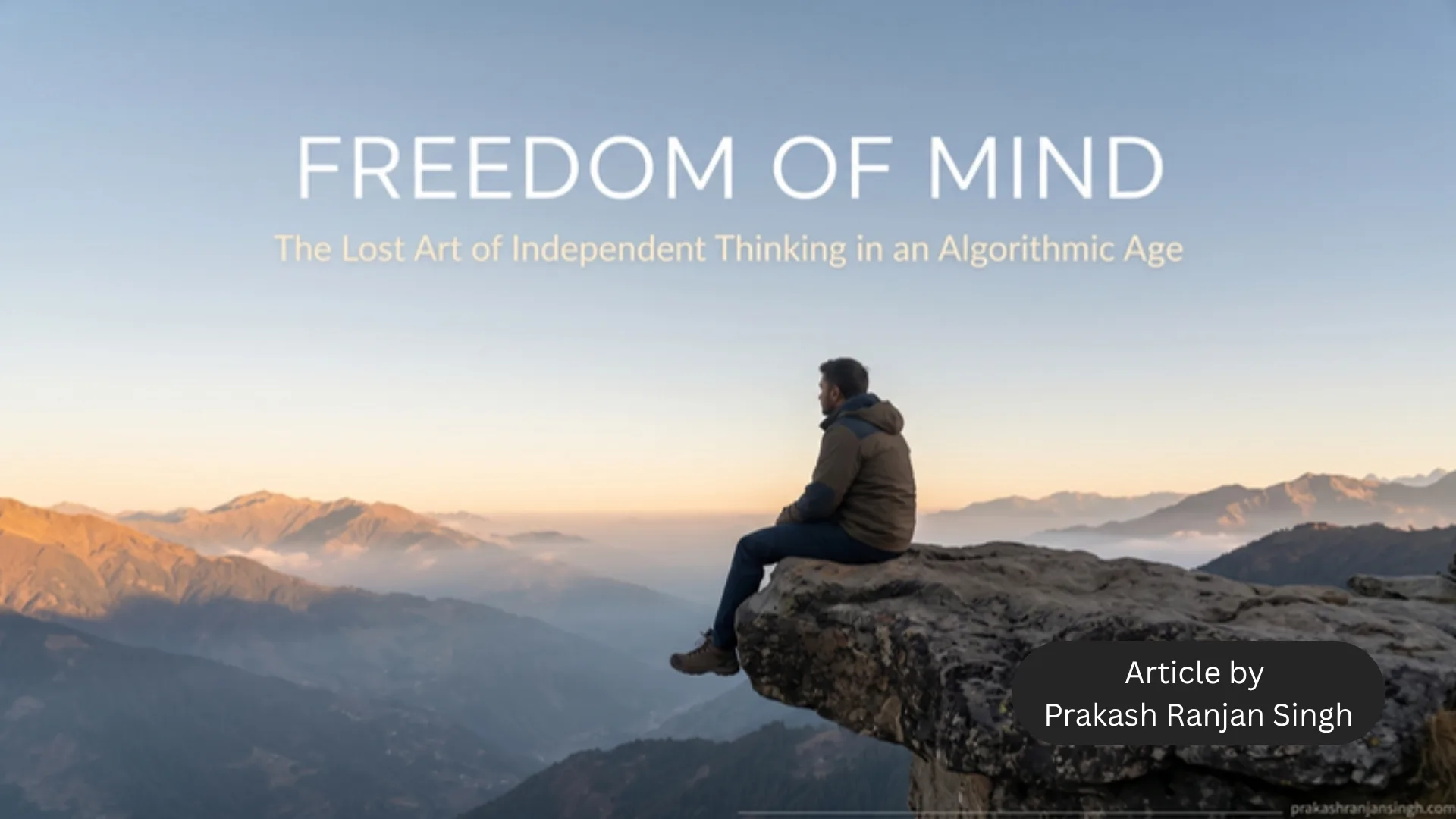
    Are We Truly Free? Freedom of Nation Vs Freedom of a Mind and The Science Behind It

    Political independence gives a nation self-rule, but true freedom also requires mental independence — the ability to think, question and decide without being unknowingly manipulated by algorithms, propaganda and our own biases.

    Silhouette of a person symbolizing freedom of thought and mind

    India became independent on 15 August 1947. As we celebrate 79 years of Independence, we rightly remember the sacrifices of those who fought for freedom from colonial rule. But perhaps Independence Day should also make us ask a deeper question:

    After gaining freedom from external control, have we become completely free in our thoughts?

    Political freedom gives a nation the right to govern itself. But mental freedom gives an individual the ability to think, question, evaluate and decide without being unknowingly controlled by others. The second form of freedom is far more difficult to achieve.

    The oldest form of human influence

    From the beginning of human civilization, human beings have lived in groups. Whenever people gathered into families, tribes, communities, organizations and nations, leadership and influence naturally emerged.

    Those who understood human psychology better often gained the ability to influence others.

    A powerful leader could influence a tribe. A religious or social leader could influence a community. A political organization could influence voters. A manager could influence employees. Even within families, one person’s thinking can gradually influence the decisions of others.

    Influence itself is not necessarily wrong. Society cannot function without leadership, persuasion and communication.

    The real question is:

    Are we making a conscious decision—or are we being made to believe that the decision is ours?

    The science behind the manipulation of thought

    Our brain is constantly receiving enormous amounts of information. It cannot consciously analyse everything.

    Therefore, the brain uses shortcuts. Psychologists call many of these cognitive biases. We may be influenced by repetition, authority, emotional appeals, social pressure, fear, confirmation of our existing beliefs and the behaviour of people around us.

    This explains why a message repeated again and again can begin to appear believable.

    A slogan can create an emotional response.

    A frightening rumour can produce panic.

    A provocative video can create anger within seconds.

    A carefully designed advertisement can create a desire that did not exist a few minutes earlier.

    In many situations, emotion arrives before reason.

    That small gap between receiving information and consciously evaluating it is where manipulation can take place.

    From newspapers to algorithms

    Earlier, influence had relatively limited speed.

    A political speech reached those who attended it. A newspaper reached its readers. A rumour travelled from person to person.

    Technology has completely transformed this equation.

    Today, a single piece of content can reach millions of people within minutes. More importantly, digital platforms can observe what attracts our attention—what we click, watch, like, share, search for and spend time reading.

    Algorithms can then predict what content is most likely to keep us engaged.

    This creates a new form of influence that is considerably more sophisticated than traditional persuasion.

    Earlier, someone tried to convince us. Today, technology can learn what is most likely to convince us.

    That distinction is enormous.

    The invisible power of the algorithm

    Suppose a person watches a particular type of political video.

    The platform may learn that this subject attracts the person’s attention. It may subsequently recommend more content of a similar nature.

    The person watches again.

    The system learns further.

    More similar content appears.

    Gradually, the individual may begin to believe that everyone thinks the same way because the digital environment surrounding him repeatedly presents similar opinions.

    This is sometimes called an echo chamber.

    The person may not realize that he is not seeing the whole world.

    He is seeing a curated version of the world.

    And that raises a profound question:

    If someone else controls what information repeatedly enters our mind, how independent are our conclusions?

    Thought can become action within seconds

    Human thought is powerful because thought precedes behaviour.

    A person sees a message.

    The message creates an emotion.

    The emotion influences interpretation.

    Interpretation produces a decision.

    The decision produces action.

    This entire chain can sometimes happen extraordinarily quickly.

    That is why rumours can cause panic, provocative messages can trigger anger, advertisements can create consumption, political narratives can mobilize voters, and social-media trends can influence millions.

    The danger is not that every message is false.

    The greater danger is that we may act before determining whether the message deserves our belief.

    Freedom does not mean freedom from influence

    It is impossible to live without being influenced.

    Our parents influence us.

    Teachers influence us.

    Friends influence us.

    Books influence us.

    Culture influences us.

    Religion, politics, education, media and technology influence us.

    Even our experiences influence the way we interpret new information.

    Therefore, absolute freedom from influence is practically impossible.

    Real intellectual freedom means something different:

    The ability to recognize influence and still retain the power to make an independent judgement.

    A free mind is not a mind that never changes.

    A free mind is a mind that can change after examination rather than manipulation.

    The most dangerous controller may be inside us

    There is another dimension that deserves attention.

    Sometimes nobody needs to control us from outside because our own biases control us.

    We tend to believe information that confirms what we already believe. We may reject uncomfortable facts simply because they challenge our identity or worldview.

    This is where confirmation bias becomes powerful.

    A person may say, “I want the truth,” while subconsciously searching only for information that supports his existing opinion.

    Therefore, intellectual freedom requires not only questioning others but also questioning ourselves.

    Perhaps the most difficult question is:

    “What if I am wrong?”

    A person who can sincerely ask this question has already taken an important step toward freedom.

    Political freedom and mental freedom

    India’s political independence was achieved through extraordinary sacrifice.

    But political independence gives us the right to choose our representatives. It does not automatically guarantee that every choice we make is intellectually independent.

    A democracy becomes stronger when citizens can distinguish between:

    information and propaganda,

    opinion and fact,

    persuasion and manipulation,

    debate and hatred,

    freedom of expression and deliberate misinformation.

    The strength of democracy ultimately depends not merely on how many people can vote, but on how freely and intelligently people can make their choices.

    Technology can become either a liberator or a controller

    Technology itself is neither good nor bad.

    The same technology that can manipulate people can also educate them.

    Artificial intelligence can spread misinformation—but it can also help people compare information.

    Social media can create echo chambers—but it can also expose people to perspectives they might never encounter otherwise.

    The internet can distract us—but it has also democratized access to knowledge.

    Therefore, the real battle is not humanity versus technology.

    It is:

    human consciousness versus unconscious dependence on technology.

    Technology should remain our tool.

    The moment the tool begins determining our emotions, attention and decisions without our awareness, we need to pause.

    How can we protect our freedom of thought?

    Perhaps we need a new form of freedom education—digital and psychological freedom.

    Before reacting to an emotionally charged message, we should ask:

    Who created this message?

    Why was it created?

    What emotion is it trying to generate in me?

    Is there evidence supporting it?

    Am I seeing the complete picture?

    What would I think if this message supported the opposite side?

    Am I deciding—or merely reacting?

    A few seconds of reflection can sometimes prevent hours, days or even years of regret.

    The real meaning of freedom

    On Independence Day, we celebrate freedom from colonial rule.

    But perhaps the next stage of our journey is to protect ourselves from invisible forms of control—fear, prejudice, propaganda, misinformation, addiction, herd mentality, algorithms and our own cognitive biases.

    A nation becomes truly strong when its citizens are not easily manipulated.

    A society becomes truly mature when people can disagree without becoming enemies.

    And an individual becomes truly free when he can think independently, question fearlessly, listen patiently and decide consciously.

    Our thoughts are the starting point of our actions.

    Therefore, before reacting to a slogan, rumour, demand, advertisement, political message, social-media post or emotional appeal, we should give our brain one precious gift:

    A moment to think.

    Because independence is not merely the freedom to do what we want.

    True freedom is having the freedom to decide what we should want.

    This Independence Day, therefore, let us ask ourselves not only—

    “Are we free as a nation?”

    but also—

    “Is my mind truly free?”

    Perhaps the second question is the beginning of the next great freedom struggle.

    Related Reading

  • Paper Leak: Buying a Government Job, Corruption Fueling Further Corruption

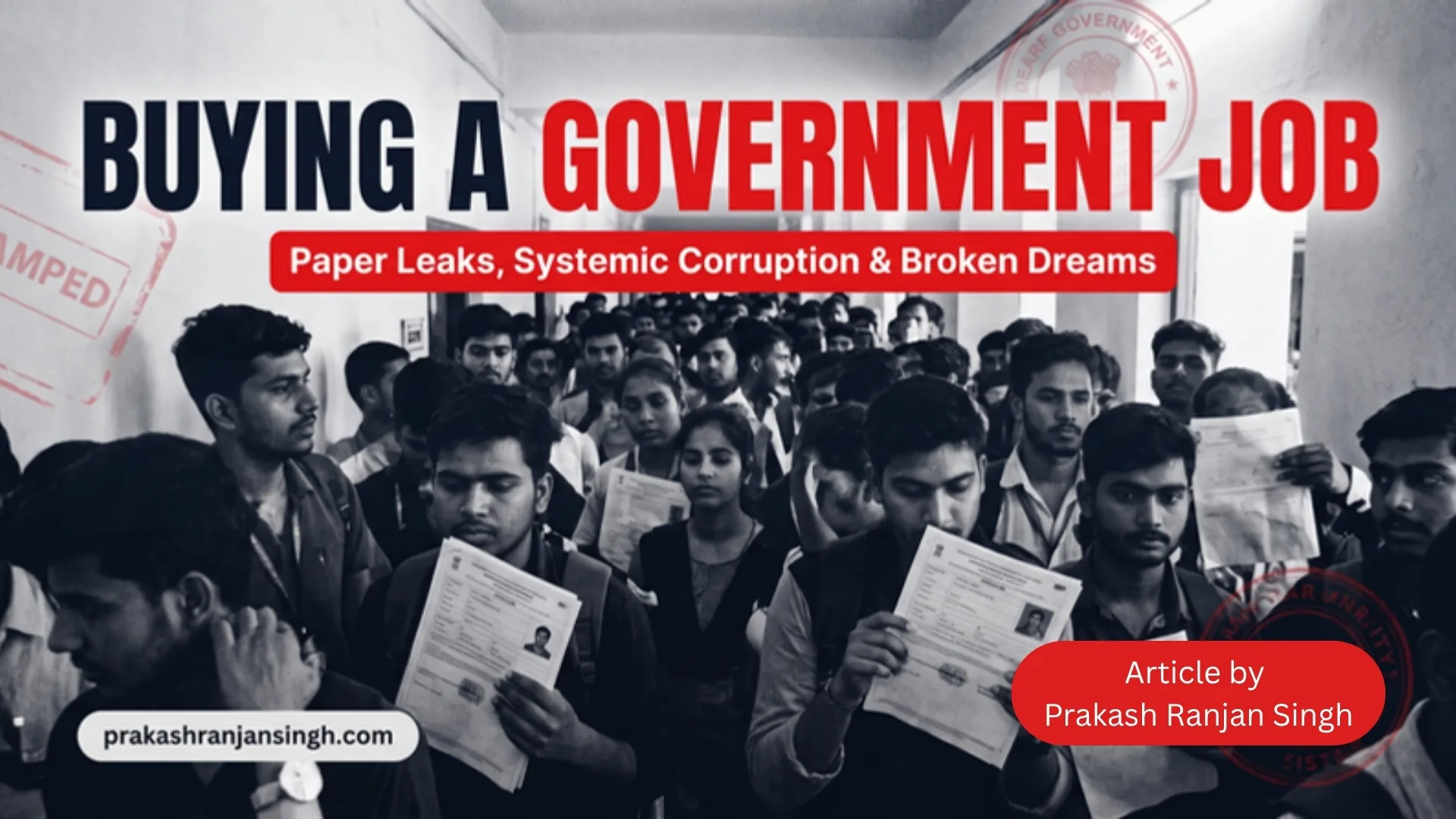
    Paper Leak: Buying a Government Job, Corruption Fueling Further Corruption

    Quick summary: When government jobs are bought instead of earned, the damage doesn’t stop at unfair selection — it can turn public service itself into a scheme to recover the bribe, making corruption self-perpetuating. Paper leaks and recruitment fraud deserve the strictest punishment because they threaten the moral foundation of the Republic, not just one exam.

    Gavel and Indian rupee notes symbolizing corruption in government job recruitment

     “If someone spends ₹1 crore to get a government job, will they spend the next 30 years serving the nation… or recovering their investment?”

    This is an uncomfortable question.

    Why Are India’s Youth Protesting?

    Across the country, thousands of young people are protesting against paper leaks and recruitment irregularities. Their anger is not just about one examination—it is about a growing fear that honesty is losing to money and influence.

    If recruitment can be manipulated, the damage doesn’t end on the day of selection.

    A deserving candidate loses a dream.

    A family loses hope.

    And the country may lose an honest public servant.

    The Danger We Rarely Discuss

    But there is another danger that we rarely discuss.

    If a person believes they have obtained a government post through an illegal payment, the temptation to recover that money can become enormous. Public service may gradually turn into personal profit. Every signature, every approval, every file, every public interaction can become an opportunity to “earn back” the investment.

    That is how corruption, if left unchecked, can become self-perpetuating.

    The cost is paid not only in money—but in delayed justice, poor public services, reduced trust in institutions, and lost opportunities for millions of honest citizens.

    What India’s Youth Deserve

    India’s youth are among the most talented in the world.

    They deserve examinations that reward hard work, not shortcuts… merit, not money… integrity, not influence.

    The fight against paper leaks is not just about protecting exams.

    It is about protecting the moral foundation of our Republic.

    One honest recruitment can change a family. One corrupt recruitment can affect thousands of families.

    Should Recruitment Fraud Carry the Strictest Punishment?

    Now the question is yours:

    Should recruitment fraud and paper leaks be treated as crimes against the future of the nation, with the strictest possible punishment for everyone involved?

    Comment “YES” if you believe every government job should be won only through merit. Share this post if you believe India’s youth deserve a fair chance.

    Related Reading

  • Understanding Gen Z: A Generation of Extraordinary Potential at a Crossroads

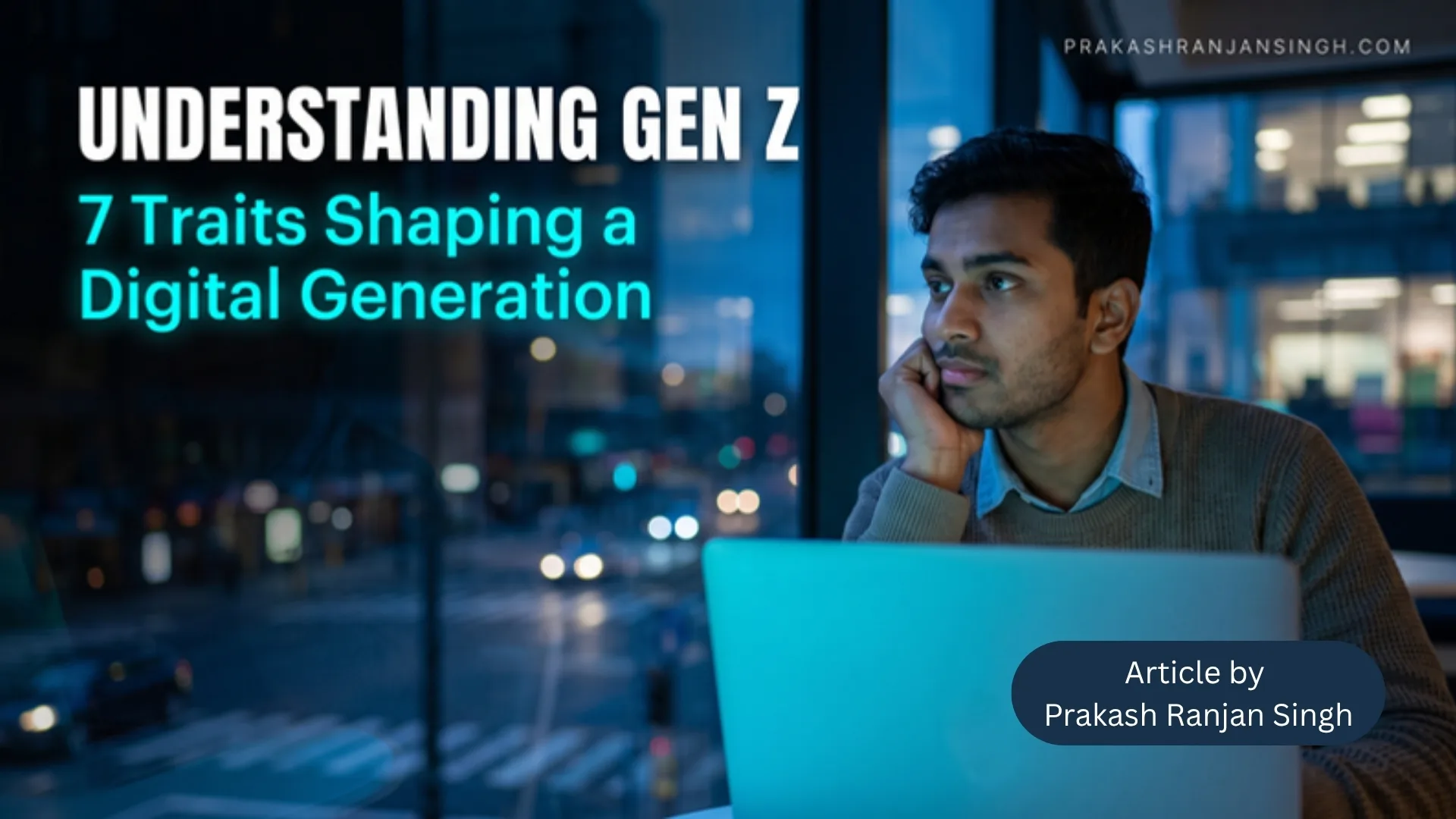
    Understanding Gen Z: A Generation of Extraordinary Potential at a Crossroads

    Understanding Gen Z: A Generation of Extraordinary Potential at a Crossroads

    Gen Z is the first generation to grow up entirely inside smartphones, social media, and AI, giving it remarkable creativity and adaptability alongside real risks: instant-gratification debt culture, algorithm-driven echo chambers, and viral-attention behaviour, and the path forward is balancing speed with patience and freedom with responsibility, not criticizing the generation itself.

    Every generation is shaped by the environment in which it grows. The Silent Generation experienced wars, Baby Boomers rebuilt societies, Generation X adapted to globalization, and Millennials witnessed the rise of the internet. Gen Z, however, is the first generation to grow up entirely in the age of smartphones, social media, artificial intelligence, and instant digital connectivity.

    This has created a generation with remarkable strengths\u2014but also unprecedented challenges.

    What Does a Digital-First Mindset Actually Look Like?

    For many young people today, life is closely connected with the digital world. Daily experiences are often converted into content for social media. Success is increasingly measured through likes, followers, comments, and viral reach.

    This has encouraged creativity and entrepreneurship. Many young creators have built successful careers through digital platforms. However, the constant pressure to remain visible can also create anxiety, comparison, and emotional exhaustion.

    How Has Instant Gratification Culture Changed Spending?

    Technology has made almost everything immediate\u2014food delivery, entertainment, shopping, transportation, and even credit.

    The “Buy Now, Pay Later” culture and easy digital loans have made spending easier than ever before. While these financial tools can be useful when used responsibly, many young consumers enter debt without fully understanding long-term financial consequences.

    Financial discipline, once learned through years of experience, is now often replaced by instant consumption.

    Why Is Speed Sometimes a Weakness, Not Just a Strength?

    Gen Z is fast, ambitious, and eager to achieve success early in life. This energy is one of its greatest strengths.

    Yet impatience can sometimes become a weakness. Career growth, financial success, relationships, and personal development all require time. When expectations are built around instant results, disappointment and frustration can grow quickly.

    Patience remains one of the most valuable life skills.

    How Does Gen Z Balance Freedom With Tradition?

    Gen Z values personal freedom, independence, and self-expression. They are more willing than previous generations to question outdated practices, challenge authority, and demand equality. These qualities are essential for a progressive society.

    At the same time, rejecting every tradition simply because it is old may also result in losing valuable cultural wisdom. Customs, family values, and community traditions often carry lessons developed over generations. The challenge is not choosing between tradition and modernity, but balancing both.

    Is Technology a Blessing or a Risk for This Generation?

    This generation is exceptionally technology-savvy. Artificial intelligence, digital platforms, automation, and global communication come naturally to them.

    However, technology also makes people vulnerable to misinformation, manipulation, fake news, emotional polarization, and algorithm-driven content. When algorithms repeatedly show only one viewpoint, individuals may unknowingly become trapped inside digital echo chambers, making independent thinking more difficult.

    What Has Virality Culture Done to Social Behaviour?

    The desire to become viral has created a culture where extreme behaviour often receives more attention than thoughtful discussion. Abusive language, online trolling, public showmanship, and controversial content frequently gain greater visibility than meaningful dialogue. Gradually, online popularity can become more important than personal character.

    What Psychological Challenges Come With This Lifestyle?

    Modern lifestyles have also introduced new mental health concerns. Many young people experience constant comparison with others, fear of missing out (FOMO), loneliness despite being constantly connected, sleep disorders due to excessive screen time, stress from continuous online engagement, reduced attention span, and emotional sensitivity to public criticism. Mental health has become as important as physical health.

    What Role Does Gen Z Play Politically and Socially?

    Young people today actively participate in social and political discussions. Social media allows movements to spread rapidly and gives every individual a voice. This has strengthened democratic participation.

    However, rapid emotional mobilization also creates risks. Viral misinformation, manipulated narratives, and coordinated online campaigns can influence public opinion before facts are verified. A responsible democracy requires informed citizens, not merely emotionally activated audiences.

    What Can Gen Z Learn From Previous Generations?

    One unintended consequence of rapid modernization is the growing distance between generations. Many young people rely more on internet influencers than on parents, teachers, grandparents, or experienced professionals.

    Experience cannot replace innovation, and innovation cannot replace experience. The greatest progress occurs when youthful energy combines with the wisdom of previous generations.

    How Can Society Help Build a Balanced Future?

    Instead of criticizing Gen Z, society should focus on guiding and empowering them. Educational institutions should strengthen financial literacy, digital literacy, emotional intelligence, critical thinking, and responsible use of artificial intelligence. Families should encourage open communication rather than generational conflict. Governments and policymakers should promote responsible digital ecosystems while protecting freedom of expression. Technology companies should recognize that algorithms influence behaviour and therefore carry social responsibility.

    Gen Z is not a lost generation. It is a generation living through one of the fastest technological transformations in human history.

    Its creativity, courage, adaptability, and entrepreneurial spirit can shape the future of India and the world.

    But every strength requires balance. Speed must be matched with patience. Freedom with responsibility. Technology with wisdom. Expression with respect. Innovation with experience.

    If these balances are achieved, Gen Z will not merely inherit the future\u2014it will redefine it.

    The real question is not whether Gen Z will change the world. The question is whether society can help this remarkable generation change the world without losing itself in the process.

    Related Reading

  • Beyond Aadhaar: Can Behavioural Intelligence Become India’s Greatest National Resource?

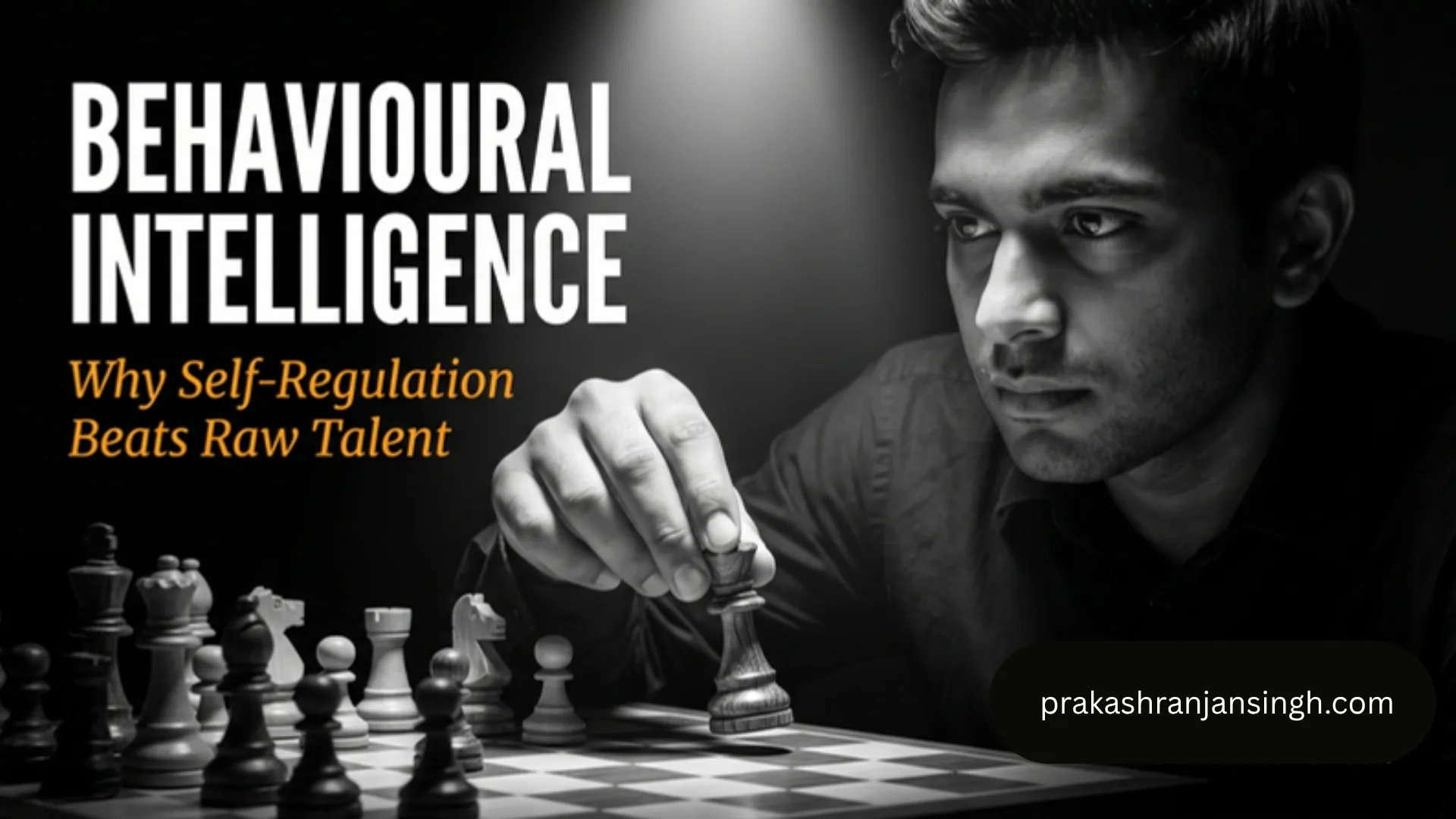
    Beyond Aadhaar: Can Behavioural Intelligence Become India’s Greatest National Resource?

    Beyond Aadhaar: Can Behavioural Intelligence Become India's Greatest National Resource?

    India’s biggest untapped resource for Vision 2047 isn’t minerals or land — it’s the behavioural potential of its people, visible during disasters and crises when ordinary citizens organise relief, calm tensions, and coordinate logistics, and identifying that talent responsibly means a voluntary civic-recognition platform with strong privacy safeguards, not more surveillance.

    India’s march towards Vision 2047 is often discussed in terms of economic growth, infrastructure, defence, digital transformation, and artificial intelligence. Yet one of the country’s most valuable resources remains largely unexplored—not minerals, not land, but the behavioural potential of its people.

    Today, governments maintain extensive databases containing identity, taxation, education, health, and welfare information. These systems help deliver public services more efficiently. However, they tell us who people are, not necessarily how they contribute to society.

    This raises an intriguing question: Can behavioural intelligence help governments and civil society identify leadership, community service, and organisational talent while fully respecting democratic rights and privacy?

    Why Is Every Public Movement a Living Behavioural Laboratory?

    Whenever a large gathering takes place—whether during disaster relief, a social campaign, a religious event, an election rally, or a public protest—we observe fascinating differences in human behaviour.

    Some people instinctively take responsibility and organise others. Some negotiate and calm tensions. Some excel at communication, while others quietly manage logistics, healthcare, food distribution, or crowd discipline.

    Behavioural science has long recognised that people display different personality traits, motivations, and decision-making styles under pressure. Modern psychology, organisational behaviour, and leadership research all suggest that crisis situations often reveal qualities that routine office work may never expose.

    The COVID-19 pandemic, for example, showed countless ordinary citizens becoming extraordinary volunteers—arranging oxygen cylinders, delivering food, coordinating hospital beds, and supporting strangers through digital networks. Their contribution was rarely captured in any formal database, yet it demonstrated exceptional civic leadership.

    Can AI Detect Patterns Without Detecting Character?

    Recent advances in artificial intelligence, computer vision, natural language processing, and network analysis have made it possible to study large-scale behavioural patterns from lawfully collected data.

    AI may be able to identify indicators such as leadership and coordination, teamwork and cooperation, crisis response capability, communication skills, volunteer engagement, and organisational efficiency. These insights could help identify people interested in serving during disasters, public health campaigns, environmental initiatives, or local governance.

    However, AI has important limitations. It recognises patterns rather than intentions. A person’s behaviour in one emotionally charged event does not define their character or future conduct. Human behaviour is shaped by context, stress, relationships, and changing life circumstances. Behavioural data should therefore support human judgement—not replace it.

    What Would a National Talent Registry Actually Look Like?

    Instead of creating systems that monitor citizens indiscriminately, India could explore voluntary and transparent mechanisms for recognising civic talent.

    Imagine a national platform where citizens choose to showcase verified contributions such as disaster response, community service, mentoring, environmental work, or public problem-solving. Combined with education, professional experience, and demonstrated service, this could help governments and civil society identify capable volunteers and future leaders.

    Such an approach would encourage participation rather than suspicion and would reward contribution rather than conformity.

    What Can India Learn From Other Countries?

    Many countries already use behavioural insights in limited and carefully governed ways. The United Kingdom’s Behavioural Insights Team has used behavioural science to improve public policy, including tax compliance, health programmes, and public services. Governments around the world also analyse volunteer participation during emergencies to improve disaster preparedness.

    These examples show that behavioural science can strengthen governance when used transparently and with appropriate safeguards. They also demonstrate that public trust is essential: citizens are more willing to participate when they understand the purpose of data collection and know that their rights are protected.

    What Ethical Line Must India Never Cross?

    The promise of behavioural intelligence must be balanced by constitutional values.

    Peaceful participation in protests, expressing political opinions, or supporting a social cause are legitimate democratic activities. These should never, by themselves, be used to label citizens as “risky” or “undesirable.”

    Any assessment of unlawful behaviour must rely on credible evidence, due process, and the rule of law—not on political beliefs or lawful civic participation.

    Strong safeguards are therefore essential: transparency about what data is collected, independent oversight, robust privacy and data protection, the ability for citizens to access and correct records, protection against discrimination, and strict legal accountability for misuse. Without these safeguards, behavioural analytics could undermine the very democracy it aims to strengthen.

    India has one of the world’s youngest populations. Yet much of its civic talent remains invisible because there is no systematic way to recognise it.

    The future of governance may not lie in building larger databases, but in creating smarter, fairer systems that connect willing citizens with meaningful opportunities to serve their communities.

    The goal should not be to classify people as “good” or “bad.” Instead, it should be to identify strengths, encourage public participation, and ensure that talent from every village, town, and city has an opportunity to contribute to nation-building.

    As India advances towards Vision 2047, artificial intelligence and behavioural science will undoubtedly influence public administration. The real challenge is not whether these technologies can analyse human behaviour—it is whether they can be governed in a way that strengthens democracy, protects privacy, and respects constitutional freedoms.

    India’s greatest national asset is not merely its population, but the potential within its people. If behavioural intelligence is developed with transparency, accountability, and public trust, it could become a powerful tool for recognising civic leadership and strengthening the partnership between citizens and the state.

    The future of governance should not be about watching citizens more closely. It should be about empowering them to contribute more meaningfully.

    Related Reading

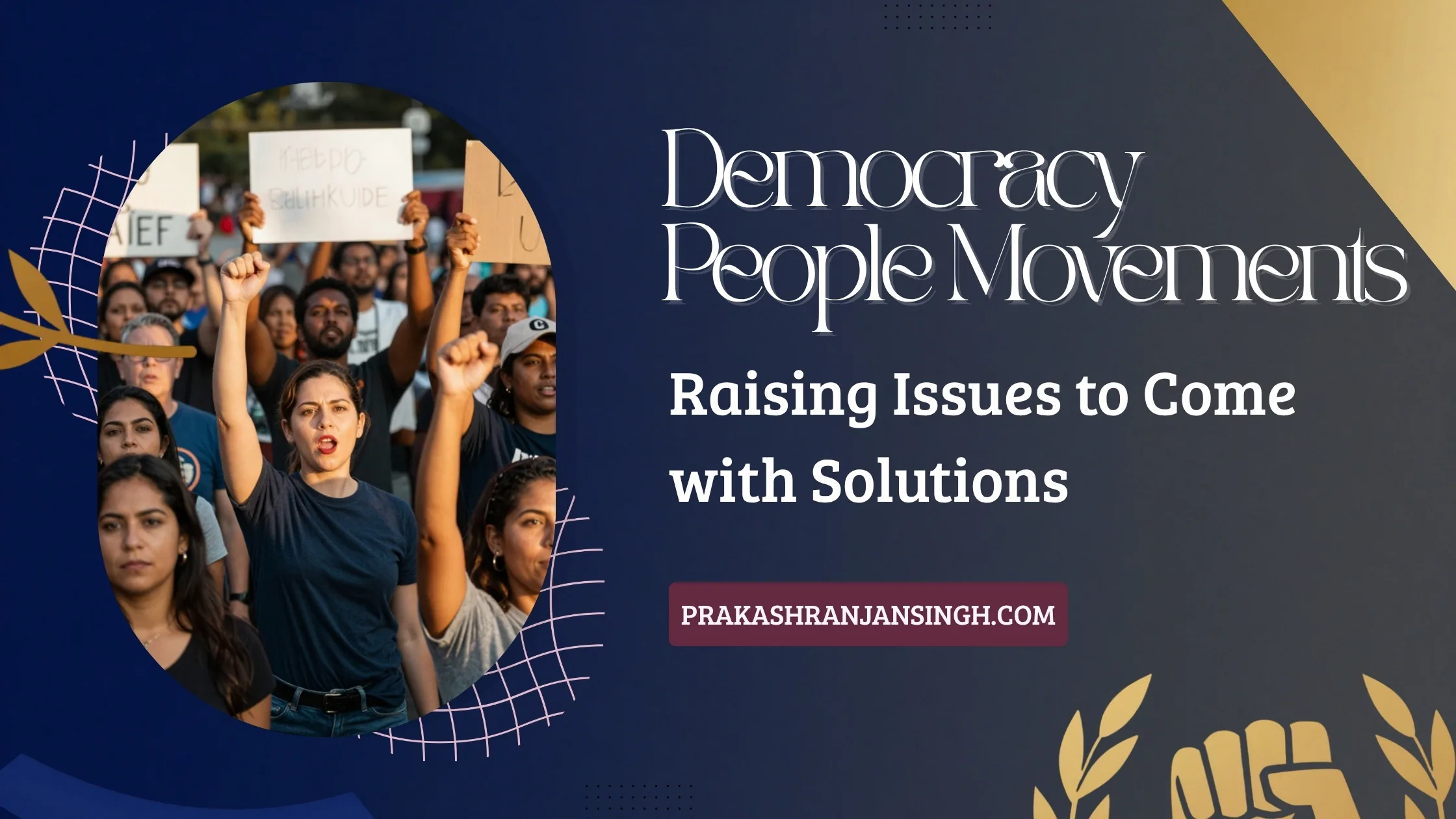
  • Democracy, People Movements, Raising Issues to Come with Solutions

    Democracy, People Movements, Raising Issues to Come with Solutions

    From Raising Issues to Creating Solutions: How India's Youth Movements Can Strengthen Democracy

    India’s public movements are strongest at raising issues but often stop short of proposing solutions, and youth-led protests over exam reforms and accountability show what’s possible when energy turns constructive: AI-assisted policy analysis, expert panels, and pilot projects can turn a protest into a genuine democratic problem-solving lab.

    India is the world’s largest democracy, home to more than 1.4 billion people, extraordinary cultural diversity, and one of the youngest populations on Earth. Such a vast nation naturally faces challenges in education, employment, healthcare, agriculture, infrastructure, governance, and environmental protection. In a democracy, it is both natural and healthy for citizens to raise these issues through peaceful public movements.

    Recent youth-led movements, including protests over examination reforms and youth concerns, have demonstrated that organized public participation can bring national attention to important issues and encourage governments to respond. Reports indicate that such movements have focused on alleged examination irregularities, accountability, and reforms in the education system, prompting discussions and policy responses.

    Why Does India Need a More Solution-Oriented Democracy?

    Every protest begins with a problem, but lasting progress comes from solving that problem. Raising a voice is the first step; presenting workable solutions is the next.

    India possesses tremendous intellectual strength. Its engineers, scientists, entrepreneurs, students, researchers, civil servants, and innovators have repeatedly demonstrated their ability to solve complex challenges. Every public movement should therefore become a platform not only for criticism but also for innovation.

    For example, if students protest examination irregularities, the movement could simultaneously recommend stronger digital security for examinations, transparent recruitment and evaluation systems, independent monitoring mechanisms, AI-based fraud detection, faster grievance redressal systems, and time-bound accountability for officials. Such constructive proposals enable governments, experts, and citizens to work together toward meaningful reform.

    How Can Youth Become True Nation Builders?

    Nearly every major transformation in India’s history has been driven by young people. Today’s youth are educated, technologically connected, and creative. Their energy should be directed not only toward mobilization but also toward policy thinking, research, and community-led innovation.

    Imagine if every nationwide movement created a panel of subject experts, public consultation papers, draft policy recommendations, pilot projects, and citizen innovation competitions. The movement would then become a laboratory for democratic problem-solving rather than only a platform for expressing dissatisfaction.

    Can Technology Strengthen Democratic Participation?

    Modern technology allows millions of citizens to collaborate on solutions. Online surveys, public consultations, AI-assisted policy analysis, open-data platforms, and digital suggestion portals can help transform public opinion into practical recommendations.

    Instead of asking only, “What is wrong?”, citizens can also ask: What is the best solution? How much will it cost? How can it be implemented? Who will monitor it? How can success be measured? These questions make democratic participation more constructive.

    What Does Shared Responsibility Actually Look Like?

    Governments are responsible for governance, but citizens also share responsibility for nation-building. Constructive criticism, informed debate, peaceful protest, and practical suggestions together strengthen democratic institutions.

    Movements become more influential when they remain peaceful and constitutional, base their demands on facts and evidence, welcome dialogue, present practical alternatives, and encourage long-term institutional reforms.

    India’s future will not be determined only by the number of protests it witnesses, but by the number of solutions it creates. Public movements should continue to hold institutions accountable, while also becoming platforms for innovation, policy ideas, and constructive nation-building.

    If every movement evolves from “raising issues” to “creating solutions,” India’s immense talent and youthful energy can become a powerful force for democratic progress. A democracy is strongest not only when its citizens speak boldly, but also when they help design the path forward.

    Related Reading

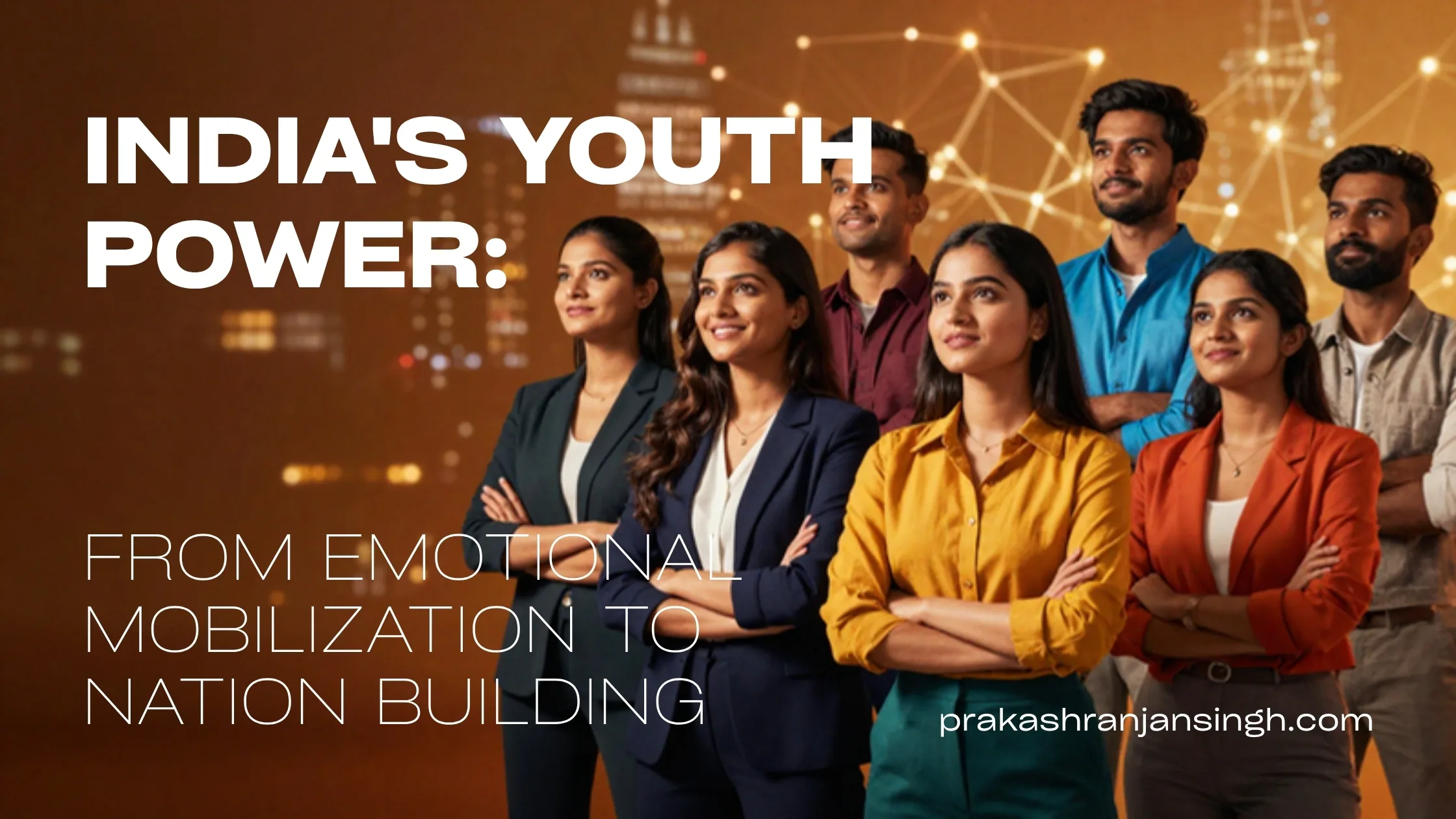
  • India’s Youth Power: From Emotional Mobilization to Nation Building

    India’s Youth Power: From Emotional Mobilization to Nation Building

    India's Youth Power: From Emotional Mobilization to Constructive Nation-Building

    India’s massive youth population is a genuine strength, but social media has made emotional mobilization spread faster than the harder work of building real solutions: complex issues get reduced to viral slogans, and turning youth energy into lasting national progress needs civic education, critical thinking, and constructive engagement, not just louder outrage.

    India possesses one of the world’s largest youth populations. This demographic advantage can become the nation’s greatest strength if it is guided toward innovation, productivity, and responsible citizenship. However, in the digital age, a growing concern is that many public issues generate rapid emotional mobilization but comparatively less attention is given to developing practical, long-term solutions.

    Social media has transformed the way ideas spread. A message, slogan, or campaign can reach millions within hours. While this has empowered citizens to raise legitimate concerns and hold institutions accountable, it has also created an environment where emotions often travel faster than facts. Complex constitutional, social, economic, and administrative issues may be reduced to simple narratives that encourage instant reactions rather than thoughtful analysis.

    Young people naturally possess energy, idealism, and the desire to bring change. These are valuable qualities for a democracy. However, when enthusiasm is not accompanied by critical thinking, constitutional understanding, and evidence-based reasoning, there is a risk that individuals may support causes without fully understanding their long-term consequences. Responsible civic participation requires both passion and informed judgment.

    What Factors Are Driving This Pattern?

    Several factors contribute to this challenge.

    Psychological Factors: Human beings are naturally influenced by group identity, emotional appeals, and the desire for recognition. In the age of social media, the pursuit of popularity, instant validation, and viral visibility can sometimes overshadow the harder work of research, dialogue, and constructive problem-solving. Algorithms often amplify emotionally charged content, making it easier for outrage to spread than balanced discussion.

    Social Factors: Increasing digital engagement has reduced opportunities for meaningful face-to-face discussions in many communities. Families and educational institutions may have fewer opportunities to teach young people how to respectfully debate differing viewpoints, verify information, and appreciate constitutional values. A society that encourages questioning, listening, and critical thinking strengthens democracy.

    Political Factors: Political participation is essential in a democracy, and young people have an important role to play. At the same time, all political actors, regardless of ideology, should encourage informed participation rather than emotional polarization. Sustainable reforms emerge through democratic dialogue, constitutional processes, and policy discussions rather than confrontation alone.

    Financial Factors: Economic uncertainty, unemployment, and rising aspirations can create frustration among youth. Such circumstances may increase the appeal of emotionally powerful narratives that promise quick solutions. Expanding opportunities for quality education, entrepreneurship, skill development, and employment can help channel youthful energy into productive nation-building.

    Behavioral Factors: Modern digital platforms reward speed, short attention spans, and immediate reactions. This can discourage patience, deep reading, and careful analysis of complex public issues. Developing habits of fact-checking, respectful debate, and evidence-based decision-making is increasingly important.

    External Influences: In today’s interconnected world, information campaigns can originate from many sources, including foreign actors, commercial interests, or coordinated online networks. These may attempt to influence public opinion or deepen social divisions. Strengthening digital literacy, transparency, and independent verification can help citizens distinguish reliable information from manipulation.

    Whose Job Is It to Fix This?

    The responsibility for addressing these challenges does not lie with youth alone. Parents should encourage curiosity, ethics, and independent thinking. Schools and universities should strengthen civic education, constitutional literacy, and critical reasoning. Media organizations should prioritize accuracy and responsible journalism. Political leaders should promote constructive dialogue and discourage misinformation. Civil society should create platforms where young people participate in solving problems instead of merely reacting to them.

    India’s constitutional institutions are designed to evolve through democratic debate, accountability, and lawful reform. Constructive criticism and peaceful civic engagement are vital parts of democracy, but they are most effective when accompanied by well-researched solutions and respect for constitutional processes.

    The future of India will depend not only on the size of its youth population but also on the quality of its thinking. Every young citizen should aspire not merely to become a voice in a crowd but to become a creator of ideas, a solver of problems, and a responsible guardian of democratic values.

    India’s youth possess extraordinary energy, intelligence, and creativity. If these strengths are guided by knowledge, discipline, innovation, and a commitment to national development, they can transform every challenge into an opportunity. The true measure of patriotism is not simply raising slogans but contributing ideas, building institutions, respecting democratic values, and working together to create a stronger, more prosperous, and more united India.

    Related Reading

  • Parenting: The Greatest Art of Nation Building

    Parenting: The Greatest Art of Nation Building

    Parenting: The Greatest Art of Nation Building

    A nation’s future takes shape long before schools or workplaces — it starts inside homes, where parents become a child’s first teachers: research shows that a child’s personality, emotional intelligence, and moral values are heavily shaped by the quality of parenting, making strong, balanced parenting an investment in the nation itself, not just the family.

    A nation’s future is not shaped only in its schools, universities, or workplaces. It is shaped much earlier—inside homes, where parents become the first teachers, mentors, and role models. Parenting is perhaps the most important art in human life. It demands patience, emotional maturity, self-control, consistency, and unconditional love. Every parent has the power to influence not only the future of their child but also the future of society.

    Scientific research consistently shows that a child’s personality, emotional intelligence, confidence, and moral values are greatly influenced by the quality of parenting received during childhood. Therefore, better parenting is not merely a family responsibility; it is an investment in building a stronger and more compassionate nation.

    Why Should Parents Treat Every Child as an Individual?

    One of the first responsibilities of parents is to understand their children as unique individuals. Every child has different abilities, interests, fears, and emotional needs. Instead of comparing children with others, parents should discover their strengths and encourage them to develop their own potential. Acceptance creates confidence, while constant comparison creates insecurity.

    Children inevitably make mistakes as they grow. Mistakes should be treated as opportunities for learning rather than reasons for humiliation. Parents who respond with patience and guidance instead of anger help their children develop responsibility and resilience. Sharing personal experiences of success, failure, and life’s lessons often has a much greater impact than punishment or lengthy lectures.

    Why Does Emotional Safety Matter So Much?

    Perhaps the greatest gift parents can offer is emotional safety. Children should feel that they can discuss any issue—whether related to studies, friendships, relationships, or personal failures—without fear of rejection. When children fear harsh judgment, they begin hiding important aspects of their lives. Open communication builds trust, and trust becomes the strongest protection against harmful influences.

    How Has Modern Parenting Become More Difficult?

    Modern parenting has become more challenging than ever. Today’s children are exposed to social media, misinformation, unhealthy peer pressure, online gaming addiction, and extreme ideological influences. Many of these dangers silently shape their thinking and behavior. Parents cannot protect children simply by imposing restrictions; they must become active participants in their children’s lives, understand the digital world, and discuss its benefits and risks with honesty.

    Psychologists recommend an “authoritative parenting” style, which combines warmth with reasonable discipline. Children flourish when parents establish clear values and boundaries while also listening to their opinions and respecting their emotions. Excessive control may create rebellion, while complete freedom without guidance may create confusion. The healthiest environment balances love with responsibility.

    Do Children Learn More From Words or From Watching?

    Children learn far more from observation than from instructions. If parents demonstrate honesty, kindness, discipline, respect, gratitude, and empathy in their own lives, children naturally imitate these qualities. Character is not taught through speeches; it is transmitted through everyday actions.

    Quality time is another essential ingredient of successful parenting. Eating together, reading books, playing games, travelling, discussing current events, and simply listening without distractions strengthen emotional bonds. Even a short period of undivided attention each day can significantly improve a child’s emotional well-being.

    Parents should also nurture critical thinking rather than blind obedience. Encouraging children to ask questions, solve problems independently, and make age-appropriate decisions prepares them for the complexities of adult life. A confident child is less likely to be misled by negative influences.

    What About Children’s Mental Health?

    Another important aspect of parenting is protecting children’s mental health. Anxiety, loneliness, and academic pressure are becoming increasingly common. Parents should watch for changes in behavior, sleep, eating habits, or social interactions and seek professional support whenever necessary. Asking for help is a sign of wisdom, not weakness.

    Above all, children need unconditional love. They should know that while their behavior may sometimes require correction, their worth as individuals never depends on their achievements, examination results, or failures. Such unconditional acceptance builds self-esteem and emotional security that lasts a lifetime.

    Strong families create responsible citizens. Responsible citizens build ethical institutions. Ethical institutions build prosperous nations. Therefore, parenting is not merely about raising successful children—it is about creating compassionate human beings who contribute positively to society.

    If every parent practices patience instead of anger, communication instead of fear, guidance instead of punishment, and understanding instead of comparison, the next generation will grow into emotionally healthy, morally responsible, and socially aware citizens. In this way, the true art of parenting becomes the foundation of a great nation.

    Related Reading

  • Patriotism and Youth: India and China Comparative Analysis

    Patriotism and Youth: India and China Comparative Analysis

    Patriotism and Youth: India and China Comparative Analysis

    India’s youth have as much energy and ambition as China’s, but it’s often more scattered: China’s youth face early, disciplined career structure while India’s are pulled by social media, political noise, and inconsistent guidance, and the fix isn’t more slogans — it’s redirecting that same patriotism into daily skill-building and discipline.

    Across Asia, Gen Z is often described as ambitious, digitally connected, and under pressure. Yet the way this generation channels its energy can differ sharply between India and China because of social expectations, education systems, state influence, and the psychology of belonging.

    India’s youth often show strong enthusiasm, creativity, and a desire to contribute, but that energy can become scattered. China’s youth, by contrast, are more likely to be pushed into disciplined early career focus, though that focus can also come with stress, conformity, and fear of failure. The difference is not simply “motivation versus laziness”; it is shaped by the environment each generation grows up in.

    What Psychological Factors Explain the Difference?

    A major psychological factor is sense of structure. In China, many young people grow up in a system that strongly rewards academic performance, professional discipline, and measurable contribution. This creates a mindset where career planning begins early and social expectations are clear.

    In India, youth often face a more mixed environment. They are exposed to ambition and inspiration, but also to confusion, political noise, job insecurity, and inconsistent guidance. When a young person is constantly pulled by social media, short-term trends, exam pressure, and ideological conflicts, concentration weakens and long-term career thinking suffers.

    Another factor is identity formation. Young people want to feel that their efforts matter. In China, national identity is often linked with collective progress, so contribution to the economy can feel like contribution to the nation. In India, patriotic feeling is strong, but it is not always converted into daily professional discipline. Many young people love the country emotionally, but that emotion does not always turn into consistent work behavior.

    How Does Social Influence Shape Career Mindset?

    Career psychology is shaped by what a society praises. If success is measured through skill, productivity, and persistence, youth are more likely to work toward those goals. If attention is pulled toward status, entertainment, or political identity battles, youth may lose focus on capability-building.

    India has enormous youth potential, but many young people are vulnerable to external manipulation because they are searching for meaning and belonging. Political groups, influencers, and online narratives can easily capture attention by offering instant emotional reward. This can reduce patience for slow, steady career development.

    China’s youth also face pressure, but the pressure often works differently. The fear of consequences, competition, and social expectations can force early discipline. This may produce stronger economic output, but it can also create burnout, anxiety, and a narrowed sense of freedom.

    Is Career Development Itself a Form of Patriotism?

    Patriotism should not be limited to slogans, rallies, or emotional statements. Real patriotism means becoming useful to society through education, skill, honesty, discipline, and work.

    A nation grows when its youth do at least four things well: learn continuously, build employable skills, respect time and responsibility, and contribute to families, organizations, and the wider economy.

    In this sense, career development itself is a patriotic act. When a young person becomes skilled, productive, and ethical, the nation benefits directly. GDP growth, social stability, and innovation all depend on such daily discipline.

    What Does India Actually Need to Change?

    India does not lack youth energy. It needs direction, mentorship, and a stronger culture of productive pride. Families, schools, colleges, employers, religious institutions, media, and civil society all have a role in shaping this mindset.

    The message to Indian youth should be simple: your patriotism is proven not only by what you say, but by what you build. A nation cannot rise through anger alone; it rises through competence. A young Indian who studies seriously, works honestly, supports innovation, and resists manipulation is already serving the country in a powerful way.

    The future of India depends on whether its youth can transform passion into purpose. Patriotism becomes meaningful when it leads to personal discipline, career growth, and social contribution. If Indian youth learn to protect their attention, choose skill over distraction, and treat work as service, they can become the strongest force in national development.

    Related Reading

  • Cyber Fraud in the Digital Age: Awareness Is the Strongest Security

    Cyber Fraud in the Digital Age: Awareness Is the Strongest Security

    Cyber Fraud in the Digital Age: Awareness Is the Strongest Firewall

    Cyber criminals now target senior executives, not just ordinary citizens, by impersonating top management to trick finance teams into urgent money transfers: fraudsters exploit fear, greed, and urgency around every new government scheme or banking product, and the strongest defence is disciplined verification habits, not just better technology.

    The rapid digital transformation of our society has made banking, governance, healthcare, education, and business faster and more convenient than ever before. However, the same technology that has simplified our lives has also become a powerful weapon in the hands of cyber criminals. Every new digital service is quickly followed by new methods of fraud, making cybercrime one of the fastest-growing threats to individuals, businesses, and governments.

    Recently, incidents have emerged in which the mobile numbers or digital identities of senior corporate executives were compromised. Fraudsters impersonated top management and sent urgent messages to employees in finance and operations departments, instructing them to transfer large amounts of money. Such incidents demonstrate that cyber criminals no longer target only ordinary citizens; they are now attacking organizations at the highest levels.

    How Do Fraudsters Keep Adapting Their Tactics?

    The most dangerous aspect of cyber fraud is that criminals continuously change their modus operandi according to the prevailing situation. Whenever a new government scheme, banking product, investment opportunity, recruitment drive, or public campaign is launched, fraudsters immediately exploit it. They pose as bank officials offering loans or KYC updates, government employees conducting verification drives, police officers, judges, transport officials, income tax officers, telecom representatives, electricity department staff, courier executives, insurance agents, or customer care executives. Their objective is always the same—to gain trust, create urgency, and extract money or confidential information.

    These criminals understand human psychology. They know that fear, greed, curiosity, and urgency often overpower logic. A threatening phone call claiming that a bank account will be blocked, a message promising quick investment returns, a fake police investigation, or an attractive government benefit can make even educated people act without verification.

    What Can Individuals Actually Do to Protect Themselves?

    Fortunately, most cyber frauds can be prevented through awareness and disciplined digital behaviour. Every citizen should follow a few basic principles: never share OTPs, passwords, UPI PINs, CVV numbers, or internet banking credentials with anyone; verify every request for financial transactions through an independent phone call or official communication, even if it appears to come from a senior executive, colleague, or family member; do not click on unknown links or download applications sent through SMS, WhatsApp, email, or social media; always use official websites and verified mobile applications for banking and government services; be suspicious of messages creating panic or offering unrealistic rewards; enable two-factor authentication wherever available and keep devices updated with the latest security patches; and immediately report suspicious transactions to your bank and the national cybercrime helpline without delay.

    What Should Organizations Be Doing Differently?

    Organizations must also strengthen their internal controls. No financial transaction should be executed solely on the basis of a text message or phone call. High-value payments should require multiple approvals and independent verification. Employees should receive regular cyber-security training because technology alone cannot stop fraud if people remain unaware.

    The fight against cybercrime cannot be won by law enforcement agencies alone. It requires cooperation between governments, financial institutions, technology companies, educational institutions, businesses, and every responsible citizen. Cyber awareness should become as common as road safety awareness. Just as we teach children to avoid strangers, we must also teach them to recognize digital strangers.

    In the digital era, awareness is the strongest firewall. Fraudsters succeed only when people act without verifying facts. Every suspicious message should be questioned, every unexpected request should be verified, and every citizen should remember a simple rule: Trust is valuable, but verification is essential.

    A few moments of caution can prevent a lifetime of financial loss and emotional distress. As cyber criminals become smarter, our awareness must become even stronger. Digital progress will truly benefit society only when it is accompanied by digital responsibility and constant vigilance.

    Related Reading