Category: Psychology & Motivation

  • The Second Half of the Career: How Employees in Their 40s and 50s Can Survive and Thrive in the New Corporate World

    The Second Half of the Career: How Employees in Their 40s and 50s Can Survive and Thrive in the New Corporate World

    Age is not the real threat to a corporate career after 45—professional irrelevance is, and the employees who thrive in their second half are the ones who combine hard-won judgment with a genuine willingness to keep learning.

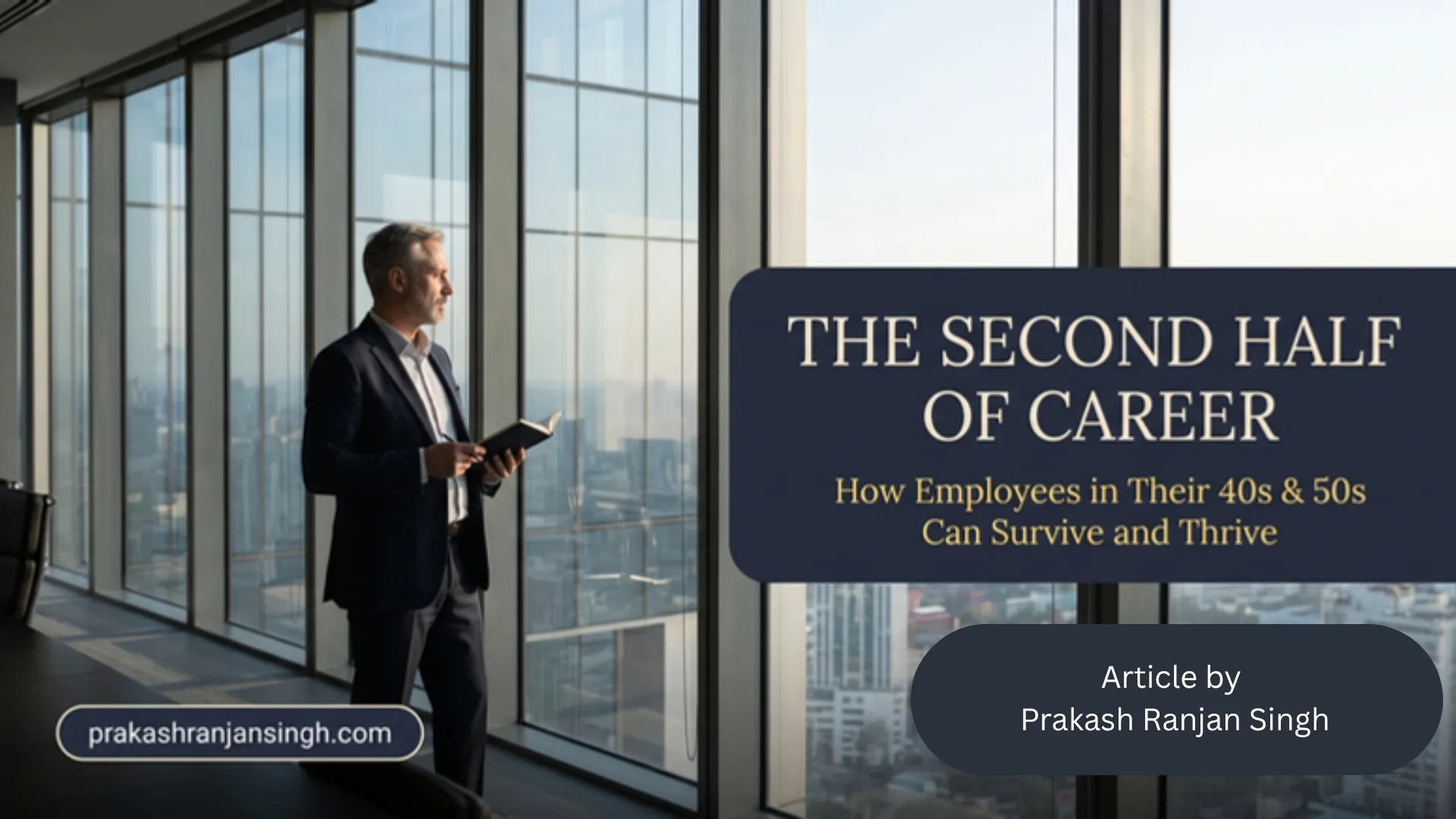
    Employees in their 40s and 50s navigating the second half of their corporate career

    For decades, corporate life followed a reasonably predictable pattern. Young employees entered an organisation, learned the basics, gradually gained experience, moved into senior roles, and eventually looked forward to a relatively stable final phase of their careers.

    That certainty is disappearing.

    Today, the corporate world is being reshaped by artificial intelligence, automation, digital transformation, global competition, cost optimisation, restructuring, and constantly changing business models. The fear of layoffs, slower salary growth, role redundancy, and unexpected organisational changes has affected employees of almost every age.

    But the challenge is not the same for everyone.

    A 25-year-old who loses a job may have several decades to rebuild a career. A professional in the late 40s or early 50s often faces a much more complex reality. They may have greater financial responsibilities, children pursuing higher education, ageing parents, loans, medical expenses, and a limited number of years before retirement. At the same time, they may suddenly find themselves competing with younger professionals who are digitally native, willing to work for lower compensation, and perceived to be more flexible.

    This is the second-half challenge of a corporate career.

    Yet, employees in their late 40s and early 50s possess one powerful advantage that should never be underestimated: experience. The real question is whether they can convert that experience into continuing relevance.

    Age Is Not the Real Threat. Irrelevance Is.

    The greatest danger for an experienced employee is not growing older. It is becoming professionally outdated.

    An employee who says, “I have been doing this work for 25 years, so I know everything,” may actually be moving towards professional danger. The corporate world does not reward experience merely because it is old. It rewards experience when that experience continues to solve today’s problems.

    This is why employees in the second half of their careers must change their mindset.

    The question should not be:

    “Can I compete with younger employees?”

    The better question is:

    “What can I offer that combines experience, judgment, relationships and new-age skills?”

    That combination can be extraordinarily powerful.

    The Different Survival Strategies at Different Stages of Life

    A young employee generally has one major advantage: time.

    They can change jobs, experiment with industries, learn new skills, take career risks, accept temporary setbacks, and start again. A young professional may lose one opportunity and still have twenty or thirty years to discover another.

    But an experienced employee cannot always follow the same strategy.

    By the late 40s or early 50s, career decisions must become more thoughtful. The focus should gradually shift from merely getting a job to becoming a person whose experience is difficult to replace.

    Young professionals may compete primarily on energy, speed, technology and availability.

    Experienced professionals must increasingly compete on:

    Judgment

    Reliability

    Decision-making

    Crisis management

    Institutional knowledge

    Professional relationships

    Customer understanding

    Leadership maturity

    Risk assessment

    The ability to mentor and develop others

    The smartest experienced employee is therefore not one who tries to become a 25-year-old again.

    It is one who combines the wisdom of experience with the adaptability of youth.

    Digital Transformation Has Changed the Rules

    The digital revolution has made the corporate world particularly challenging for employees who built their careers in a different technological era.

    Earlier, expertise was often acquired over years through files, meetings, physical processes, customer interactions, operational exposure, and institutional experience. Today, technology can change a process overnight.

    Artificial intelligence can draft reports. Automation can complete repetitive tasks. Data analytics can identify patterns. Digital platforms can reduce the need for multiple manual interventions.

    This creates anxiety among experienced employees.

    But technology should not automatically be viewed as the enemy.

    The biggest risk is not AI replacing every experienced employee. The greater risk is a younger employee using AI and digital tools to perform work faster, more efficiently and more accurately than someone who refuses to learn.

    Therefore, the survival formula for senior employees is simple:

    Do not compete against technology. Learn to work with it.

    You do not necessarily need to become a software engineer or an artificial intelligence expert. But you must understand how modern tools affect your work.

    Learn the technology relevant to your profession. Understand data. Become comfortable with digital platforms. Learn how AI can improve productivity. Keep yourself informed about cybersecurity, compliance, automation, digital communication and changing customer behaviour.

    The objective is not to know everything.

    The objective is to ensure that nobody can say:

    “This person belongs to the old system and cannot work in the new one.”

    Your Long Exposure to the Organisation Is a Major Asset

    One of the greatest strengths of experienced employees is their deep understanding of the organisation.

    They have seen policies change, systems evolve, crises emerge, customers behave differently, and management priorities shift. They often understand the history behind a process—something that may not be available in any SOP, manual or training presentation.

    They know:

    Why a particular process was introduced

    Where operational risks usually arise

    Which customers or stakeholders require special handling

    How previous crises were managed

    Which solutions worked and which failed

    Who possesses critical institutional knowledge

    How to navigate complex situations

    This is known as institutional memory, and it can be extremely valuable.

    However, experience becomes valuable only when it is used constructively.

    An experienced employee should never say:

    “We have always done it this way.”

    Instead, say:

    “I have seen similar situations before. Let us understand what has changed and combine our experience with the new system.”

    That single change in attitude can transform the perception of a senior employee.

    Never Become a Prisoner of Your Job Description

    In uncertain times, employees who define themselves too narrowly become vulnerable.

    “This is not my job.”

    “This belongs to another department.”

    “I am too senior for this work.”

    “I have never done this before.”

    Such statements can gradually create an image of resistance.

    Instead, employees should demonstrate willingness to learn and contribute beyond their traditional responsibilities.

    This does not mean accepting exploitation or unlimited workload without boundaries. It means developing functional versatility.

    The more useful you are across different processes, systems and teams, the more difficult it becomes to replace your contribution.

    The future may belong to specialists—but it will strongly favour specialists who also understand the bigger picture.

    Build Relationships Before You Need Them

    Technical competence alone rarely guarantees career security.

    Workplaces are human ecosystems. Projects are completed through cooperation. Opportunities often emerge through trust. Difficult periods are managed through communication.

    For experienced employees, interpersonal relationships become even more important.

    Maintain professional relationships with:

    Your immediate team

    Your reporting manager

    Senior leadership

    Colleagues in other departments

    Junior employees

    Customers and stakeholders

    Former colleagues and professional contacts

    A good professional network should not be built only after receiving a layoff letter.

    It should be built throughout your career.

    But there is another important point: relationships should never become political manipulation. Genuine professional relationships are built through respect, trust, helpfulness and credibility.

    People remember the employee who supported them during a difficult situation.

    They also remember the person who created unnecessary conflict.

    Keep Your Ego Under Control

    This may be one of the biggest challenges for experienced professionals.

    After spending twenty or twenty-five years building a career, it is natural to expect recognition. It can be emotionally difficult when a younger manager, colleague or technology expert questions an old method or asks you to learn something new.

    But the corporate world is changing rapidly.

    A younger boss does not reduce your experience.

    A new technology does not erase your contribution.

    Learning from a junior does not reduce your dignity.

    The mature employee understands that knowledge can come from any direction.

    The ability to say, “Please teach me how this works,” may be more valuable today than pretending to know everything.

    Ego closes the door to learning.

    Humility keeps the career alive.

    Make Your Experience Visible

    Many experienced employees make a common mistake: they work hard but assume everyone already knows their value.

    In the modern corporate environment, value must be demonstrated through outcomes.

    Document your achievements. Communicate completed work professionally. Highlight improvements, cost savings, risk reduction, process efficiency and successful problem-solving.

    Do not engage in self-promotion without substance. But do not remain invisible either.

    The ideal professional reputation is:

    “Whenever there is a difficult problem, this person can be trusted to solve it.”

    That reputation is far more powerful than simply being known as someone who has worked in the organisation for a long time.

    Become the Person Who Reduces Risk

    As employees gain experience, one of their greatest contributions is their ability to identify problems before they become disasters.

    A young employee may bring energy and fresh ideas.

    An experienced employee can often say:

    “This looks good, but let us also examine the operational, financial, regulatory and customer risks.”

    This ability becomes extremely valuable in industries such as banking, finance, healthcare, manufacturing, technology, operations and other regulated sectors.

    Learn from past mistakes—but do not repeatedly discuss them.

    Convert experience into foresight.

    That is how seniority becomes a strategic advantage.

    Workplace Discipline Never Becomes Old-Fashioned

    Technology changes. Management changes. Organisations change.

    But some qualities never lose their value.

    Punctuality.

    Integrity.

    Accountability.

    Confidentiality.

    Respectful behaviour.

    Following policies.

    Meeting commitments.

    Avoiding unnecessary mistakes.

    In an uncertain corporate environment, management needs employees who can be trusted.

    Your professional reputation is built slowly but can be damaged quickly.

    An experienced employee should therefore be exceptionally careful about workplace discipline. At this stage of a career, avoidable errors can become more damaging because expectations are higher.

    Experience should reflect in judgment and consistency.

    Learn Continuously—But Learn Strategically

    An employee in their 50s does not need to chase every new technology or certification.

    The goal is strategic learning.

    Identify the skills that are most relevant to your industry and future role.

    For example:

    AI tools relevant to your profession

    Data analysis and interpretation

    Digital workflow systems

    Cybersecurity awareness

    Regulatory and compliance developments

    Leadership and people management

    Communication and presentation

    Financial and business understanding

    Risk management

    Emerging industry trends

    A simple rule can help:

    Every year, learn at least one important skill that was not part of your professional toolkit five years ago.

    Continuous learning sends a powerful message—to your employer and, more importantly, to yourself.

    You may have experience from the past, but you are still preparing for the future.

    Control Emotions in a Changing Workplace

    Career uncertainty creates fear.

    Fear can lead to anger.

    Anger can lead to conflict.

    Conflict can damage relationships.

    For experienced employees, emotional control becomes a major professional strength.

    Do not react impulsively to criticism.

    Do not allow office politics to consume your energy.

    Do not spread rumours during restructuring.

    Do not panic over every organisational change.

    Observe. Analyse. Communicate. Respond.

    The person who remains calm when everyone else is emotionally disturbed often becomes a natural source of stability for the organisation.

    That stability itself can become a professional asset.

    Adaptability Is the New Form of Experience

    Earlier, experience was measured by the number of years spent doing something.

    Tomorrow, experience may increasingly be measured by how successfully you have adapted to change.

    The experienced employee who has worked with multiple technologies, handled different crises, adapted to new regulations, changed roles and continuously learned possesses a far more powerful profile than someone who performed the same task for thirty years.

    Therefore, do not fear role changes automatically.

    Do not resist new systems simply because the old system was comfortable.

    Do not reject change before understanding it.

    Adaptability does not mean agreeing with every decision. It means remaining capable of functioning effectively even when circumstances change.

    Understand Your Rights—but Also Understand Your Responsibilities

    Every employee should have basic knowledge of employment terms, contracts, notice periods, leave entitlements, severance provisions and applicable labour laws.

    This knowledge becomes particularly important during restructuring or job loss.

    However, legal awareness should not create a permanent attitude of confrontation.

    The ideal approach is balance.

    Know your rights.

    Fulfil your responsibilities.

    Maintain documentation.

    Read official communications carefully.

    Seek professional advice when necessary.

    In moments of uncertainty, knowledge is often the difference between informed decision-making and emotional panic.

    Prepare for the Worst Without Living in Fear

    One of the greatest mistakes employees make is assuming that a long career automatically guarantees a safe future.

    Career security should be supported by financial security.

    Employees in their late 40s and 50s should be particularly conscious of:

    Maintaining an emergency fund

    Reducing unnecessary debt

    Avoiding lifestyle inflation

    Protecting essential insurance coverage

    Reviewing investments

    Keeping an updated résumé

    Maintaining professional contacts

    Developing skills that can create alternative opportunities

    This is not pessimism.

    It is preparedness.

    The best time to prepare for an unexpected career disruption is before it happens.

    The Final Advantage of Experience: Wisdom

    Youth brings energy.

    Technology brings speed.

    Experience brings perspective.

    A person who has spent decades working has probably experienced success, failure, difficult managers, challenging customers, organisational crises, changing systems and professional disappointments.

    These experiences create something that cannot easily be downloaded from the internet or generated by a machine:

    judgment.

    The future corporate world will need people who can not only process information but also understand context.

    Who can not only identify a problem but anticipate its consequences.

    Who can not only use AI but question its output.

    Who can not only follow a process but understand when an unusual situation requires human judgment.

    This is where experienced employees can create their greatest value.

    The New Formula for the Second Half of a Career

    The corporate survival strategy for employees in their late 40s and 50s can be expressed simply:

    Experience + Digital Skills + Adaptability + Emotional Intelligence + Professional Relationships + Discipline = Continued Relevance

    The world may increasingly value technology, but technology alone cannot replace trust, maturity, judgment, leadership and human understanding.

    The challenge for experienced employees is not to prove that the past was better.

    It is to prove that their experience remains valuable in the future.

    Conclusion: Do Not Compete With Youth. Combine Youthful Learning With Mature Experience.

    The corporate journey after 45 is not necessarily the beginning of decline.

    It can become the most valuable phase of a career.

    But only for those willing to evolve.

    The future belongs neither exclusively to the young nor exclusively to the experienced. It will belong to those who remain relevant.

    Young employees must learn from experience.

    Experienced employees must learn from change.

    The most powerful professionals will be those who combine both worlds.

    For employees in their late 40s and early 50s, the message is clear: do not allow your age to define your professional future. Allow your willingness to learn, adapt and contribute to define it.

    Your years of experience are not a burden.

    They are an asset.

    But like every asset, they must be continuously upgraded.

    In the new corporate world, the goal is no longer simply to work until retirement. The goal is to remain employable, valuable and respected until the very last day of your career—and perhaps beyond.

    Related Reading

  • The Fire Inside Gen Z: How Decades of Change Created an Impatient Generation

    The Fire Inside Gen Z: How Decades of Change Created an Impatient Generation

    Today’s young generation isn’t inherently impatient or entitled—it’s the product of an environment that taught speed, comparison, and instant results at every turn, and understanding that is the first step to actually helping them.

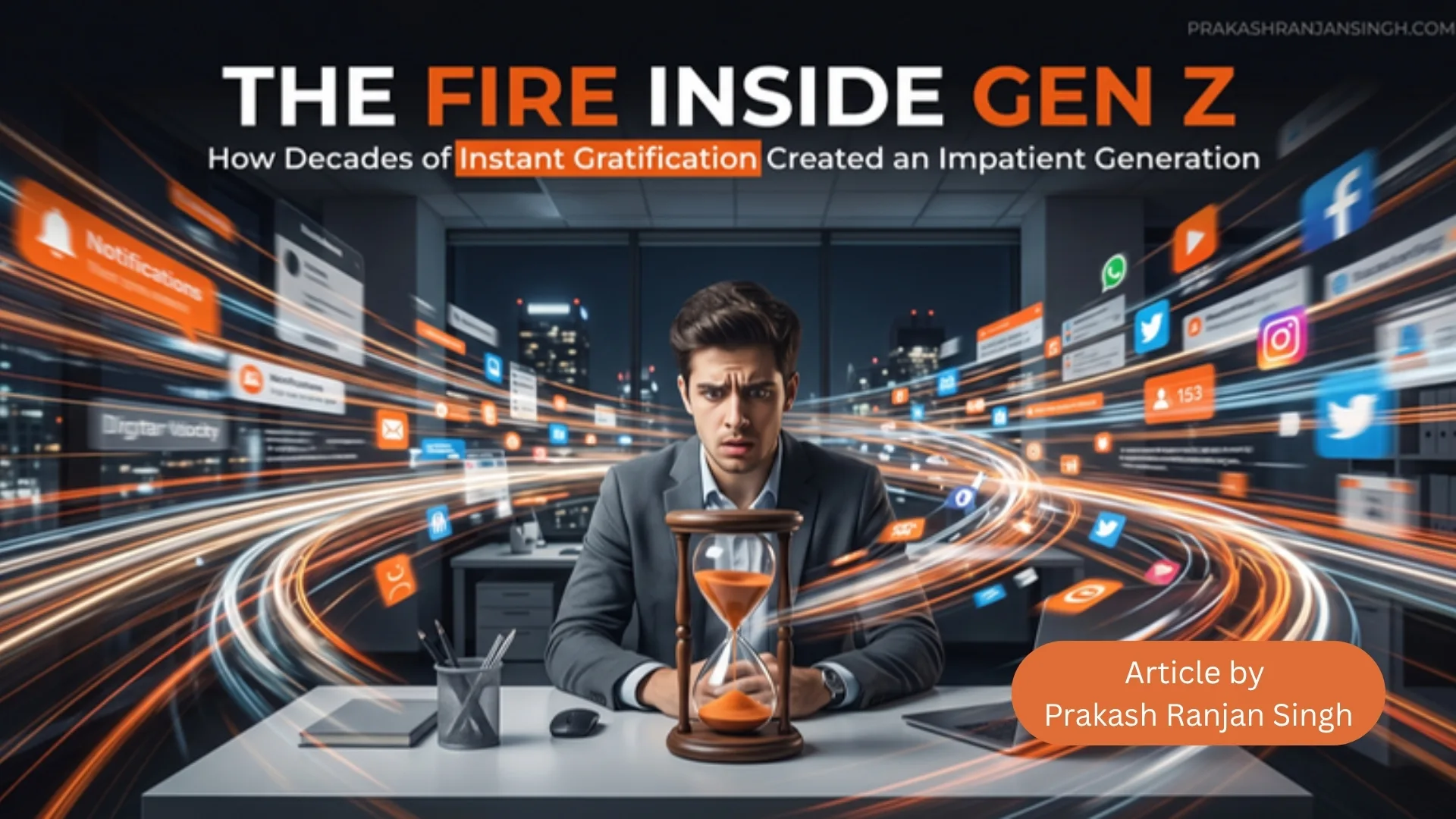
    The fire inside Gen Z and how decades of change shaped an impatient generation

    There is a growing habit of describing today’s young generation with words such as impatient, intolerant, restless, rebellious, selfish, distracted and dissatisfied.

    But perhaps we are asking the wrong question.

    Instead of asking, “What is wrong with Gen Z?”, perhaps we should ask:

    “What kind of society did we create for Gen Z and Gen Alpha to grow up in?”

    Every generation is a product of its environment.

    The generation that grew up during scarcity developed patience.

    The generation that witnessed economic liberalisation developed ambition.

    The generation that grew up with television developed aspiration.

    The generation that grew up with smartphones developed instant access.

    And the generation growing up with artificial intelligence is now discovering something even more unsettling:

    Even knowledge, skills and jobs are no longer guaranteed to provide security.

    The “fire” inside today’s young generation did not appear suddenly. It has been accumulating for decades.

    It is a mixture of aspiration, comparison, economic insecurity, technological disruption, political polarisation, family transformation, educational pressure, social-media exposure and a deep desire for freedom and recognition.

    And if we want to understand today’s young people, we must understand the world we handed over to them.

    The Generation Born Into Expectations

    Previous generations often grew up with limited expectations.

    A middle-class child was told:

    “Study well.”

    “Get a job.”

    “Build a house.”

    “Raise a family.”

    “Save money.”

    “Live honestly.”

    The formula was relatively simple.

    Today’s child receives a completely different message.

    From childhood, he sees billionaires, influencers, celebrities, entrepreneurs, luxury cars, foreign universities, expensive holidays and seemingly perfect lives on a smartphone.

    The message is no longer merely:

    “Work hard and build a good life.”

    It has become:

    “Become successful, become famous, become rich and do it quickly.”

    That is a massive psychological transformation.

    The young person is not comparing himself with his neighbour anymore.

    He is comparing himself with the entire world.

    Liberalisation Opened the Door—And Also Multiplied Desire

    India’s economic transformation since the 1990s created enormous opportunities.

    Consumer choice expanded.

    Private-sector employment grew.

    Television and advertising transformed aspirations.

    Global brands entered Indian homes.

    Information became more accessible.

    The middle class expanded.

    Millions of Indians rightly began dreaming bigger.

    This was a tremendous achievement.

    But every expansion of opportunity also expands expectations.

    A young person who sees possibilities everywhere becomes less willing to accept limitations.

    The previous generation might have considered a modest government or private-sector job a success.

    The new generation asks:

    “Why should I settle?”

    That question can produce entrepreneurship and innovation.

    But it can also produce frustration when reality does not match expectation.

    Why Are Degrees Being Created Faster Than Opportunities?

    For decades, Indian society promoted one powerful formula:

    Education = secure career = successful life.

    Parents invested enormous amounts in education.

    Children competed in examinations.

    Degrees multiplied.

    Engineering, management, commerce, medicine and numerous professional courses became aspirational pathways.

    But the economy could not always create high-quality jobs at the same speed as educational aspirations.

    This produced an uncomfortable generation:

    Highly educated, digitally connected and ambitious—but often uncertain about employment.

    The latest official PLFS data illustrates why employment remains an important part of the youth story. In the October–December 2025 quarter, the current-weekly-status unemployment rate for 15–29-year-olds was 14.3% nationally, with the urban rate at 18.0%.

    These figures should not be used to label an entire generation as unemployed. Most young Indians work, study, build businesses and contribute enormously to society.

    But they do explain part of the psychological pressure.

    When society tells a young person:

    “You have a degree, therefore you should succeed,”

    but the labour market responds:

    “There are limited opportunities,”

    frustration is inevitable.

    How Did Social Media Make Comparison Continuous?

    The smartphone changed the psychology of an entire generation.

    Earlier, a young person could compare himself with perhaps 20 people around him.

    Today he can compare himself with millions.

    Instagram shows success.

    YouTube shows wealth.

    LinkedIn shows professional achievements.

    Dating platforms show endless choices.

    Short-video platforms provide instant entertainment.

    News feeds provide continuous outrage.

    Algorithms learn what makes people react—and then provide more of it.

    India’s adolescents are already deeply connected to this digital environment. UNICEF reports that 89.1% of adolescents aged 14–16 have a smartphone at home, while 76% primarily use it for social media and 57% for educational purposes; its 2024 U-Report survey found 40% of young people surveyed spent more than four hours online daily.

    This does not mean social media is inherently harmful.

    It can educate, connect, empower and create opportunities.

    But it has fundamentally changed the speed of human psychology.

    Earlier:

    Desire → effort → achievement.

    Now:

    Desire → click → instant gratification.

    The brain begins expecting immediate results.

    That expectation does not disappear when the young person enters the real world.

    Unfortunately, careers don’t work like Instagram.

    Relationships don’t work like WhatsApp.

    Businesses don’t work like YouTube.

    Wealth doesn’t work like a viral reel.

    And governments cannot deliver prosperity through a notification.

    What Is the Real Cost of Instant Gratification?

    A young person can order food in minutes.

    Get a cab in minutes.

    Transfer money instantly.

    Watch any movie immediately.

    Speak to someone across the world instantly.

    Use AI to generate an essay instantly.

    Search for an answer instantly.

    This is extraordinary technological progress.

    But it creates a psychological problem:

    The world has become faster than human emotional development.

    A young person may therefore struggle to understand why:

    a career takes years,

    wealth takes decades,

    trust takes time,

    relationships require compromise,

    skills require practice,

    businesses take repeated failures,

    institutions move slowly.

    The technology teaches speed.

    Life teaches patience.

    The conflict between these two realities creates frustration.

    How Has the Indian Family Structure Changed?

    India’s traditional joint-family structure provided something modern society often struggles to reproduce:

    a psychological safety net.

    Grandparents were around.

    Uncles and aunts were accessible.

    Children grew up among cousins.

    Problems were shared.

    Responsibilities were distributed.

    Elders provided perspective.

    Modernisation, urbanisation and migration gradually weakened many of these structures.

    The nuclear family brought privacy and independence.

    But independence can sometimes become isolation.

    A young person today may have hundreds of online contacts and very few people with whom he can genuinely share his fears.

    UNICEF’s mapping of child and adolescent mental-health services in India highlights the treatment gap and the tendency for adolescent distress to be dismissed as simply a normal part of growing up.

    That is an important warning.

    A restless young person does not always need a lecture.

    Sometimes he needs someone who will listen.

    How Did Parents Become Part of the Pressure System?

    Ironically, many parents who want the best for their children may unintentionally contribute to their frustration.

    “Get good marks.”

    “Get admission into a good college.”

    “Get a high-paying job.”

    “Buy a house.”

    “Get married.”

    “Settle down.”

    The child grows up believing that life is a sequence of targets.

    Failure at one target feels like failure of the entire self.

    And social media adds another layer:

    “Why is everyone else ahead of me?”

    The result is an increasingly competitive childhood followed by an increasingly uncertain adulthood.

    How Has the Political Environment Shaped Young Minds?

    Today’s young generation has grown up in an environment of unprecedented political communication.

    Political parties no longer communicate only through rallies, newspapers and television.

    They communicate directly through smartphones.

    Every political disagreement can become a digital battle.

    Every election becomes an emotional event.

    Every issue can be converted into a viral narrative.

    Every group can create its own information ecosystem.

    Young people therefore encounter politics not merely as policy.

    They encounter politics as identity.

    This can produce political awareness—which is good.

    But it can also produce intolerance.

    If politics becomes part of personal identity, disagreement starts feeling like personal insult.

    The young person doesn’t merely say:

    “I disagree with you.”

    He begins saying:

    “You are against us.”

    That is how political polarisation enters everyday relationships.

    How Has the Economy Quietly Damaged Patience?

    There is another major factor that cannot be ignored:

    economic insecurity.

    Housing is expensive.

    Education is expensive.

    Healthcare is expensive.

    Urban living is expensive.

    Lifestyle expectations have increased.

    Job security has declined in many sectors.

    Technology is transforming occupations.

    And credit has become easily available.

    The young person therefore faces a strange contradiction:

    He has more access to consumption than previous generations—but often less certainty about long-term financial security.

    Credit cards, personal loans, BNPL and digital lending can bridge the gap temporarily.

    But debt converts future income into present consumption.

    When employment becomes uncertain, the psychological pressure becomes much greater.

    A young person with no debt can tolerate a career setback differently from a young person with multiple EMIs.

    Did Gen Z Simply Inherit Previous Generations’ Consequences?

    This is perhaps the most uncomfortable truth.

    We cannot blame Gen Z entirely for the world it inhabits.

    Previous generations created:

    intense academic competition,

    exam-centric education,

    status-driven career choices,

    rapid urbanisation,

    environmental degradation,

    political polarisation,

    consumer culture,

    excessive dependence on technology,

    weakening community structures,

    easy consumer credit,

    enormous inequality of opportunity.

    Now we sometimes look at young people and complain:

    “Why are they so impatient?”

    But we taught them to live in an impatient world.

    We told them:

    Study faster.

    Earn faster.

    Buy faster.

    Grow faster.

    Become successful faster.

    And then we ask:

    “Why can’t you wait?”

    Will Gen Alpha Face an Even Greater Shock?

    Gen Alpha is growing up in an environment where artificial intelligence is becoming an ordinary companion.

    They may have AI tutors.

    AI assistants.

    AI-generated entertainment.

    AI-powered games.

    AI-designed content.

    AI-supported education.

    And eventually, increasingly automated workplaces.

    This generation may ask an even more fundamental question:

    “If machines can do so much, what exactly is my value?”

    That question could become one of the defining psychological questions of the next decade.

    Education therefore cannot remain merely about memorising information.

    The future requires:

    judgment, creativity, emotional intelligence, communication, ethics, collaboration, adaptability and the ability to ask better questions.

    What’s Extraordinary About This Generation?

    It would be unfair to portray Gen Z merely as angry or impatient.

    This generation also possesses remarkable strengths.

    They are:

    digitally native.

    globally connected.

    more willing to question authority.

    comfortable discussing mental health.

    entrepreneurial.

    more exposed to different cultures.

    less willing to blindly accept outdated social rules.

    quick learners.

    comfortable with technology.

    capable of building communities without geographical boundaries.

    Their intolerance of some old systems may actually contain an important message:

    “We want institutions to explain themselves.”

    That is not necessarily rebellion.

    Sometimes it is accountability.

    The challenge is teaching them the difference between questioning authority and rejecting authority, between independence and irresponsibility, and between freedom and impulsiveness.

    Should We Fight the Fire, or Give It Direction?

    The answer is not to tell young people:

    “Become like us.”

    That world has disappeared.

    Instead, we must tell them:

    “Take the best from our generation and the best from yours.”

    We need to restore some old values without rejecting new possibilities.

    1. Bring patience back into education

    Children must learn that meaningful achievement takes time.

    A viral video can happen overnight.

    A meaningful career usually cannot.

    2. Teach financial literacy before financial freedom

    Before giving young people access to unlimited credit, teach them:

    income, saving, investing, debt, interest, risk and delayed gratification.

    A credit limit is not wealth.

    3. Make employability more important than certificates

    Education should connect directly with practical skills.

    Internships, apprenticeships, vocational education, entrepreneurship and real-world projects need much greater importance.

    4. Prepare young people for AI rather than frightening them about AI

    AI should be taught as a tool.

    The objective should be:

    “Don’t compete with AI. Learn to work with it.”

    5. Rebuild intergenerational relationships

    Grandparents, parents and young people need spaces where they can talk without judgment.

    Young people need experience.

    Older people need to understand the new world.

    Both generations need each other.

    6. Teach disagreement

    One of the most important subjects missing from modern education is:

    How to disagree respectfully.

    Democracy depends upon disagreement.

    Friendship depends upon tolerance.

    Family depends upon compromise.

    Society depends upon dialogue.

    7. Regulate the digital environment intelligently

    Children need digital literacy—not merely digital access.

    They should understand algorithms, misinformation, online manipulation, privacy, cyberbullying and addictive design.

    8. Measure success differently

    Society must stop teaching children that success means only:

    salary + car + house + foreign trip + social status.

    Success should also include:

    character + competence + relationships + health + contribution + financial independence.

    9. Give young people participation, not just lectures

    Young people become responsible when they are given responsibility.

    Let them participate in:

    community projects,

    local governance,

    environmental initiatives,

    entrepreneurship,

    social service,

    public problem-solving.

    Responsibility develops maturity better than moral lectures.

    What Is the Ultimate Solution? Rebuild Hope

    Perhaps the biggest problem facing today’s young generation is not intolerance.

    It is uncertainty.

    They don’t know:

    Will I get a good job?

    Will AI replace me?

    Can I afford a house?

    Will my marriage survive?

    Can I trust institutions?

    Will my savings be enough?

    Will the planet remain healthy?

    Will my children have a better life?

    When the future looks uncertain, impatience grows.

    When hope declines, anger grows.

    When belonging disappears, identity politics grows.

    When purpose disappears, instant gratification becomes attractive.

    Therefore, the most powerful antidote to youth dissatisfaction is not punishment.

    It is hope backed by opportunity.

    Is the Generation Gap Actually a Bridge Waiting to Be Built?

    Older generations sometimes say:

    “Today’s children have everything but are still unhappy.”

    Young people respond:

    “You gave us everything except certainty.”

    Both may be partly right.

    Previous generations gave today’s youth infrastructure, education, technology and opportunity.

    But they also handed them debt, environmental challenges, intense competition, social fragmentation and a rapidly changing labour market.

    The answer is therefore neither to glorify the past nor worship the future.

    We need a bridge.

    A bridge between discipline and freedom.

    Between tradition and innovation.

    Between experience and experimentation.

    Between saving and consumption.

    Between authority and accountability.

    Between technology and humanity.

    Between ambition and patience.

    Can This Fire Destroy—Or Illuminate?

    The fire inside Gen Z and Gen Alpha should not automatically be treated as a social threat.

    Fire is dangerous when uncontrolled.

    But the same fire can illuminate a room, power an engine and transform society.

    Their impatience can become innovation.

    Their questioning can become reform.

    Their dissatisfaction can become entrepreneurship.

    Their technological ability can become productivity.

    Their global exposure can become tolerance.

    Their desire for freedom can become democratic participation.

    Their rejection of outdated traditions can become social progress.

    But this transformation will not happen automatically.

    The older generation must stop merely criticising them.

    The younger generation must stop merely rejecting the older generation.

    Both must listen.

    Because the future belongs neither entirely to the old nor entirely to the young.

    It belongs to the generation capable of combining the wisdom of experience with the courage of change.

    And perhaps that is the real lesson of the fire burning inside today’s youth:

    Don’t extinguish their fire. Teach them how to control it, where to direct it, and what it is worth burning for.

    If India can convert the frustration of its young population into skills, employment, entrepreneurship, civic responsibility, innovation and constructive dissent, the very generation currently described as “restless” may become the generation that transforms India.

    The question is not whether Gen Z and Gen Alpha are difficult generations.

    The question is whether we are building a society worthy of their aspirations.

    Related Reading

  • The Opportunity You Missed Is Not Your Real Loss

    The Opportunity You Missed Is Not Your Real Loss

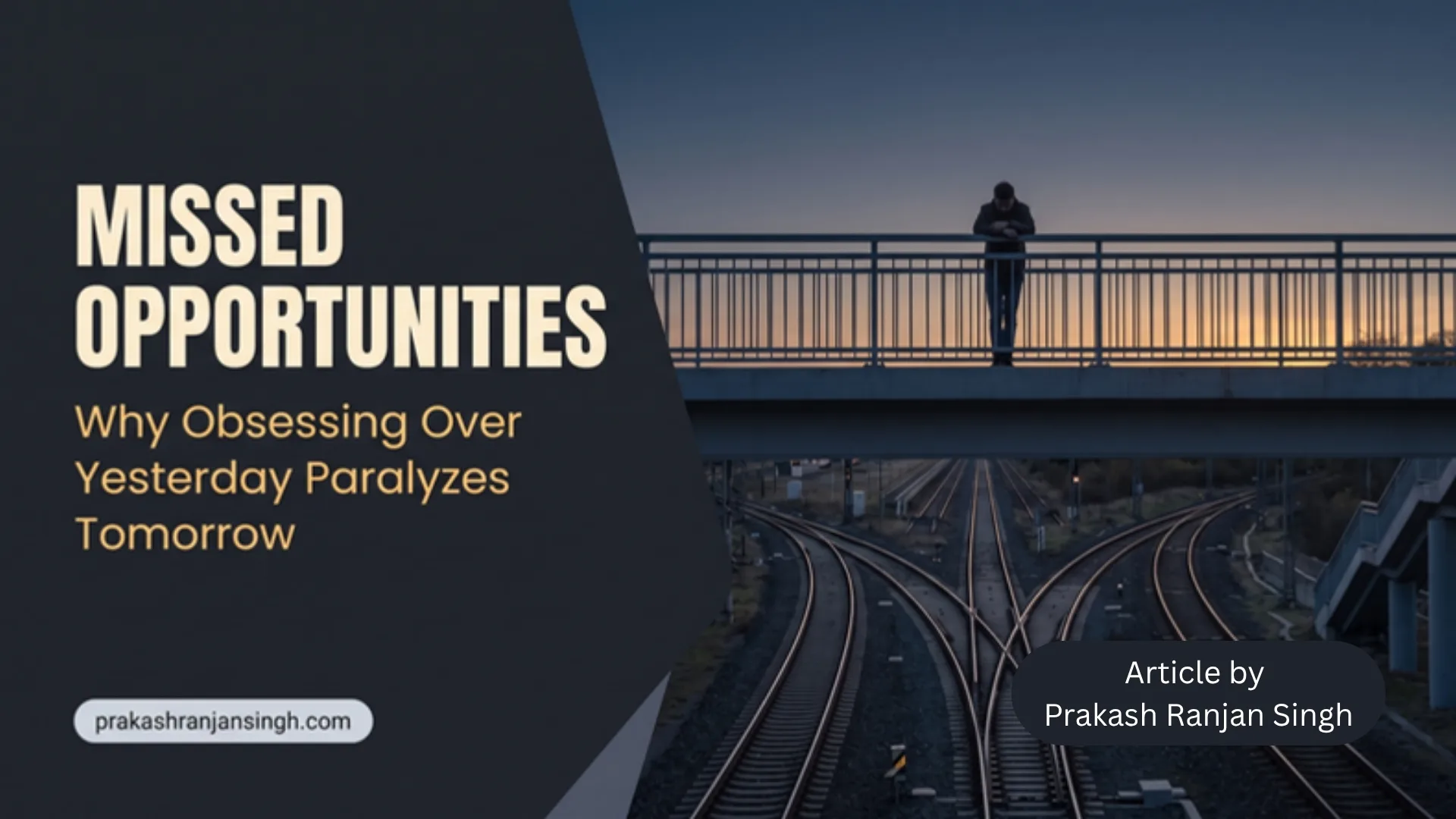
    Person looking back at a missed opportunity instead of forward at new ones

    The opportunity you missed is not your real loss — the real loss is failing to notice the opportunities still standing in front of you right now. Human psychology gives enormous weight to chances that have already played out because their results are visible in hindsight, but this backward-looking habit blinds people to the new opportunities being created around them every single day by technology, urbanisation, changing careers, and unsolved problems.

    “Had I invested then…” — perhaps one of the most expensive sentences in human psychology.

    How often have we looked at a stock that multiplied 10 or 20 times and said, “I knew about this company years ago. If only I had invested then!”

    We see a piece of land that was once available at a fraction of today’s price and think, “If only I had purchased it at that time!”

    We see a successful business and remember that we had once thought about starting something similar.

    We see someone who became wealthy through technology, real estate, investments or entrepreneurship and tell ourselves, “I could have done that too.”

    But there is a fundamental mistake in this thinking.

    The opportunity that has gone is not necessarily your biggest loss. The bigger loss is failing to recognize the opportunities that are still in front of you.

    Our Brain Is Addicted to Missed Opportunities

    Human psychology has a strange habit.

    We give enormous importance to opportunities that have already passed because their results are visible.

    A stock that was ₹50 and became ₹1,000 looks like an obvious opportunity today.

    But when it was ₹50, nobody knew with certainty that it would become ₹1,000.

    The same applies to property.

    A piece of land on the outskirts may look unattractive today. Ten or fifteen years later, a highway, airport, industrial corridor, metro line or township may transform the entire area.

    After the transformation, everyone can see the opportunity.

    But opportunity is rarely visible with the same clarity before transformation.

    That is why hindsight is so powerful—and so dangerous.

    We Compare Today’s Reality With Yesterday’s Price

    An investor looks at a multibagger stock and thinks: “Why didn’t I buy it?”

    But instead of asking that question, he should ask: “Which companies today have the potential to become tomorrow’s multibaggers?”

    A property investor looks at a developed locality and thinks: “I should have bought there 15 years ago.”

    The better question is: “Which areas today are likely to become tomorrow’s prime locations?”

    An entrepreneur sees a successful business and thinks: “I should have started this years ago.”

    The productive question is: “What emerging need is being ignored today?”

    The difference between these two mindsets can completely change a person’s future.

    Opportunities Don’t Disappear—They Change Their Form

    Opportunities are continuously being created by changes around us.

    Technology creates opportunities. Population growth creates opportunities. Urbanisation creates opportunities. Infrastructure creates opportunities. Changing lifestyles create opportunities. Artificial intelligence creates opportunities. Aging populations create opportunities. Digital payments create opportunities. Electric vehicles create opportunities. Healthcare innovation creates opportunities. Education technology creates opportunities. Agricultural modernization creates opportunities.

    Even problems create opportunities because every unsolved problem represents a potential need, and every need can create an opportunity.

    The challenge is not the absence of opportunities.

    The challenge is our inability to recognize them.

    The “I Wish” Trap

    There are several psychological traps that keep people looking backward.

    1. Hindsight Bias

    Once we know the result, the past appears obvious.

    We think: “It was so obvious that this stock would rise.”

    No—it wasn’t.

    The outcome is obvious only because we already know it.

    2. Regret

    Regret makes us emotionally attached to decisions we never made.

    Instead of learning from the past, we repeatedly replay it.

    That consumes mental energy without creating any future benefit.

    3. Comparison

    We compare our present with somebody else’s successful outcome.

    Someone bought property early. Someone invested in a startup. Someone built a business. Someone purchased shares decades ago.

    We see their destination but not the uncertainty, failures and risks they faced along the way.

    4. Fear of Being Wrong

    Many people identify opportunities but don’t act because they fear losing money, failing or being criticised.

    Years later, when the opportunity succeeds, they regret not acting.

    But avoiding every risk also carries a risk—the risk of remaining exactly where you are.

    5. Comfort Zone

    A person may recognize a new opportunity but continue with familiar habits because familiarity feels safe.

    Unfortunately, yesterday’s comfort zone can become tomorrow’s disadvantage.

    Look at the Outskirts Before They Become the City

    Consider real estate.

    Today’s outskirts may become tomorrow’s urban extension. A village near a highway may become a commercial centre. Agricultural land near a growing city may eventually be surrounded by housing and infrastructure. An area near a proposed industrial corridor may transform dramatically over time.

    Of course, not every distant property will become valuable.

    The opportunity lies in identifying the forces that can change the location—not merely buying something because it is cheap.

    Look for infrastructure, connectivity, employment centres, population movement, government development plans, educational institutions, hospitals, industrial projects and urban expansion.

    Don’t simply ask: “What is cheap today?” Ask: “What could become valuable tomorrow, and why?”

    The Same Principle Applies to Careers

    Opportunities aren’t limited to money.

    A young person may complain: “I missed the IT boom.” Another may say: “I should have learned digital skills earlier.” Someone else may think: “I should have entered AI five years ago.”

    But the future has not yet happened.

    New technologies will create new professions that don’t even have established names today.

    The important question is not “What opportunity did I miss?” It is “What capability can I develop today that the future will reward?”

    Business Opportunities Are Often Hidden Inside Problems

    Many successful businesses begin with a simple observation: “People are struggling with something. Can I solve it better?”

    A shortage, inconvenience, inefficiency or changing habit can become a business opportunity.

    The person who sees only a problem complains. The entrepreneur asks: “Can this problem become my opportunity?”

    That change in perspective is enormous.

    Even Failure Can Become an Opportunity

    Sometimes an opportunity appears in disguise.

    A failed business can teach market realities. A rejected job can force someone to develop new skills. A financial mistake can create investment discipline. A career setback can encourage entrepreneurship. A technological disruption can make an old skill irrelevant—but create demand for a new one.

    Therefore, even failure does not necessarily close the door.

    Sometimes it simply redirects you toward another door.

    Stop Living in the Museum of Missed Opportunities

    The past should be a teacher, not a permanent residence.

    There is nothing wrong with asking: “What could I have done differently?”

    But after learning the lesson, we must move to the more important question: “What can I do differently now?”

    Every morning brings a fresh set of possibilities. A new company may be emerging. A new technology may be developing. A new neighbourhood may be expanding. A new business problem may be waiting for a solution. A new skill may be becoming valuable. A new relationship may open a new door. A new idea may change your life.

    We simply need to notice.

    Train Your Brain to Search Forward

    Instead of constantly saying “I missed that,” start saying “What am I missing now?”

    Instead of “I should have bought that stock,” ask “What industries are likely to grow over the next decade?”

    Instead of “I should have purchased property there,” ask “Where is tomorrow’s development likely to happen?”

    Instead of “I should have started that business,” ask “Which emerging problem can I solve today?”

    Instead of “I am too late,” ask “What can I still become early in?”

    The Future Belongs to Opportunity Seekers

    Nobody can go back and invest yesterday. Nobody can purchase yesterday’s property today. Nobody can restart a missed career opportunity.

    But today is still an unfinished page.

    There are thousands of companies whose future nobody knows. There are locations whose transformation has not yet happened. There are technologies whose full potential has not yet been discovered. There are businesses that haven’t been created. There are careers that haven’t yet been invented. And there are ideas inside ordinary people’s minds that could become extraordinary.

    So don’t waste your present calculating the wealth you could have created in the past.

    Use the past as data, the present as a laboratory, and the future as your destination.

    Because the biggest opportunity you may have missed is not the one that made someone else rich.

    It may be the opportunity standing in front of you right now—while you are still looking backward.

    The question is not “What did I miss?”

    The real question is: “What opportunity am I failing to see today?”

    Related Reading

  • 🚨 WE MAY BE CREATING A GENERATION THAT IS ADULT BEFORE IT IS READY TO BE AN ADULT

    🚨 WE MAY BE CREATING A GENERATION THAT IS ADULT BEFORE IT IS READY TO BE AN ADULT

    Young adult on smartphone, symbolizing the gap between biological adulthood and financial independence

    Biological adulthood is arriving earlier while financial independence and marriage keep arriving later, leaving young people to navigate love, sexuality, and money largely on their own — often guided by algorithms instead of parents. This growing gap between physical maturity and life-readiness is quietly reshaping how a generation forms relationships and enters adulthood.

    The Growing Gap Between Adulthood and Marriage: An Invisible Crisis We Are Ignoring

    And nobody seems to be talking about it.

    A child today can access adult content before reaching adulthood.

    A teenager can learn about relationships, sexuality, money, luxury, dating and lifestyle from a smartphone.

    But the same teenager may have no idea how to handle rejection, loneliness, emotional attachment, financial pressure or a real-life relationship.

    And here is the paradox:

    We are exposing children to adulthood earlier… while pushing marriage and financial independence further and further away.

    Welcome to one of the biggest social experiments of our time.

    🔥 Biological Adulthood Is Coming Earlier

    đź’° Financial Adulthood Is Coming Later

    đź’Ť Marriage Is Coming Even Later

    So what happens in between?

    That is the uncomfortable question we don’t want to ask.

    Attraction between young people is natural.

    Relationships are natural.

    The desire for companionship is natural.

    But when emotional and biological development happens years before financial stability, marriage and family formation, where does society expect young people to learn how to manage these powerful emotions?

    Parents?

    Schools?

    Social media?

    Pornography?

    Friends?

    Algorithms?

    Unfortunately, the last three are often becoming the teachers.

    And that should worry us.

    📱 Has the Internet Become the New Parent?

    Previous generations learned about relationships by observing parents, grandparents, relatives and society.

    The joint family had plenty of problems—but it also provided an informal university of life.

    Children watched adults argue.

    They watched them compromise.

    They saw responsibility.

    They saw marriage.

    They saw ageing.

    They saw sacrifice.

    Today, many children grow up in nuclear families where both parents are busy fighting their own battles.

    And when the child has questions about relationships, attraction or sexuality, the smartphone is often available 24 hours a day.

    The internet answers every question—even the questions children were never emotionally prepared to ask.

    ⚠️ Is Information Arriving Faster Than Maturity?

    This may be the real crisis.

    Today’s youngsters are not necessarily less intelligent.

    In fact, Gen Z may be among the most informed, adaptable and technologically capable generations ever produced.

    But information is not wisdom.

    Knowing something doesn’t mean knowing how to handle it.

    A 16 years old may understand relationships better than a 40 years old did at that age.

    But does that 16 Years old necessarily have the emotional maturity to handle heartbreak?

    Does he or she understand consent?

    Boundaries?

    Manipulation?

    Emotional dependency?

    Financial consequences?

    Digital footprints?

    The answer is obviously not always yes.

    đź’” Why Are Relationships Failing?

    Maybe we should ask a different question.

    Did we teach the younger generation how to build relationships—or only teach them how to find them?

    Dating apps can help people meet.

    Social media can help people connect.

    Technology can bring people closer.

    But none of these automatically teach:

    commitment, patience, compromise, responsibility and emotional maturity.

    Those still have to be learned.

    đź’° Then Comes the Second Problem: Money

    We tell young people:

    “First study.”

    “Then get a good job.”

    “Then build your career.”

    “Then become financially independent.”

    “Then buy a house.”

    “Then think about marriage.”

    Nothing is wrong with these expectations.

    But career establishment can now take years.

    Competition is brutal.

    Employment is uncertain.

    Housing is expensive.

    And financial independence is increasingly difficult.

    Meanwhile, emotional and biological development doesn’t follow the career timetable.

    The heart doesn’t wait for the salary slip.

    đź§  This Is Where the Invisible Pressure Begins

    A young person can be:

    âś” biologically mature

    âś” digitally exposed

    âś” emotionally curious

    âś” socially pressured

    …but still:

    ❌ financially dependent

    ❌ professionally uncertain

    ❌ emotionally inexperienced

    ❌ socially isolated

    That is a dangerous combination.

    And if society refuses to acknowledge it, the consequences may appear through loneliness, anxiety, unhealthy relationships, emotional dependency and difficulty forming stable families.

    Not necessarily tomorrow.

    But gradually.

    And perhaps we are already seeing the early signs.

    👨‍👩‍👧 Parents Also Need to Change

    Parenting cannot remain:

    “Because I said so.”

    Modern children need something different:

    “Let’s talk about it.”

    Parents must become approachable enough for their children to discuss uncomfortable subjects.

    Relationships.

    Attraction.

    Sexuality.

    Pornography.

    Money.

    Career.

    Failure.

    Loneliness.

    Mental health.

    Social media.

    If parents cannot discuss these subjects, someone else will.

    And the question is:

    Who do you want educating your child—the family or the algorithm?

    🎓 Education Also Needs a Reboot

    We teach children mathematics.

    Science.

    History.

    Technology.

    But where is the curriculum for:

    emotional intelligence?

    financial discipline?

    relationship management?

    digital responsibility?

    handling rejection?

    communication?

    conflict resolution?

    career resilience?

    A person can score 95% in an examination and still fail spectacularly at life.

    Academic intelligence without emotional intelligence is incomplete education.

    🔥 Please Don’t Blame Gen Z

    This is important.

    Gen Z did not create this environment.

    We did.

    Adults created the technology.

    Adults created the algorithms.

    Adults created the economic system.

    Adults created the education system.

    Adults created the social expectations.

    And then we complain that young people are different.

    Perhaps they are not becoming worse.

    Perhaps they are simply becoming different faster than society can understand.

    Gen Z doesn’t need constant lectures.

    It needs direction.

    It needs skills.

    It needs mentors.

    It needs financial opportunities.

    It needs healthy conversations.

    And above all, it needs adults who understand the world in which they are growing up.

    🚨 The Biggest Danger May Not Be Early Adulthood or Late Marriage

    The real danger is the gap between the two.

    Young people are entering the psychological world of adulthood earlier.

    But economic independence, stable careers and marriage are arriving later.

    Who will guide them through the gap?

    If parents remain silent…

    If schools avoid uncomfortable conversations…

    If society continues moral policing…

    If technology continues educating children without responsibility…

    and if economic opportunities remain inadequate…

    then we should not be surprised if the next generation faces psychological and relationship challenges that we are currently unable to imagine.

    SO HERE IS THE QUESTION:

    Should we be worried about children growing up too fast—or should we be worried that society is preparing them too slowly?

    And perhaps an even more uncomfortable question:

    👇 Are today’s parents raising their children—or are smartphones, social media and algorithms doing it for them?

    What do you think? Please comment…

    Related Reading

  • Life Is Short. Roles Are Many. Self-Motivation Is the Real Superpower

    Life Is Short. Roles Are Many. Self-Motivation Is the Real Superpower

    Person balancing many life roles, symbolising self-motivation across career, family and personal growth

    Life gives us far less time than it feels like, and within that short window we don’t live one life but many overlapping roles — student, professional, spouse, parent, caregiver, leader — and the one skill that carries a person through all of them is self-motivation.

    We often say that life is long.

    But if we look closely, it is surprisingly short.

    With an average life expectancy of around 70 years, and a much smaller portion of those years spent in active working and responsibility-bearing life, we actually have a limited window to build a career, support our parents, raise children, contribute to society, maintain relationships, pursue our dreams and leave behind something meaningful.

    And the most interesting part is this:

    We don’t live one life within those years. We live many different lives.

    At different stages, we become students, professionals, children to our parents, spouses, parents to our children, leaders, colleagues, friends, caregivers, mentors and eventually guides for the next generation.

    Every role demands something different from us.

    And every role arrives with its own responsibilities.

    The Same Person, Different Roles

    A young person entering professional life dreams of success.

    He wants to prove himself, build wealth, establish an identity and enjoy life.

    Then marriage brings a new role.

    Children bring another.

    Ageing parents bring another.

    Career growth brings leadership responsibilities.

    Later, the responsibilities gradually change from earning to protecting, from building to guiding, and from competing to mentoring.

    The challenge is that life doesn’t give us separate time slots for these responsibilities.

    They overlap.

    A person may have to manage a demanding career while raising children, supporting parents, maintaining a marriage, managing finances and dealing with personal struggles—all at the same time.

    This is where life becomes a real test.

    Some people perform brilliantly.

    Some perform reasonably well.

    Some fulfil only a portion of their responsibilities.

    And some simply escape from the complexity.

    But what separates the extraordinary from the ordinary is often not money, intelligence or favourable circumstances.

    It is the ability to motivate oneself when nobody else is there to motivate them.

    The World Doesn’t Always Push You Forward

    External motivation is temporary.

    A promotion can motivate you.

    A salary increase can motivate you.

    Praise can motivate you.

    A good boss can motivate you.

    A supportive family can motivate you.

    But what happens when the promotion doesn’t come?

    What happens when your boss doesn’t appreciate you?

    What happens when your efforts remain unnoticed?

    What happens when circumstances become completely unfavourable?

    That is where self-motivation begins.

    The extraordinary people of life are not necessarily those who always get favourable circumstances.

    They are those who learn to create favourable circumstances inside their own mind.

    They develop an internal voice that says:

    “I may be tired, but I cannot stop.”

    “I may have failed, but I can learn.”

    “Nobody may appreciate me today, but I know what I am capable of.”

    “Circumstances may be difficult, but my responsibility remains.”

    That inner voice can change an ordinary life into an extraordinary one.

    Self-Motivation at Different Stages of Life

    1. Student Life — Motivate Yourself to Learn

    At this stage, motivation should come from curiosity and dreams rather than pressure.

    Don’t study merely because parents are asking you to.

    Study because knowledge will eventually give you independence.

    Learn to tell yourself:

    “I am building the person I want to become.”

    Develop discipline early.

    Set small targets.

    Celebrate progress rather than waiting for perfect results.

    A student who learns self-discipline today develops an advantage that remains useful throughout life.

    2. Early Career — Motivate Yourself to Build

    The beginning of a career can be frustrating.

    The salary may be low.

    Recognition may be limited.

    Seniors may get better opportunities.

    Colleagues may progress faster.

    This is the stage when comparison can destroy motivation.

    Instead, develop the habit of asking:

    “What can I learn today that will increase my value tomorrow?”

    Learn continuously.

    Develop new skills.

    Take responsibility before demanding authority.

    Accept difficult assignments.

    Build professional relationships.

    Don’t chase only designations.

    Build capability.

    Because positions can be given to you, but capability has to be earned.

    3. Family Life — Motivate Yourself to Take Responsibility

    Marriage and parenthood fundamentally change the meaning of success.

    You are no longer responsible only for yourself.

    Your decisions affect other people.

    There will be days when you don’t feel like working.

    There will be days when you are emotionally exhausted.

    There will be days when family problems and professional problems arrive together.

    This is where self-motivation becomes responsibility-driven.

    You tell yourself:

    “My family is depending on me, so I cannot surrender to temporary difficulties.”

    It doesn’t mean suppressing emotions.

    It means learning to continue functioning despite them.

    4. Mid-Career — Motivate Yourself to Reinvent

    This may be one of the most dangerous stages of life.

    A person becomes experienced but can also become comfortable.

    The learning curve slows down.

    Routine takes over.

    The person starts saying:

    “I have already seen everything.”

    But the world keeps changing.

    Technology changes.

    Industries change.

    Workplaces change.

    Young professionals bring new ideas.

    Artificial intelligence is transforming jobs.

    The greatest danger at this stage is not failure.

    It is becoming irrelevant.

    Self-motivation here means deliberately learning again.

    Upgrade your skills.

    Understand technology.

    Experiment.

    Accept younger people’s ideas.

    Challenge your own assumptions.

    The question should not be:

    “How many years have I worked?”

    It should be:

    “How much value can I still create?”

    5. Leadership Stage — Motivate Yourself to Motivate Others

    As responsibility increases, your personal performance is no longer enough.

    You become responsible for other people’s performance.

    A great leader doesn’t merely complete his own work.

    He creates an environment where others can perform.

    At this stage, self-motivation means controlling ego, remaining calm under pressure and giving credit to others.

    Your success is no longer measured only by what you accomplish personally.

    It is measured by how many people become successful because of your leadership.

    6. Later Life — Motivate Yourself to Give Back

    Eventually, the race for position and money begins to lose its attraction.

    You start asking deeper questions:

    “What have I contributed?”

    “Whom have I helped?”

    “What knowledge can I pass to the next generation?”

    “What will remain after I am gone?”

    This is the stage where experience becomes more valuable than ambition.

    Mentoring young people, supporting family, helping society, sharing knowledge and encouraging others can give life a completely new purpose.

    A meaningful life is not measured only by what we accumulate, but also by what we leave behind.

    The Self-Motivation Techniques That Work at Every Stage

    Self-motivation is not magic.

    It is a habit.

    1. Have a Purpose Bigger Than Comfort

    Comfort rarely produces extraordinary achievement.

    Have something worth getting up for.

    A family.

    A mission.

    A dream.

    A social cause.

    A responsibility.

    A legacy.

    When your purpose is strong, temporary difficulties become easier to tolerate.

    2. Break Life Into Small Targets

    Don’t try to solve your entire life in one day.

    Ask:

    What is the most important thing I need to accomplish today?

    Small victories create momentum.

    Momentum creates confidence.

    Confidence creates bigger achievements.

    3. Stop Waiting for Motivation

    This is perhaps the most important lesson.

    Many people say:

    “When I feel motivated, I will start.”

    Extraordinary people understand the opposite:

    “Start first. Motivation will follow.”

    Action often creates motivation—not the other way around.

    4. Learn to Talk to Yourself

    Your internal dialogue matters.

    If you constantly tell yourself:

    “I can’t.”

    “It’s too late.”

    “Others are better.”

    “Nothing will change.”

    your brain gradually accepts that narrative.

    Replace it with:

    “I can improve.”

    “I can learn.”

    “I can try again.”

    “I may not control the situation, but I can control my response.”

    Self-talk is not weakness.

    It is mental conditioning.

    5. Don’t Compare Your Chapter With Someone Else’s Book

    Someone may become successful at 25.

    Another may become successful at 45.

    Someone may lose everything at 50 and rebuild at 60.

    Life has no universal timetable.

    Measure yourself against your previous self, not somebody else’s present.

    6. Protect Your Energy

    Self-motivation becomes difficult when your physical and mental energy is constantly depleted.

    Sleep properly.

    Move your body.

    Eat sensibly.

    Take breaks.

    Spend time with positive people.

    Limit unnecessary negativity.

    A tired mind struggles to remain motivated.

    7. Learn From Failure Without Becoming Its Prisoner

    Failure is an event.

    It is not an identity.

    Instead of asking:

    “Why did this happen to me?”

    ask:

    “What is this experience trying to teach me?”

    The first question creates helplessness.

    The second creates growth.

    8. Keep Reinventing Yourself

    The person who succeeds at 25 may not be the same person who needs to succeed at 45 or 65.

    Therefore, keep changing.

    Learn.

    Unlearn.

    Relearn.

    Adapt.

    The ability to reinvent yourself may ultimately be more important than the ability to succeed once.

    The Real Heroes Are Often Invisible

    Society celebrates celebrities, billionaires, sports stars and famous leaders.

    But there is another category of heroes we rarely talk about.

    The father who worked for decades without complaining.

    The mother who sacrificed her dreams for her children.

    The employee who remained honest despite pressure.

    The professional who continued learning after 50.

    The person who supported ageing parents while managing a career.

    The individual who failed repeatedly but continued trying.

    The ordinary person who quietly fulfilled every responsibility placed upon his shoulders.

    These people may never receive medals.

    They may never appear on television.

    Their names may never be written in history books.

    But they have accomplished something extraordinary:

    They successfully navigated the complicated journey of life.

    Life Is Not About Playing One Role Perfectly

    Perhaps the biggest misconception about success is that we have to become perfect in everything.

    We don’t.

    Nobody can be the perfect employee, perfect parent, perfect spouse, perfect child, perfect friend and perfect citizen simultaneously.

    Life is about balance, adjustment and continuous improvement.

    There will be moments when career gets more attention.

    There will be moments when family needs you more.

    There will be moments when your health, relationships or inner peace must take priority.

    The real skill is knowing which role needs you most at which stage of life.

    The Final Measure of Success

    One day, the professional race will end.

    The designation will disappear.

    The office will belong to someone else.

    The salary will stop.

    The business will pass to another generation.

    The possessions will remain behind.

    What will remain?

    Your relationships.

    Your values.

    Your contribution.

    Your memories in other people’s lives.

    And the person you became while fulfilling your responsibilities.

    That is why the greatest achievement in life may not be becoming rich, famous or powerful.

    It may simply be this:

    To perform every role life gives you with sincerity, courage, dignity and continuous self-motivation.

    We get only a limited number of years.

    We don’t know how many are left.

    So don’t wait for the perfect circumstances.

    Don’t wait for someone to motivate you.

    Don’t wait for recognition.

    Don’t wait for tomorrow.

    Motivate yourself.

    Rise when you fall.

    Learn when you fail.

    Adapt when the world changes.

    Take responsibility when others run away.

    Help others when you become capable.

    And keep moving.

    Because the real heroes of life are not those who had the easiest journey.

    They are those who kept walking when the journey became difficult.

    Related Reading

  • 🚨 CONTROVERSIAL OPINION: The world’s most dangerous weapon is NOT a gun, a missile, or AI… It’s a WORD.

    🚨 CONTROVERSIAL OPINION: The world’s most dangerous weapon is NOT a gun, a missile, or AI… It’s a WORD.

    Quick summary: Words carry more lasting power than physical weapons — a single sentence can end a friendship, start a war, or change someone’s life forever, yet we’re never taught how to use them responsibly.

    A single word can be more powerful than any weapon

     đźš¨ CONTROVERSIAL OPINION: The world’s most dangerous weapon is NOT a gun, a missile, or AI… It’s a WORD.

    Read that again.

    The Power of a Single Word

    A single word has ended friendships. A single word has started wars. A single word has saved marriages. A single word has stopped someone from giving up. A single word has inspired ordinary people to become extraordinary.

    Yet, schools teach us physics, chemistry, mathematics, and coding—but almost nobody teaches us how to use words responsibly.

    Words are invisible, but their impact is not.

    Some words burn like fire. Some calm like cool rain. Some spread like the wind. Some become the foundation on which trust, confidence, and leadership are built.

    Think about it…

    How many people are still carrying the pain of one insulting sentence spoken years ago?

    And how many successful people are where they are today because one teacher, one parent, one friend, or one mentor simply said:

    “I believe in you.”

    The greatest leaders are not remembered only for what they did—they are remembered for what they said.

    Before You Speak, Ask Yourself This

    Before speaking, ask yourself four simple questions:

    âś… Is it true? âś… Is it necessary? âś… Is it respectful? âś… Will it make someone’s life a little better?

    In an age where one social media post can reach millions within minutes, choosing the right words is no longer just good manners—it’s a life skill.

    Your words can become someone’s biggest wound… or someone’s biggest strength.

    So choose them wisely.

    Tell Us: What Words Changed Your Life?

    đź’¬ Now tell me honestly…

    What is one sentence—positive or negative—that changed your life forever?

    Let’s read those life-changing words in the comments. They may inspire someone who needs them today.

    Related Reading

  • Marriage: Commitment towards Passionate Relationship

    Marriage: Commitment towards Passionate Relationship

    The greatest miracle in a marriage isn’t finding the perfect person—it’s two people choosing each other again, every single day, even when life is imperfect.

    Marriage as a commitment towards a passionate relationship

    Among all human relationships, there is something truly special about the bond between a husband and wife.

    Two strangers. Two different families. Two different personalities. Two different dreams. Yet, one day they decide to walk through life together.

    From that moment, they begin sharing not just a home, but also responsibilities, struggles, victories, dreams, and memories.

    What does human psychology tell us about why this bond matters?

    Human psychology tells us something beautiful: every person longs for meaningful relationships. We all want someone who believes in us, stands beside us during difficult times, and celebrates our happiness as if it were their own.

    When a husband and wife genuinely support each other, they become much more than partners. They become each other’s biggest source of courage. One person’s weakness becomes the other’s strength. One person’s dream becomes a shared mission. One person’s pain becomes a shared burden.

    That is why people often say, “They are made for each other.” Not because they never disagree. But because they never stop choosing each other.

    What actually makes the happiest couples different?

    The happiest couples are not those who have a perfect life. They are the ones who remain committed, respectful, and supportive—even when life is imperfect.

    A loving relationship creates confident children. Confident children build strong families. Strong families create a stronger nation.

    Perhaps this is why the greatest success in life is not measured by the size of your bank balance or the title on your visiting card… It is measured by the number of people who feel safe, respected, and loved because you are in their lives.

    A successful marriage doesn’t happen by luck. It grows through trust. It survives through patience. And it flourishes through countless small acts of love.

    One question for everyone reading this: what is the one quality that keeps a husband and wife together for a lifetime? Trust, respect, sacrifice, communication, or commitment?

    Write your answer in one word in the comments. Let’s learn from each other.

    Related Reading

  • Why People Think Differently at Different Levels of an Organisation

    Why People Think Differently at Different Levels of an Organisation

    Why People Think Differently at Different Levels of an Organisation

    Most workplace conflict isn’t caused by bad intentions — it’s caused by mismatched priorities: entry-level employees chase opportunity, middle managers balance growth against security, and senior leaders protect stability and legacy, and effective leadership means adapting your approach to each of these very different psychological stages instead of using one style for everyone.

    Every organisation is a living ecosystem. Although employees work toward the same goals, their priorities, fears, ambitions, and decision-making processes often differ significantly depending on where they stand in the organisational hierarchy. Understanding these psychological differences is essential for leaders, HR professionals, and employees who aspire to build stronger, more productive workplaces.

    What Drives the Entry-Level Mindset?

    For employees at the beginning of their careers, the organisation represents opportunity. Their primary focus is on learning new skills, proving their capabilities, earning recognition, and securing promotions. They are generally energetic, ambitious, and willing to take risks if those risks promise faster career growth.

    This stage is driven by hope and aspiration. Employees are more interested in gaining experience than protecting what they already have because they have relatively little to lose.

    How Does the Middle Management Mindset Differ?

    The middle level is often the most challenging phase of a professional career. These employees carry significant operational responsibilities while simultaneously managing expectations from both senior leadership and junior teams.

    At this stage, professionals constantly evaluate opportunities—both inside and outside the organisation. They seek career advancement, better compensation, and greater responsibility while also considering family obligations, financial commitments, and long-term career security.

    Middle managers frequently experience the highest levels of stress because they must satisfy multiple stakeholders while competing for limited leadership positions.

    What Does Senior Leadership Actually Prioritise?

    As professionals reach the highest levels of an organisation, their perspective changes dramatically. Many have already achieved financial stability and professional recognition. Instead of chasing rapid promotions, their focus often shifts toward preserving their reputation, ensuring organisational stability, mentoring future leaders, and completing the remaining years of their careers successfully.

    Senior leaders generally become more cautious in decision-making because the consequences of failure are much greater. Their experience teaches them that sustainable success often requires patience rather than aggressive risk-taking.

    Why Do Conflicts Naturally Arise Between These Levels?

    Many workplace misunderstandings occur because people assume everyone shares the same priorities. In reality, young professionals seek opportunities, middle managers seek advancement with security, and senior leaders seek stability and legacy.

    When these different perspectives collide, disagreements can emerge over promotions, organisational change, innovation, and resource allocation. Often, these conflicts are not caused by bad intentions but by differing psychological priorities.

    What Should Leadership Actually Do About This?

    Effective leaders recognise these differences and adapt their management style accordingly. A single leadership approach rarely works for everyone.

    Leaders should inspire young employees with learning and career opportunities, support middle managers through empowerment and transparent communication, and engage senior professionals by valuing their experience and strategic insights.

    Organisations that understand these psychological stages tend to experience higher employee engagement, lower attrition, and stronger succession planning.

    Behavioural science suggests that human motivation evolves over time. Early in life, achievement and growth dominate our thinking. As responsibilities increase, security becomes equally important. Later in a career, purpose, legacy, and organisational impact often become stronger motivators than personal advancement.

    This evolution is natural and should be recognised rather than criticised.

    An organisation succeeds not because everyone thinks alike, but because people with different priorities work together toward a common purpose. Recognising the changing psychology of employees across different career stages enables better leadership, healthier workplaces, and more effective organisational decisions.

    The strongest organisations are those where ambition is encouraged, experience is respected, and every level of the hierarchy understands the perspective of the others. In today’s rapidly changing workplace, emotional intelligence may be just as important as technical expertise in building organisations that thrive for decades.

    Related Reading

  • The Psychology of Management: Why Understanding Human Behavior Is the Heart of Great Leadership

    The Psychology of Management: Why Understanding Human Behavior Is the Heart of Great Leadership

    The Psychology of Management: Why Understanding People Matters More Than Authority

    Behind every successful organization lies an invisible force that determines whether strategies succeed or fail — the psychology of the people executing them: management is less about giving instructions and more about understanding motivation, managing emotions, and influencing without force, and this skill only becomes more valuable as AI automates routine work.

    Management is often associated with planning, organizing, budgeting, and controlling resources. However, behind every successful organization lies an invisible force that determines whether strategies succeed or fail—the psychology of human beings.

    Whether it is a multinational corporation, a government institution, a startup, a family business, or a social organization, every achievement ultimately depends on people. Machines execute instructions, technology accelerates processes, and capital provides resources, but people make decisions. Therefore, understanding human psychology is one of the most valuable skills a manager or leader can develop.

    This is why leading management institutions across the world devote significant attention to subjects such as organizational behavior, leadership, motivation, negotiation, communication, decision-making, and emotional intelligence. These disciplines recognize a simple truth: successful management is fundamentally about understanding people.

    Why Does Psychology Matter So Much in Management?

    Every individual thinks differently, reacts differently, and is motivated by different factors. A manager who understands these differences can create an environment where people willingly contribute their best.

    Management is not merely about giving instructions. It is about creating trust, inspiring confidence, resolving conflicts, and aligning individual goals with organizational objectives.

    A technically brilliant manager may struggle if they cannot understand people. Conversely, a leader with strong interpersonal skills often succeeds by bringing out the best in others.

    What Are the Five Dimensions of Psychological Management?

    1. Managing Yourself First
    Before managing others, a leader must learn to manage themselves. Self-management includes emotional control during stressful situations, patience while making difficult decisions, discipline and consistency, self-awareness about strengths and weaknesses, and continuous learning and adaptability. A leader who cannot control their own emotions will find it difficult to inspire confidence in others.

    2. Understanding Human Motivation
    People rarely work only for money. They seek recognition, respect, growth, purpose, security, appreciation, and belonging. Different individuals are motivated by different combinations of these factors. A successful manager identifies these motivations and aligns them with organizational goals, creating an environment where employees become genuinely engaged.

    3. Managing Emotions
    Organizations are emotional ecosystems. Fear, hope, excitement, frustration, pride, and disappointment influence productivity every day. Emotionally intelligent managers listen carefully, remain calm during crises, avoid unnecessary conflicts, encourage constructive feedback, and build trust through empathy and fairness. When emotions are managed wisely, teams become more resilient and collaborative.

    4. Influencing Without Force
    The most effective leaders do not rely solely on authority. Instead, they influence through credibility, clear communication, ethical conduct, inspiration, shared vision, and mutual respect. People are far more committed when they understand and believe in the purpose behind their work rather than simply obeying instructions.

    5. Building Productive Teams
    Every organization consists of individuals with different personalities, experiences, and perspectives. An effective manager learns how to resolve disagreements constructively, encourage collaboration, recognize individual strengths, delegate responsibilities appropriately, celebrate achievements, and learn from failures without creating fear. Psychological safety allows people to contribute ideas, admit mistakes, and innovate more freely.

    Why Is Emotional Intelligence Such a Hidden Advantage?

    Modern research consistently highlights emotional intelligence as a key leadership capability, including self-awareness, self-control, empathy, social skills, and relationship management. Leaders who possess these qualities often build stronger teams, retain talent more effectively, and create healthier organizational cultures.

    Where Does Ethical Influence End and Manipulation Begin?

    Understanding psychology provides influence, but influence should never become manipulation. Ethical leadership respects people’s dignity, autonomy, and well-being. Manipulation seeks personal gain at others’ expense. The strongest leaders earn trust through honesty, transparency, and fairness rather than exploiting emotions.

    Does This Apply Outside the Workplace Too?

    The principles of psychological management are valuable far beyond business. They improve family relationships, parenting, teaching, public administration, politics, healthcare, community leadership, and customer service. Every human interaction benefits from better understanding, communication, and empathy.

    What Does This Mean for Management in the AI Era?

    Artificial intelligence is transforming routine work, but it cannot fully replace uniquely human capabilities such as empathy, moral judgment, trust-building, inspiration, and relationship management. As organizations automate technical tasks, psychological and interpersonal skills are becoming even more important. The managers of tomorrow will not succeed simply because they understand technology. They will succeed because they know how to combine technology with human potential.

    The true essence of management lies in bringing out the best in people. Budgets, strategies, technologies, and systems are essential, but they become meaningful only when human beings work together with commitment and purpose.

    Mastering human psychology does not mean controlling people. It means understanding their motivations, respecting their individuality, communicating effectively, and creating conditions where they can perform at their highest potential.

    The greatest managers are remembered not for the authority they exercised, but for the people they inspired, the trust they built, and the positive impact they created. In an increasingly complex world, the ability to understand human psychology may become one of the most valuable leadership skills of all.

    Related Reading

  • The Power of Silence: An Art of Survival, Wisdom, and Lasting Success

    The Power of Silence: An Art of Survival, Wisdom, and Lasting Success

    The Power of Silence: The Art of Survival in a World That Never Stops Talking

    Silence is often mistaken for weakness, but it’s actually a psychological pause that lets the brain’s rational centers override emotional impulses: it prevents regret, protects relationships, and builds trust at work, at home, and online, though it should never become an excuse to stay quiet in the face of injustice.

    In a world filled with constant noise, endless opinions, social media debates, and instant reactions, silence has become one of the rarest human qualities. Many people mistake silence for weakness, fear, or lack of confidence. In reality, silence is often a sign of emotional maturity, self-control, intelligence, and inner strength.

    Silence is not merely the absence of words. It is a conscious decision to observe before reacting, understand before judging, and think before speaking. Throughout history, successful leaders, philosophers, scientists, judges, negotiators, and spiritual teachers have understood that silence is one of the greatest tools for survival and success.

    Life frequently places us in confusing, emotionally charged, and challenging situations. During such moments, silence often becomes our strongest shield. It protects our dignity, preserves relationships, prevents unnecessary conflicts, and allows better decisions.

    What’s the Psychology Behind Silence?

    The human brain is highly emotional. During stress, anger, excitement, or fear, the emotional centers of the brain become more active than the rational thinking centers. When we speak under emotional pressure, we often say things that we later regret.

    Silence creates a psychological pause. This pause gives the brain enough time to control emotional impulses, process facts objectively, understand the intentions of others, and choose wiser responses instead of emotional reactions. In psychological terms, silence strengthens emotional regulation and reduces impulsive behavior. It allows reason to overcome emotion.

    How Does Silence Save Us From Regret?

    One careless sentence can damage years of trust. Many broken friendships, workplace conflicts, family disputes, and legal battles begin with words spoken in anger.

    Silence can prevent unnecessary arguments, emotional misunderstandings, damage to personal reputation, office politics, family conflicts, social embarrassment, and poor professional decisions. Many people regret what they said—but very few regret the words they wisely chose not to speak.

    What Does Silence Look Like at Work and at Home?

    Every office experiences disagreements, competition, misunderstandings, and pressure. A silent and observant professional understands situations before responding, avoids unnecessary office politics, earns the reputation of being balanced and dependable, protects confidential information, and gains the trust of colleagues and management.

    Often, the person who speaks the least listens the most—and therefore understands the most.

    Families are built not only on love but also on patience. Arguments between spouses, parents and children, or siblings often escalate because both sides want to win the conversation.

    Silence does not mean surrender. Sometimes it means respecting emotions, giving others time to calm down, preventing permanent damage from temporary anger, and allowing love to become stronger than ego. Many relationships are saved simply because one person chooses silence over confrontation.

    Why Does Silence Matter in Public Life and Leadership?

    In markets, public gatherings, social events, or online discussions, people often react instantly without verifying facts. Wise individuals understand that not every opinion deserves a response.

    Silence protects us from rumors, manipulation, public conflicts, misunderstandings, and emotional traps. Sometimes the strongest answer is no answer at all.

    Great leaders know when to speak—and when not to. Silence allows leaders to listen carefully, observe body language, understand hidden concerns, make balanced decisions, and build trust by speaking thoughtfully rather than frequently.

    People generally value words more when they come from someone who speaks with purpose instead of constantly.

    What Does Silence Have to Do With Personal Growth?

    Silence creates space for self-reflection. During quiet moments, we examine our strengths, our mistakes, our ambitions, our emotions, and our values. Creativity, innovation, and wisdom often emerge from moments of deep silence rather than constant stimulation.

    What Does “Digital Silence” Mean in the Age of Instant Reactions?

    Modern technology has made instant reactions effortless. Every notification, comment, and trending topic invites us to respond immediately. Yet not every message deserves our attention.

    Digital silence is becoming an important life skill. Before posting, commenting, or forwarding information, silence gives us time to ask whether it is true, necessary, or helpful, and whether it will create unnecessary conflict. This brief pause can prevent misinformation, damaged relationships, and lasting regret.

    When Should Silence NOT Be Chosen?

    Silence is powerful, but it should never become an excuse for ignoring injustice or avoiding responsibility. We should speak when someone is being harmed, when truth needs to be defended, when ethical responsibilities require action, and when constructive communication can solve problems.

    Wisdom lies in knowing the difference between silence that protects peace and silence that allows injustice.

    Research in psychology and neuroscience suggests that calm reflection can improve decision-making by reducing impulsive responses and allowing the brain to evaluate information more carefully. Quiet moments also help lower stress, improve concentration, and support emotional balance.

    Silence is therefore not only a philosophical idea but also a practical habit that contributes to clearer thinking and healthier relationships.

    How Can You Actually Practice Silence?

    Pause before responding during emotional situations, listen completely before offering advice, spend a few minutes each day in quiet reflection, avoid reacting immediately on social media, choose thoughtful conversations over unnecessary debates, allow emotions to settle before making major decisions, and speak only when your words add value.

    Silence is one of humanity’s most underestimated strengths. It is an art of survival in confusing times, a shield during conflict, and a guide toward wiser decisions. It protects our relationships, strengthens our character, and helps us respond with clarity rather than impulse.

    Silence does not weaken our voice—it gives our voice greater meaning. In a world that often rewards the loudest opinions, those who master the discipline of silence frequently develop the deepest understanding, the strongest resilience, and the most enduring influence.

    Sometimes, the path to success is not found in speaking more, but in knowing when silence is the wisest response.

    Related Reading