


RBI’s New Silver-Collateral Framework, the Opportunities for Common Households, and the Challenges Facing Banks, Borrowers and the Financial Ecosystem
When the price of gold rises, people notice the jewellery in their lockers. When silver rises, they may begin to look differently at the utensils, ornaments and coins kept at home. But when a financial institution starts accepting these assets as collateral, something more important happens: household wealth begins to acquire a new borrowing power.
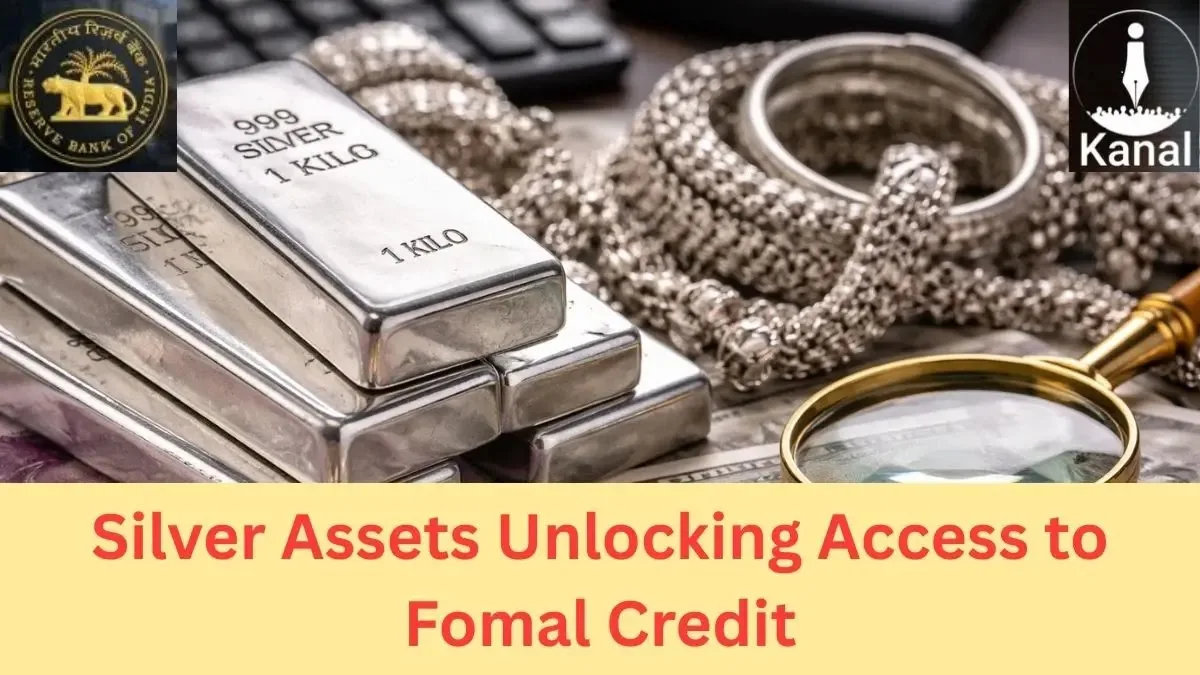
A silver loan is a loan taken by pledging eligible silver jewellery, ornaments or coins with a bank or NBFC. This article explains what the RBI’s rules allow, how borrowers may behave when silver prices rise, and how to avoid turning household savings into repeated debt.
Updated 24 October 2026. Rules summarised from the RBI directions linked below; this is general information, not financial advice.
Key Takeaways
- What it is: a silver loan lets you pledge eligible silver jewellery, ornaments or coins; silver bars, bullion and silver ETFs are not eligible.
- The limits: the RBI caps the loan at 85%, 80% or 75% of value depending on loan size, with up to 10 kg of ornaments and 500 g of coins per borrower.
- The real risk: collateral value is not repayment capacity; borrow only what you need and can repay, or the silver can be auctioned.
Table of Contents
- 1. A New Chapter in India’s Precious-Metal Lending Story
- 2. What Has RBI Actually Permitted for a Silver Loan?
- 3. The Psychology of a Rising Silver Price
- 4. The Borrower’s Biggest Mistake: Confusing Asset Value with Repayment Capacity
- 5. Why Silver Lending Is More Complicated Than It Looks
- 6. What This Means for Banks and NBFCs
- 7. Will Silver Loans Increase Financial Inclusion?
- 8. How Customer Behaviour Could Change Across the Ecosystem
- 9. The Hidden Danger: Turning Household Savings into Repeated Borrowing
- 10. A Practical Action Plan for Silver-Loan Customers
- 11. What Should the Financial Ecosystem Learn?
- Conclusion: The Metal May Be Silver, but the Real Test Is Financial Wisdom
1. A New Chapter in India’s Precious-Metal Lending Story
For generations, gold has played several roles in Indian households. It has been jewellery, a symbol of family security, a wedding tradition, an emergency reserve and, when money is urgently needed, a source of credit.
Silver has traditionally occupied a different position. Families have kept silver coins, ornaments, utensils and gifts, but silver has not enjoyed the same widespread visibility in organised lending as gold.
Rising precious-metal prices have changed the conversation. As silver becomes more valuable, households may increasingly ask a practical question: if gold can help meet an emergency, why should eligible silver not serve the same purpose?
The Reserve Bank of India has addressed this possibility through its Lending Against Gold and Silver Collateral Directions, 2025, with implementation required by 1 April 2026. The framework standardises important aspects of lending against eligible gold and silver collateral. It covers commercial banks, cooperative banks and NBFCs, subject to the applicable rules.
The significant development is not simply that another metal can be pledged. It is that a previously underused household asset can gain a more formal place in the credit system.
2. What Has RBI Actually Permitted for a Silver Loan?
The first lesson for customers is to separate regulatory facts from market expectations.
Under the framework, eligible silver jewellery, ornaments and coins can be accepted as collateral by covered lenders. However, silver bullion and other forms of primary silver are generally not eligible collateral for ordinary loans under these directions.
The framework also provides for:
- Standardised assessment of purity and weight.
- Transparent valuation using prescribed reference prices.
- Maximum loan-to-value ratios for consumption loans.
- Clear loan documentation and disclosure of charges.
- Safeguards for storage, return and auction of pledged collateral.
- Assessment of repayment capacity for larger loans.
For consumption loans, the maximum loan-to-value ratio is 85% for total eligible-collateral loan amounts up to ₹2.5 lakh, 80% for amounts above ₹2.5 lakh and up to ₹5 lakh, and 75% above ₹5 lakh. These are regulatory ceilings, not guaranteed loan offers; the amount actually sanctioned depends on the eligible collateral, the lender’s policy and other applicable conditions.
The framework is designed to make lending more consistent, not to guarantee that every branch will offer identical products or interest rates.
RBI silver loan rules at a glance
| Item | What the RBI directions say |
|---|---|
| Eligible silver | Jewellery, ornaments and coins; not bars, bullion or silver-backed ETFs |
| Pledge limit per borrower | Up to 10 kg of silver ornaments and 500 g of silver coins, across all loans |
| Loan-to-value (consumption loans) | 85% up to ₹2.5 lakh; 80% above ₹2.5 lakh to ₹5 lakh; 75% above ₹5 lakh |
| Valuation | Only the silver content counts, using the lower of the 30-day average and the previous day’s closing price for that purity (IBJA or a SEBI-regulated exchange) |
| Bullet-repayment loan | Capped at 12 months, renewable under the RBI’s conditions |
| Return after repayment | Same day, and within 7 working days at most; ₹5,000 per day compensation for lender-caused delay |
| Auction | Notice first; reserve price at least 90% of current value (85% after two failed auctions); surplus refunded within 7 working days |
Source: RBI Lending Against Gold and Silver Collateral Directions, 2025 (updated as on 29 September 2025). Lenders may apply stricter policies of their own.
3. The Psychology of a Rising Silver Price
Consider a family that bought silver ornaments several years ago. At the time, the family regarded them as savings for a wedding, a future emergency or a daughter’s household.
As silver prices rise, the family may feel that its financial position has improved—even if its monthly income remains unchanged.
This is where psychology enters the lending process.
The wealth effect: The family feels richer because its asset is worth more.
The liquidity temptation: The family realises that the asset may now unlock a larger loan.
The instant-relief effect: An urgent medical bill, school fee, business expense or household repair makes borrowing feel easier than selling an asset.
The fear of missing out: News of rising prices can encourage people to pledge silver before prices move further or before they believe a borrowing opportunity might disappear.
The mental-accounting trap: A borrower may think, “This is only a loan against silver,” rather than recognising it as a debt that must be repaid with interest and charges.
These reactions are human, not necessarily irresponsible. A secured loan can be useful. The danger arises when the value of the collateral receives more attention than the borrower’s ability to repay.
The same instinct appears with gold, as discussed in Rising Gold Prices: A Blessing or a Debt Trap for Gold Loan Customers? and in the psychology of money.
4. The Borrower’s Biggest Mistake: Confusing Asset Value with Repayment Capacity
Suppose a household has eligible silver whose assessed value is ₹1,00,000.
At an illustrative 85% loan-to-value ceiling, a loan of up to ₹85,000 might appear possible for a qualifying consumption loan within the relevant regulatory band. But the lender’s valuation, purity deductions, product terms and credit policy may result in a lower amount.
Now consider the customer’s actual financial position.
If the household needs ₹20,000 for a medical emergency, borrowing the full ₹85,000 simply because it is available may create an unnecessary interest burden.
The wiser question is not, “How much will the bank give me?”
It is, “How much do I need, how much can I repay, and what happens if my income is delayed?”
A higher collateral value increases potential borrowing capacity. It does not increase salary, business profits or household cash flow.
5. Why Silver Lending Is More Complicated Than It Looks
Silver may have a market price, but that does not mean every silver item can be valued as easily as a standard financial asset.
A lender must determine the actual silver content and purity. An ornament may contain alloys, attachments or other materials that do not count towards its intrinsic silver value. Decorative or sentimental value may be important to the family but may not add to the collateral valuation.
Price volatility is another challenge. Silver prices can rise sharply, but they can also decline. A loan sanctioned when prices are high may become more risky if prices fall while the outstanding debt remains unchanged.
The RBI framework addresses this partly through prescribed loan-to-value limits and valuation rules. For eligible collateral, the reference price uses the lower of the preceding 30-day average closing price or the previous day’s closing price, for the relevant purity, from the specified sources.
But no valuation formula can remove every market risk. A borrower still needs a repayment plan, and a lender still needs sound collateral management.
6. What This Means for Banks and NBFCs
For lenders, silver-backed lending offers a potential new product line and an opportunity to reach customers who may hold silver but have limited access to formal credit.
It could help lenders serve rural households, small traders, artisans and other borrowers whose financial assets are not always reflected in conventional income documentation.
However, the business is not as simple as accepting silver and handing over money.
Lenders need trained valuers, reliable purity-assessment procedures, secure storage, appropriate insurance and audit controls, transparent customer communication, and credible auction arrangements. They must also manage fraud risks, ownership disputes, operational costs and fluctuations in collateral value.
A product that appears attractive because of rising metal prices can become costly if appraisal errors, poor recovery practices or weak controls create losses.
The competitive challenge will be to balance speed with safeguards. Customers want quick access to funds, but rapid processing should never mean careless valuation or unclear loan terms.
7. Will Silver Loans Increase Financial Inclusion?
Potentially, yes—but the result will depend on how the product is delivered.
A household may possess silver jewellery or coins but lack easy access to a formal credit product. A properly regulated silver loan could provide an alternative to informal borrowing, particularly when funds are needed for a short-term emergency or a productive activity.
A small farmer might use a loan for seasonal farm expenses. A trader could meet a temporary working-capital requirement. A household might bridge a short-term cash-flow gap without immediately selling a family asset.
Yet financial inclusion should not be measured only by the number of loans sanctioned. It should also be measured by whether borrowers understand the costs, repay comfortably and retain their assets.
If a family repeatedly pledges silver to pay ordinary household expenses because income is insufficient, access to credit may be masking a deeper financial problem rather than solving it.
Responsible financial inclusion means access to useful credit—not simply easier access to debt.
8. How Customer Behaviour Could Change Across the Ecosystem
The arrival of a formal silver-loan framework could influence several groups at once.
Households: Silver may increasingly be viewed as an emergency liquidity reserve rather than only a traditional store of value. Some families may become more financially confident; others may overestimate how much they can safely borrow.
Jewellers and bullion traders: Customers may ask more questions about purity, resale value and the difference between the market price of silver and the value a lender will recognise as collateral. However, silver lending should not be confused with a guarantee of higher jewellery demand or prices.
Banks and NBFCs: Lenders may explore new customer segments and products. Competition could improve convenience, but it may also create pressure to process loans quickly and grow portfolios. Strong internal controls must keep sales targets from overriding repayment assessment.
Informal moneylenders: Some borrowers may shift towards regulated lenders if the formal product offers clearer terms and competitive total costs. But informal credit may remain attractive where customers value flexibility, proximity or fewer formalities.
Regulators: RBI’s challenge will be to ensure that a new credit channel serves genuine liquidity needs without encouraging speculative borrowing, weak recovery practices or excessive household indebtedness.
The wider financial system: If managed responsibly, silver-backed lending could expand the range of assets that support formal credit. If managed poorly, it could spread the same familiar problems seen in other lending markets: over-borrowing, repeated renewals, opaque charges and distress sales of family assets.
9. The Hidden Danger: Turning Household Savings into Repeated Borrowing
The greatest psychological risk may not be the first silver loan. It may be the second, third or fourth loan.
Imagine a borrower who pledges silver for a genuine emergency. The loan is useful, and the borrower repays it successfully. Confidence grows.
Later, a new expense appears. The borrower notices that silver prices have risen and believes another loan will be easy to obtain. Rather than reducing spending or building an emergency fund, the borrower returns to the lender.
Over time, a household asset that once represented financial security can become the repeated source of debt.
The same pattern appears in other forms of easy credit. The Psychology of Easy Money shows how simple access can make borrowing feel lighter than it is.
The cycle becomes especially dangerous when loans are renewed or topped up without a realistic assessment of future cash flows. A customer may experience temporary relief while the overall financial burden continues to grow.
The lesson is simple: a valuable asset should provide financial resilience, not become a permanent substitute for income.
10. A Practical Action Plan for Silver-Loan Customers
Before pledging silver, customers should follow these steps:
- Identify the real need. Separate essential expenses, productive business needs and emergencies from discretionary spending.
- Borrow only what is necessary. Do not treat the maximum eligible loan amount as a target.
- Check the valuation. Ask about purity, net silver weight, deductions and the reference price used.
- Compare the total cost. Review the interest rate, processing and assay charges, repayment schedule, renewal conditions and consequences of default.
- Match repayment to income. Decide in advance which salary, business receipt or other reliable cash flow will repay the loan.
- Understand the risk to family assets. Silver pledged as collateral can be auctioned if the loan remains unpaid and the lender follows the applicable process.
- Keep the documents. Retain the loan agreement, valuation or assay certificate, payment receipts and all lender communications.
- Avoid borrowing to speculate. Do not take a silver loan merely to buy more silver or because you expect prices to rise further.
- Contact the lender early if repayment becomes difficult. Discuss the available options before the problem escalates. Never assume renewal or a top-up is automatic.
- Close the loan properly. Obtain confirmation of settlement, collect the pledged items within the prescribed process and check that their quantity and condition match the certificate.
A customer should also compare a silver loan with alternatives such as a small bank loan, an existing overdraft facility or an orderly sale of a portion of the asset. The best choice depends on total cost, urgency, repayment capacity and the personal importance of the silver being pledged.
If a loan goes wrong, know the rules in advance: the lender must give notice before an auction, the reserve price cannot be below 90% of the current value (85% if two auctions fail), and any surplus must be refunded within seven working days of receiving the full proceeds. For the human side of this, read the hidden human story behind gold-loan auctions.
11. What Should the Financial Ecosystem Learn?
The introduction of silver-backed lending is an opportunity to improve the relationship between household assets and formal finance. But it also demonstrates why regulation, customer education and responsible lending must develop together.
Lenders should not market the product merely by highlighting how much money a customer can obtain. Communication should explain the repayment obligation, the cost of credit, the valuation process and the circumstances in which collateral may be auctioned.
Customers, meanwhile, must recognise that collateral reduces a lender’s risk; it does not eliminate the borrower’s debt.
Financial literacy programmes should help households distinguish between wealth and income, between liquidity and affordability, and between a temporary financial bridge and a recurring debt habit.
For regulators, lenders and customer advocates, the test will be whether the new product improves access to useful credit while preserving transparency, repayment discipline and trust.
Conclusion: The Metal May Be Silver, but the Real Test Is Financial Wisdom
Gold and silver have long represented security in Indian households. Formal lending against eligible silver offers another way to access the economic value of those assets.
Used carefully, a silver loan may help a family manage an emergency, support a business or meet a short-term need without immediately selling an asset. Used impulsively, it may turn a symbol of security into a source of repayment pressure.
The rise of silver-backed lending is therefore not merely a banking development. It is a test of customer psychology, lender responsibility and the maturity of India’s financial ecosystem.
The question every borrower should ask is not simply, “How much is my silver worth today?”
It is: “Will borrowing against my silver make my financial future stronger—or will it only make today’s problem easier to ignore?”
That distinction will determine whether silver-backed lending becomes a meaningful instrument of financial inclusion or another channel through which households borrow more than they can comfortably repay.
Frequently Asked Questions
What is a silver loan?
A silver loan is a loan where you pledge eligible silver jewellery, ornaments or coins with a bank or NBFC as collateral. The lender values the silver, lends against it up to a regulatory limit, and returns it after you repay. It is a secured loan, so the debt remains yours to repay with interest and charges.
Can I take a loan against silver in India?
Yes. Under the RBI’s Lending Against Gold and Silver Collateral Directions, 2025, which lenders had to comply with by 1 April 2026, regulated banks and NBFCs can lend against eligible silver jewellery, ornaments and coins. Whether a particular branch offers the product, and on what terms, depends on that lender, so ask it directly.
What is the maximum loan against silver?
For consumption loans the RBI caps the loan-to-value ratio at 85% up to ₹2.5 lakh, 80% above ₹2.5 lakh and up to ₹5 lakh, and 75% above ₹5 lakh. These are ceilings, not guaranteed offers. The amount you actually get depends on the lender’s valuation of the silver content and its own credit policy.
Can I pledge silver bars, bullion or ETFs?
Not under these directions. Eligible collateral is silver jewellery, ornaments and coins. Lending against primary silver, such as bars or bullion, or against financial assets backed by silver, is not permitted, and loans cannot be used to buy silver or silver-backed ETFs.
How much silver can I pledge?
The RBI limits the aggregate silver ornaments pledged by one borrower across all loans to 10 kilograms, and silver coins to 500 grams. For gold the limits are 1 kilogram of ornaments and 50 grams of coins.
How is my silver valued for the loan?
Only the intrinsic value of the silver is counted. Stones, gems and making charges are not added. The reference price is the lower of the previous 30-day average closing price and the previous day’s closing price for that purity, as published by IBJA or a SEBI-regulated commodity exchange, so the value used can differ from today’s headline price.
How long can a silver loan run?
A consumption loan repaid as a single bullet payment is capped at 12 months, and it can be renewed under the RBI’s conditions. Other repayment structures depend on the lender’s product, so read the sanction letter carefully.
How soon must the lender return my silver after I repay?
The lender must return the pledged silver on the same day, and in any case within 7 working days of full repayment or settlement. If the delay is the lender’s fault, it must compensate you at ₹5,000 for each day of delay. Check the quantity and condition against your certificate when you collect it.
What happens if I cannot repay a silver loan?
The lender must give you adequate notice to repay before starting an auction. At auction the reserve price cannot be below 90% of the current value, or 85% if two auctions fail, and any surplus must be refunded within 7 working days of receiving the full proceeds. Talk to the lender early if repayment is getting difficult.
Is a silver loan a good idea?
It can help in a genuine short-term emergency, but this article explains the rules and risks and is not financial advice. Borrow only what you need, compare the total cost with alternatives, and make sure you have an income source to repay, because the collateral does not erase the debt.
What is the interest rate on a silver loan?
The RBI directions do not fix an interest rate. Each bank or NBFC sets its own rate and charges, so they differ between lenders and over time. Before you sign, compare the interest rate, processing and assay charges, renewal terms and penalties, and ask for the total cost of the loan in writing.
How much loan will I get per gram of silver?
There is no fixed per-gram amount. The lender works out the net silver content of your items, values it at the RBI reference price for that purity, and then lends up to the loan-to-value limit that applies to the loan size. Because the reference price moves and the lender may apply a lower limit, ask the branch for the exact valuation in writing.
Which banks give silver loans, and can I apply online?
Any bank or NBFC covered by the RBI directions may offer loans against eligible silver, but whether it does is its own business decision, so check your lender’s website or branch. The RBI requires pledged silver to be handled and stored only at the lender’s branches by its own employees, so expect to visit a branch for assaying and handover even if the application starts online.
Related Reading
- The Mis-Selling of Dreams: How Aggressive Investment Selling Is Weakening Financial Security
- The Salary Investor’s Dilemma: How to Grow Wealth Without Gambling With Your Future
- The Psychology of Easy Credit: Illusion of Affordability
- Psychology of Gold
- Warren Buffett: The Psychology of Wealth
See more of our stories on Google Search

Leave a Reply