Category: National Affairs

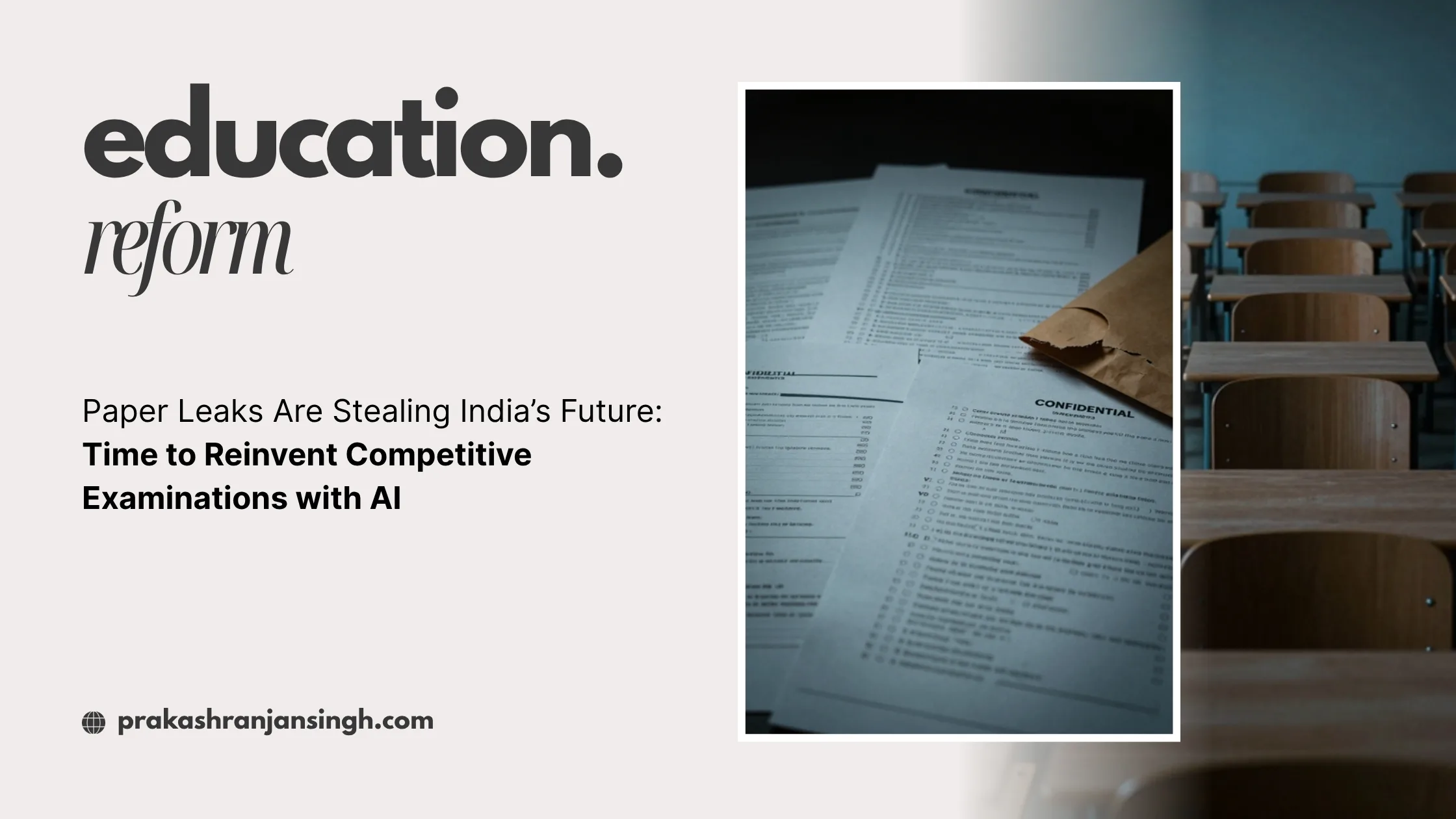
  • Paper Leaks Are Stealing India’s Future: Time to Reinvent Competitive Examinations with AI

    Paper Leaks Are Stealing India’s Future: Time to Reinvent Competitive Examinations with AI

    Paper Leaks Are Stealing India's Future: How AI-Randomized Exams Could End the Crisis

    Traditional exam systems keep failing India’s youth through recurring paper leaks, but the fix already exists in technology India has proven at scale: AI-generated unique question sets per candidate, biometric authentication, and secure digital delivery could make organised paper leaks virtually impossible while restoring merit-based trust in competitive exams.

    Every year, millions of young Indians dedicate years of their lives preparing for competitive examinations with dreams of becoming doctors, engineers, civil servants, bankers, teachers, and defence personnel. For many families, these examinations represent hope, social mobility, and financial security. Success is often determined by years of sacrifice, discipline, and relentless hard work.

    Unfortunately, this journey is increasingly being overshadowed by one of the biggest threats to India’s education system—the recurring problem of examination paper leaks.

    What’s the Real Cost When a Paper Leaks?

    Whenever a paper is leaked, the consequences extend far beyond the cancellation of a single examination. It destroys the confidence of honest candidates, wastes public resources, delays recruitment, and weakens trust in institutions. For a young aspirant who has spent years preparing, a leaked paper is not merely an administrative failure; it is an emotional setback that creates frustration, anxiety, and uncertainty about the future.

    India is a nation blessed with one of the world’s youngest populations. This demographic advantage can become our greatest strength only if the youth believe that opportunities are awarded through merit and fairness. If that belief weakens, the nation risks losing not only talent but also the enthusiasm and productive energy of millions of young citizens.

    The repeated occurrence of paper leaks suggests that traditional examination methods have reached their limitations. Printing confidential question papers, transporting them under security, storing them at multiple centres, and distributing them simultaneously create several vulnerable points where leaks can occur despite the best precautions.

    Could AI-Randomized Exams Actually Solve This?

    The answer may lie in embracing modern technology rather than relying solely on conventional systems.

    Artificial Intelligence, advanced encryption, biometric authentication, cloud computing, and secure digital platforms have transformed banking, healthcare, and digital payments. India has already demonstrated its technological capability through Digital India, Aadhaar authentication, UPI, and large-scale digital public infrastructure. The same innovation can now be applied to competitive examinations.

    Imagine an examination system where candidates authenticate themselves using secure digital credentials and biometric verification. Instead of receiving an identical printed question paper, every candidate receives a unique set of AI-generated multiple-choice questions drawn randomly from a large and carefully validated question bank based on the prescribed syllabus. While the difficulty level remains scientifically balanced, no two candidates receive exactly the same sequence of questions.

    Such a system would make organised paper leaks virtually impossible because there would no longer be a single question paper available for theft or circulation before the examination.

    The examination could be conducted through secure digital devices at authorised examination centres equipped with protected software that prevents unauthorised access, copying, or communication. AI-enabled monitoring systems could detect suspicious behaviour in real time, while automated evaluation would provide results quickly, reducing delays and administrative costs.

    What Would This Actually Fix?

    The benefits of such a transformation are significant: elimination of paper leaks caused by physical handling of question papers, faster declaration of results, reduced expenditure on printing, transportation, and storage, greater transparency and accountability, environment-friendly paperless examinations, improved confidence among candidates, and better utilisation of technology for large-scale recruitment.

    What Would It Take to Actually Build This?

    Naturally, implementing such a system would require careful planning. A massive, encrypted question bank prepared by expert subject panels would be essential. AI systems must be independently audited to ensure fairness, balanced difficulty levels, and freedom from bias. Robust cybersecurity measures would be needed to protect examination platforms from hacking attempts. Examination centres must provide secure infrastructure and reliable connectivity, while contingency plans should be available for technical failures.

    Technology alone cannot guarantee integrity. Human oversight, legal safeguards, periodic audits, and strict accountability must remain integral parts of the examination ecosystem. AI should strengthen transparency—not replace responsible governance.

    The objective is not merely to digitise examinations but to rebuild public trust. Every deserving candidate must believe that success depends only on knowledge, preparation, and merit—not on access to leaked papers or unfair advantages.

    India aspires to become a developed nation under the vision of Viksit Bharat 2047. Achieving this goal requires institutions that inspire confidence among the youth. Examination reforms are therefore not simply administrative improvements; they are investments in the nation’s future.

    The energy, intelligence, and aspirations of India’s young population are among our greatest national assets. Protecting the integrity of competitive examinations is essential to protecting that asset. By combining technology, Artificial Intelligence, strong cybersecurity, and transparent governance, India can build an examination system that is secure, efficient, and worthy of the trust of millions.

    The future of our youth should never be compromised by a leaked question paper. It should be shaped by merit, innovation, and equal opportunity.

    Related Reading

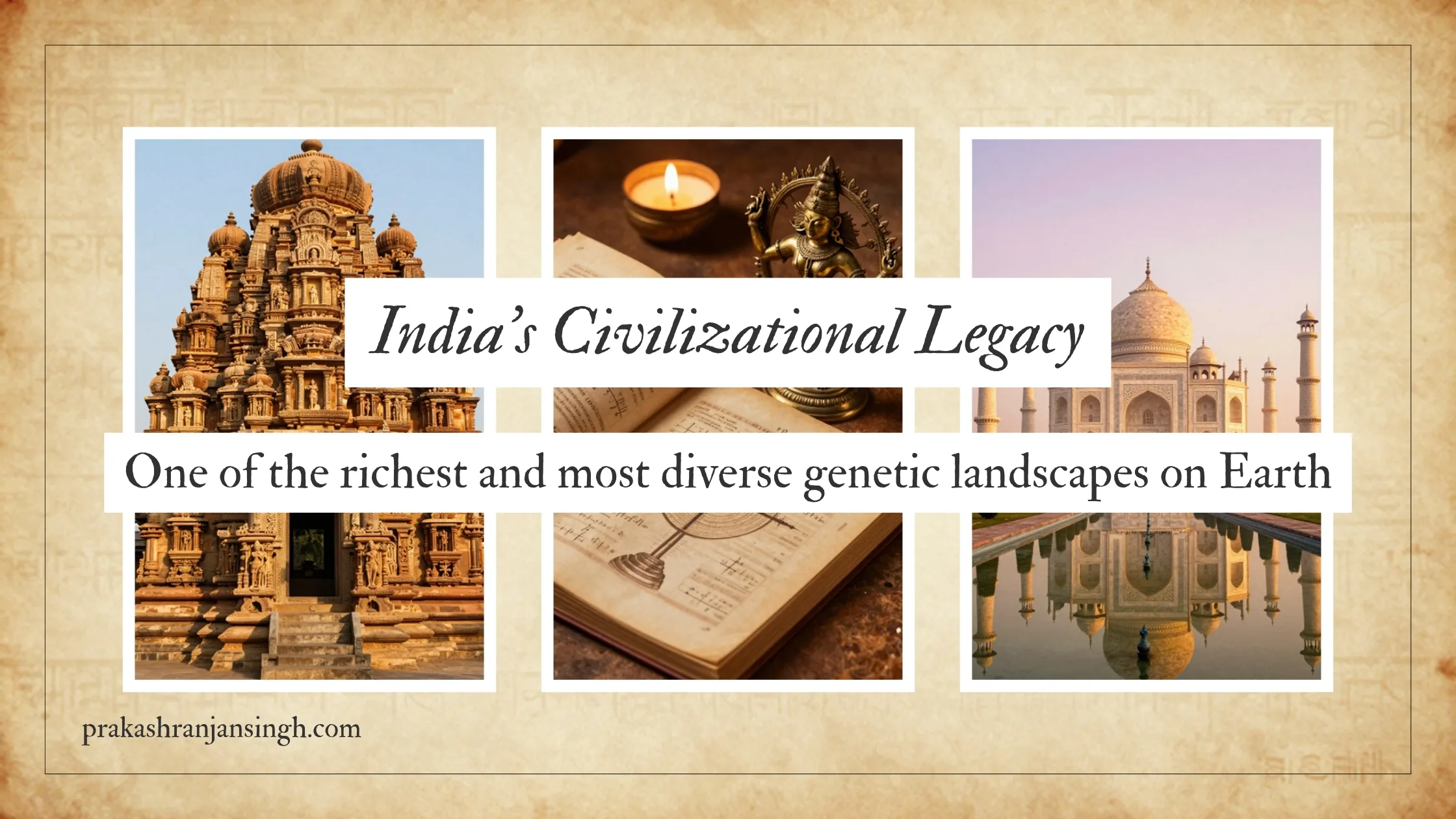
  • Rediscovering India’s Civilizational Legacy: One of the richest and most diverse genetic landscapes on Earth

    Rediscovering India’s Civilizational Legacy: One of the richest and most diverse genetic landscapes on Earth

    Rediscovering India's Civilizational Legacy

    Genetic and historical research confirms India holds one of the richest, most diverse genetic and civilizational landscapes on Earth — not proof of superiority, but evidence of tens of thousands of years of continuous habitation, innovation, and cultural influence, and India’s youth should learn this history not for chauvinism but to reclaim genuine pride and curiosity.

    In an age where artificial intelligence, biotechnology, and genome sequencing are transforming our understanding of human history, one truth has become increasingly clear: every human being shares a common origin, and all populations are remarkably similar genetically. Yet, modern scientific research also reveals that the Indian subcontinent possesses one of the richest and most diverse genetic landscapes on Earth, reflecting tens of thousands of years of continuous human habitation and interaction.

    What Does the Genetic Research Actually Show?

    Large-scale genetic studies have shown that India is home to extraordinary genetic diversity. This diversity is not a sign of division but of an ancient civilization that became a crossroads of human migration, adaptation, and cultural evolution. Rather than supporting notions of genetic superiority, science highlights India’s remarkable continuity and its role as one of the world’s oldest centers of civilization.

    History complements these scientific findings. Long before the rise of many modern nations, India had flourishing cities, universities, philosophical traditions, advanced mathematics, astronomy, metallurgy, medicine, and systems of governance. The teachings of the Upanishads, the practice of Yoga, the principles of Ayurveda, and the philosophy of Vasudhaiva Kutumbakam—”the world is one family”—continue to resonate across cultures today.

    How Far Did India’s Influence Actually Reach?

    The influence of Indian civilization extended far beyond its borders. Through trade, scholarship, spirituality, and cultural exchange, Indian ideas reached Southeast Asia and beyond. Temples, inscriptions, languages, epics, and artistic traditions in several countries bear witness to these deep historical connections. India’s impact on the world was achieved not through conquest but through the enduring power of knowledge and culture.

    Ironically, while scholars around the world study India’s ancient wisdom and scientific achievements, many young Indians remain unfamiliar with their own heritage. The digital age has connected us to the world, but it has also made many of us consumers of foreign narratives while neglecting the richness of our own civilization. Learning from other cultures is a strength, but forgetting our own roots is a loss.

    Why Should This Matter to Young Indians Today?

    Scientific progress should encourage curiosity, not chauvinism. Genetics teaches us that humanity is one family, while history teaches us that civilizations thrive when they embrace knowledge, innovation, and openness. India’s greatness has never rested on the idea that its people are biologically superior. It has rested on the enduring values of inquiry, tolerance, resilience, and the pursuit of knowledge.

    The youth of India must rediscover these strengths. They should study history with an open mind, appreciate the country’s scientific and cultural contributions, and carry forward the spirit of innovation that once made India a beacon of learning. Pride should arise from understanding, not from myths; from achievement, not from exclusion.

    The future of India will not be secured by looking backward with nostalgia alone. It will be built by combining the wisdom of an ancient civilization with the creativity of a young generation. A nation that knows its history, values its diversity, invests in education, and embraces scientific thinking will always stand tall among the nations of the world.

    India’s civilization has survived for millennia because it adapted without losing its identity. That is its true legacy. Let every young Indian take pride in that inheritance—not because science proves we are superior to others, but because history proves that our civilization has consistently contributed to the progress of humanity. The greatest tribute we can pay to our ancestors is not merely to celebrate their achievements but to surpass them through knowledge, integrity, innovation, and service to the world.

    Related Reading

  • Nationalism: The Strength That Makes a Nation Great

    Nationalism: The Strength That Makes a Nation Great

    Nationalism: The Strength That Makes a Nation Great

    Recent Middle East military tensions confirm an old truth: a nation’s real strength isn’t just weapons, economy, or technology — it’s the unity, resilience, and patriotism of its people, and India’s greatest asset in an increasingly competitive world will be citizens who put the nation first over caste, religion, or regional identity.

    Recent military tensions in the Middle East have once again reminded the world that the true strength of a nation does not lie only in its weapons, economy, or technology. Its greatest strength lies in the unity, resilience, and patriotism of its people. Whenever citizens stand together in difficult times, they become the strongest pillar of national security and sovereignty.

    The recent conflict involving Iran, Israel, and the United States has demonstrated that military power alone cannot determine the outcome of a geopolitical confrontation. Equally important are the determination of a nation’s people, their willingness to endure hardships, and their emotional attachment to their country’s identity and independence. Whatever opinions one may hold about the governments involved, it is evident that national unity plays a significant role in shaping a country’s ability to withstand external pressure.

    History repeatedly teaches us that nations become great when their citizens place the country’s interests above personal differences. Countries that have risen from war, economic crises, or natural disasters have done so because their people remained united and committed to rebuilding their nation. Patriotism has always been the invisible force behind visible achievements.

    Why Does India Have Even More at Stake Here?

    India has an even greater reason to embrace this spirit. Our civilization is one of the oldest in the world, built upon thousands of years of knowledge, spirituality, science, and cultural diversity. Yet our greatest strength has never been our diversity alone—it has been our ability to remain united despite our differences.

    Nationalism does not mean hatred towards any other country. Nor does it mean blind support for every decision of those in power. True nationalism means loving one’s country, respecting its Constitution, protecting its sovereignty, fulfilling one’s duties honestly, and working for the welfare of fellow citizens. It is a positive force that inspires responsibility rather than division.

    What Does Everyday Patriotism Actually Look Like?

    Every Indian can contribute to nation-building in simple yet meaningful ways. Performing one’s professional duties honestly, paying taxes faithfully, respecting the armed forces, protecting public property, preserving the environment, promoting social harmony, helping the poor, educating children, and voting responsibly are all acts of patriotism. A nation progresses when millions of ordinary citizens perform these extraordinary duties every day.

    The youth of India have a particularly important role. Instead of becoming divided by caste, religion, language, or regional identities, they should unite under the identity of being Indian first. They should acquire knowledge, develop skills, innovate, create employment, and strengthen India’s position in science, technology, manufacturing, agriculture, healthcare, and national defence. The future of India depends more on the character of its youth than on its natural resources.

    India’s freedom was not achieved overnight. It was earned through the sacrifices of countless freedom fighters, soldiers, social reformers, and ordinary citizens who placed the nation above themselves. Their legacy reminds us that every generation has a responsibility to strengthen the nation for the next.

    What Will It Take to Compete Globally in This Century?

    The twenty-first century is becoming an era of intense global competition. Economic power, technological leadership, cyber security, artificial intelligence, energy security, and social stability will determine which nations lead the world. India can achieve these goals only if its citizens remain united, disciplined, and committed to the national interest.

    Nationalism is not merely an emotion expressed during times of war. It is a lifelong commitment demonstrated through honesty, hard work, discipline, compassion, and service to society. A strong nation is built not only by brave soldiers guarding its borders but also by honest teachers shaping young minds, dedicated farmers feeding the country, skilled workers building infrastructure, responsible entrepreneurs creating jobs, ethical public servants delivering justice, and conscientious citizens fulfilling their civic responsibilities.

    When the spirit of nationalism lives in the hearts of the people, no challenge is too great, no obstacle is insurmountable, and no dream is beyond reach. A united nation can overcome adversity, protect its sovereignty, and build lasting prosperity.

    Let us therefore pledge to strengthen India’s unity, uphold its democratic values, respect every fellow citizen, and dedicate ourselves to the progress of our motherland. A nation becomes truly great not only because of its military or economic strength, but because its people stand together with a shared purpose, unwavering commitment, and deep love for their country.

    Jai Hind.

    Related Reading

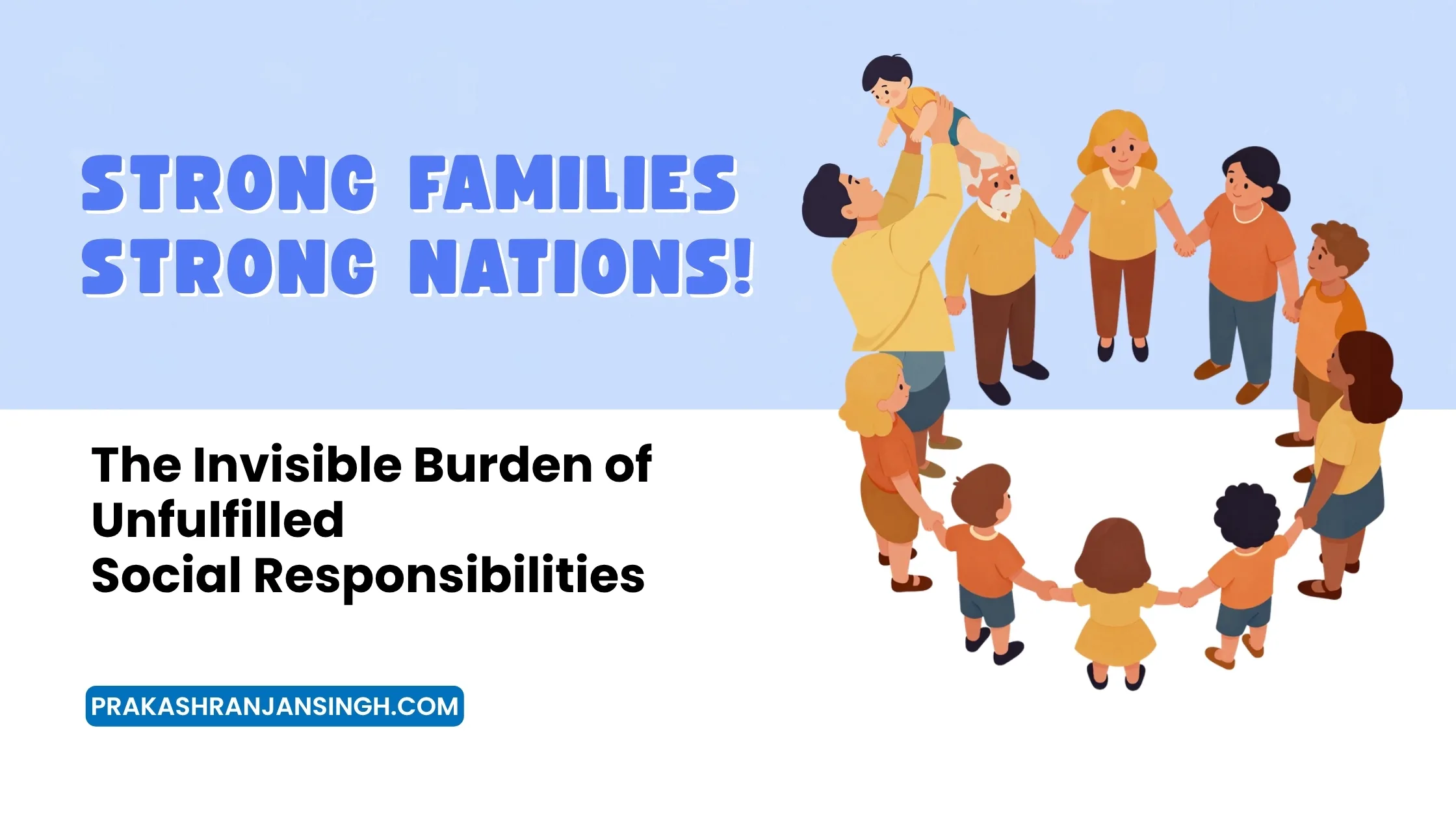
  • The Invisible Burden of Unfulfilled Social Responsibilities: Why Strong Families Build Strong Nations

    The Invisible Burden of Unfulfilled Social Responsibilities: Why Strong Families Build Strong Nations

    The Invisible Burden of Unfulfilled Social Responsibilities: Why Strong Families Build Strong Nations

    Modern success — salary, promotions, status — isn’t translating into fulfilment because many people are quietly neglecting family and social responsibilities while chasing careers, and reconnecting with parents, elders, and communities isn’t old-fashioned sentiment but the actual foundation of emotional resilience and, ultimately, a stronger nation.

    The world is changing at an unprecedented pace. Artificial intelligence, automation, globalization, and intense competition have transformed the way we live and work. Success today is often measured by salary, promotions, professional achievements, and social status. While these accomplishments are important, many people are quietly paying a heavy emotional price for this modern lifestyle.

    Despite living in an age of material abundance and technological advancement, stress, loneliness, anxiety, and dissatisfaction are becoming increasingly common. This raises an important question: Why are so many people feeling emotionally exhausted despite having more opportunities than ever before?

    One possible answer lies in an invisible burden that many of us carry—the burden of unfulfilled social and family responsibilities.

    Every human being is born into a network of relationships. We have responsibilities towards our parents, grandparents, spouse, children, siblings, neighbours, relatives, and society. These responsibilities are not merely traditions handed down through generations; they nurture emotional security, mutual trust, and social harmony. When we fulfill them sincerely, they give us a sense of purpose and inner satisfaction. When we neglect them for long periods, they can create feelings of guilt, emotional distance, and dissatisfaction.

    The Hidden Cost of Modern Life

    Today’s generation is under immense pressure. Long working hours, demanding corporate cultures, job insecurity, continuous learning requirements, financial commitments, and digital distractions consume most of their time and energy. Many young professionals leave their hometowns to build careers in distant cities, often living far from their parents and extended families.

    The result is that many people struggle to balance career aspirations with family and social obligations. They may send money home but have little time to talk to their parents. They may love their family deeply but rarely share meaningful moments with them. Festivals become holidays rather than occasions for togetherness. Neighbours become strangers, and community bonds weaken.

    Over time, these small gaps can grow into emotional distances that affect both individuals and families.

    Why Relationships Matter

    Human beings are not machines designed only for productivity. We are emotional beings who thrive on love, belonging, respect, and connection. A caring conversation with parents, a visit to grandparents, helping a neighbour in need, or spending quality time with family can provide emotional strength that no financial achievement can replace.

    When relationships become weak, many people experience an unexplained feeling of emptiness. They may continue to perform their professional duties but lose the enthusiasm, optimism, and peace of mind that come from strong emotional foundations.

    Success without meaningful relationships often feels incomplete.

    The Wisdom of Our Elders

    Every generation benefits from the experience of the one before it. Our parents and grandparents have faced hardships, economic struggles, family responsibilities, and social challenges. Their experiences may not always provide ready-made solutions for today’s world, but they often offer valuable lessons in resilience, patience, sacrifice, and integrity.

    The joint family system was more than a living arrangement. It was a support system where wisdom, traditions, values, and emotional strength were passed naturally from one generation to another. Children grew up learning respect, compassion, discipline, and responsibility through everyday life.

    As joint families have become less common, many young people have gained greater independence but may also have fewer opportunities to learn directly from older generations.

    Modern lifestyles have many advantages, but preserving intergenerational relationships can help retain the emotional and cultural strengths that families have long provided.

    Family Values Are Not Outdated

    Some people believe that traditional family values belong to the past. In reality, values such as respect for parents, gratitude, honesty, compassion, responsibility, and service remain relevant in every era.

    Technology changes. Fashion changes. Professions change. But human emotions remain the same.

    Parents still sacrifice for their children. Children still seek love and guidance. Grandparents still wish to share their blessings and experience. Neighbours still appreciate kindness during difficult times.

    These values are timeless because they reflect fundamental human needs.

    The Emotional Power of Caring for Parents

    Every parent dreams of seeing their children happy and successful. As parents grow older, they often need less material support than emotional companionship, respect, and reassurance.

    A satisfied and respected parent creates an atmosphere of blessings, confidence, and emotional stability within the family. Whether one views blessings through a spiritual, cultural, or psychological lens, caring relationships can strengthen confidence, reduce stress, and foster resilience across generations.

    Families that care for their elders also teach children by example. Young minds observe how parents treat grandparents and often carry those lessons into their own adulthood.

    Thus, every act of respect strengthens the moral foundation of the next generation.

    Social Responsibility Begins at Home

    Many people think social responsibility means donating money or participating in social campaigns. These are valuable acts, but the first responsibility begins within our own homes: respecting parents, supporting our spouse, guiding our children, helping neighbours, standing by relatives during difficult times, and protecting our cultural heritage.

    These everyday actions quietly strengthen society. A nation is built from families. Families are built on relationships. Relationships are built on responsibility. When this chain becomes weak, society also becomes weaker.

    Reconnecting With Our Roots

    Modernity and tradition should not be seen as opposites. We can embrace innovation while preserving the values that have sustained families and communities for generations.

    Our customs and rituals are not merely ceremonies. Many serve as opportunities for families to gather, strengthen relationships, express gratitude, and maintain a shared sense of identity. While practices naturally evolve over time, staying connected to our cultural heritage can help many people feel rooted and supported.

    A tree can grow taller only when its roots remain strong. Likewise, individuals and nations flourish when they remain connected to their values while adapting to change.

    Building a Strong Nation Through Strong Families

    A nation’s progress is not measured only by GDP, technology, or infrastructure. True development also depends on the emotional well-being, character, and social responsibility of its citizens.

    Employees who are emotionally secure often work with greater focus. Students supported by strong families frequently develop greater confidence. Communities built on trust become more resilient. Children raised with values become responsible citizens.

    When millions of families become stronger, the nation becomes stronger. Economic development and family values should complement each other rather than compete.

    A Call to Every Generation

    The younger generation should pursue excellence in education and careers with determination. At the same time, they should strive to remain connected to their parents, grandparents, and communities.

    Older generations, in turn, can encourage younger family members with understanding, adaptability, and guidance rather than judgment. Both generations have much to learn from one another.

    The future belongs not to those who abandon their roots, but to those who combine the wisdom of the past with the opportunities of the future.

    Conclusion

    Our greatest achievements will never be measured only by the wealth we accumulate or the positions we hold. They will also be measured by the relationships we nurture, the responsibilities we honor, and the values we pass on.

    A family where parents are respected creates children who understand gratitude. A society where neighbours care for one another creates trust. A nation where family values and social responsibility remain strong creates citizens who are not only successful but also compassionate, ethical, and resilient.

    Let us build careers without abandoning our families. Let us embrace modernity without forgetting our traditions. Let us achieve success without losing our humanity.

    For when our parents smile with contentment, our elders feel respected, our families remain united, and our communities stand together, we create something greater than personal success—we build the foundation of a strong, harmonious, and prosperous nation.

    Related Reading

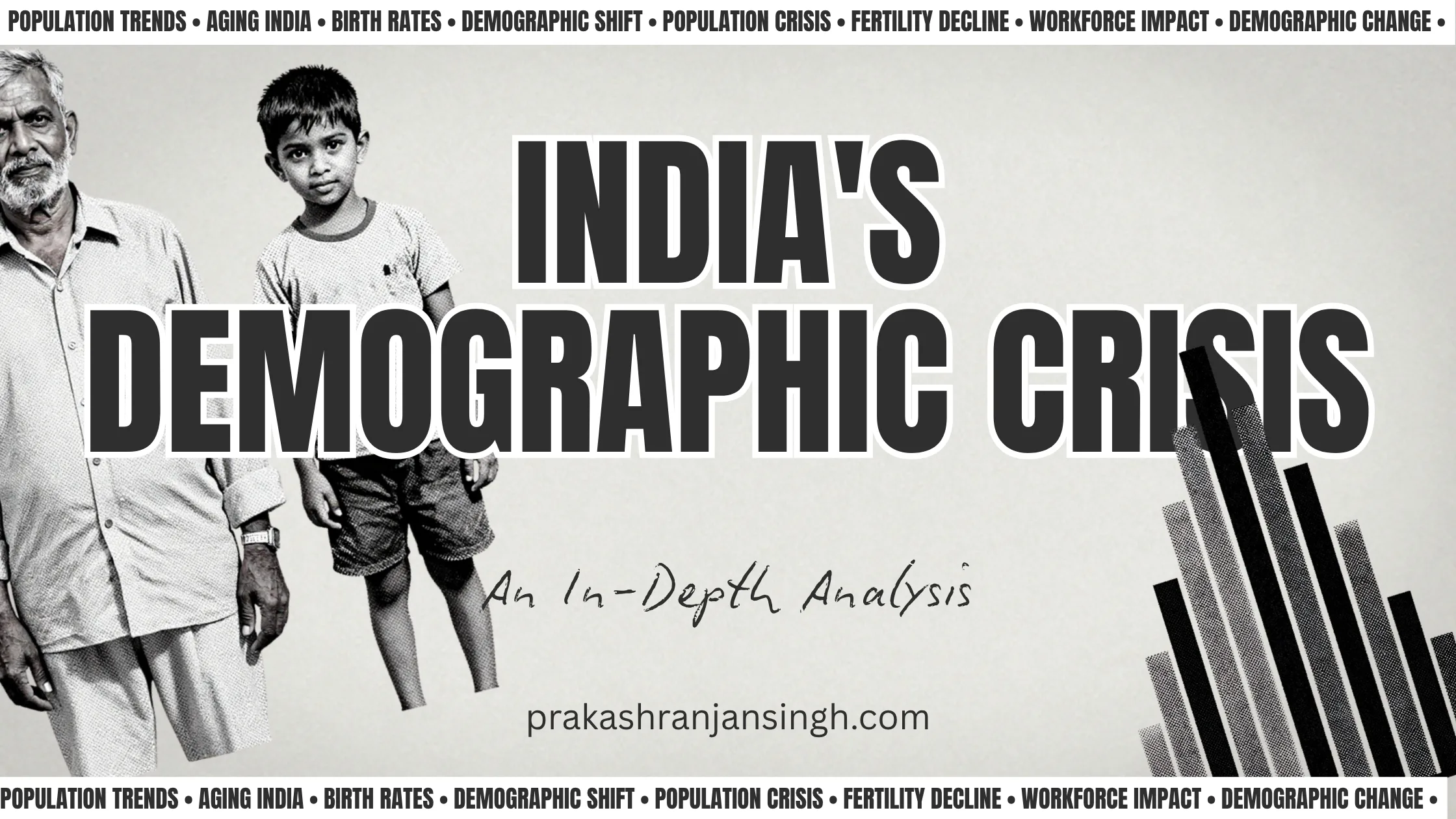
  • India at a Demographic Crossroads: Is the Nation Sleepwalking into a Human Capital Crisis?

    India at a Demographic Crossroads: Is the Nation Sleepwalking into a Human Capital Crisis?

    India at a Demographic Crossroads

    India’s celebrated demographic dividend is at risk: fertility rates in many states have already fallen to or below replacement level as young couples delay marriage or have fewer children, and without deliberate policy support for family formation, India could follow Japan, South Korea, and parts of Europe into shrinking workforces and rising dependency burdens.

    For decades, India has proudly celebrated its demographic dividend. A young population, abundant workforce, entrepreneurial spirit, and rising aspirations have been projected as the foundation of India’s journey toward becoming a developed nation and a global superpower by 2047. However, beneath the optimism lies a growing demographic challenge that policymakers, social thinkers, and citizens can no longer afford to ignore.

    Why Are Young Indians Having Fewer Children?

    Across urban India, a new social trend is rapidly emerging. Increasing numbers of young couples are choosing to have only one child, while many are deciding not to have children at all. Simultaneously, a significant section of the younger generation is postponing marriage indefinitely or rejecting the institution altogether. While these choices are often defended as matters of personal freedom, career priorities, financial pressures, or lifestyle preferences, the collective impact on the nation could be profound.

    India’s fertility rate has already fallen close to or below the replacement level in many states. Replacement fertility refers to the average number of children needed to maintain a stable population across generations. Once a nation remains below this level for a prolonged period, population ageing accelerates and the proportion of working-age citizens gradually declines.

    What Can India Learn From Japan, South Korea, and Europe?

    The experiences of countries such as Japan, South Korea, and several European nations provide a warning. These countries are now struggling with shrinking workforces, rising pension burdens, increasing healthcare expenditures, and a growing dependency ratio. Fewer young workers are required to support a rapidly expanding elderly population. Economic growth slows, innovation weakens, and governments face mounting fiscal pressures.

    India risks entering a similar cycle if current demographic trends continue unchecked.

    A nation does not become a superpower merely through technology, infrastructure, or military strength. Human capital remains the most important strategic asset. Young people drive consumption, entrepreneurship, innovation, productivity, and national defense. A declining youth population could reduce economic dynamism and weaken India’s competitive advantage in the global economy.

    What Happens to Family and Social Support?

    The issue extends beyond economics. The weakening of family structures may create broader social consequences. Traditionally, Indian society has relied on strong family networks for emotional support, elderly care, child upbringing, and community cohesion. As family sizes shrink and marriage rates decline, loneliness, social isolation, and mental health challenges may become increasingly common. Elderly citizens may find themselves without adequate family support, creating additional pressure on public welfare systems.

    Many young Indians cite economic uncertainty, high housing costs, demanding careers, expensive education, and concerns about work-life balance as reasons for avoiding marriage or parenthood. These concerns are genuine and deserve attention. However, the solution cannot simply be demographic decline. A nation that sacrifices future generations in pursuit of short-term economic comfort may eventually face long-term stagnation.

    What Should Policymakers Do Now?

    The challenge before policymakers is not to interfere with personal freedom but to create conditions that make family formation more attractive and sustainable. Affordable housing, quality childcare, tax incentives for families, flexible work arrangements, improved maternal and paternal benefits, and stronger support systems for working parents can help reverse declining fertility trends.

    Equally important is a broader cultural conversation. Society must recognize that raising children is not merely a private choice but also a contribution to the nation’s future. Every generation inherits a country from those who came before it and bears responsibility for those who will come after.

    India stands at a demographic crossroads. The decisions made by today’s youth and policymakers will shape the nation for decades to come. If the trend of declining marriages and shrinking families continues without thoughtful intervention, India could face a future marked by labour shortages, rising dependency burdens, and diminished human capital.

    The dream of becoming a developed and influential nation by 2047 requires more than economic reforms and technological progress. It requires a vibrant, confident, and growing younger generation capable of carrying the nation forward. Ignoring the demographic warning signs today may prove costly tomorrow.

    The question before India is simple yet profound: Can a nation sustain its ambitions if it gradually runs short of the very people needed to achieve them?

    Related Reading