

India fertility rate below replacement level is now official: the Sample Registration System report for 2024 puts the national figure at 1.9 children per woman, against the 2.1 needed to keep the population stable, as Down To Earth reports from the government data. A prolonged shortfall means an ageing population and a shrinking share of working-age citizens.
This is India demographic crisis in slow motion: the celebrated demographic dividend is at risk: fertility rates in many states have already fallen to or below replacement level as young couples delay marriage or have fewer children, and without deliberate policy support for family formation, India could follow Japan, South Korea, and parts of Europe into shrinking workforces and rising dependency burdens.
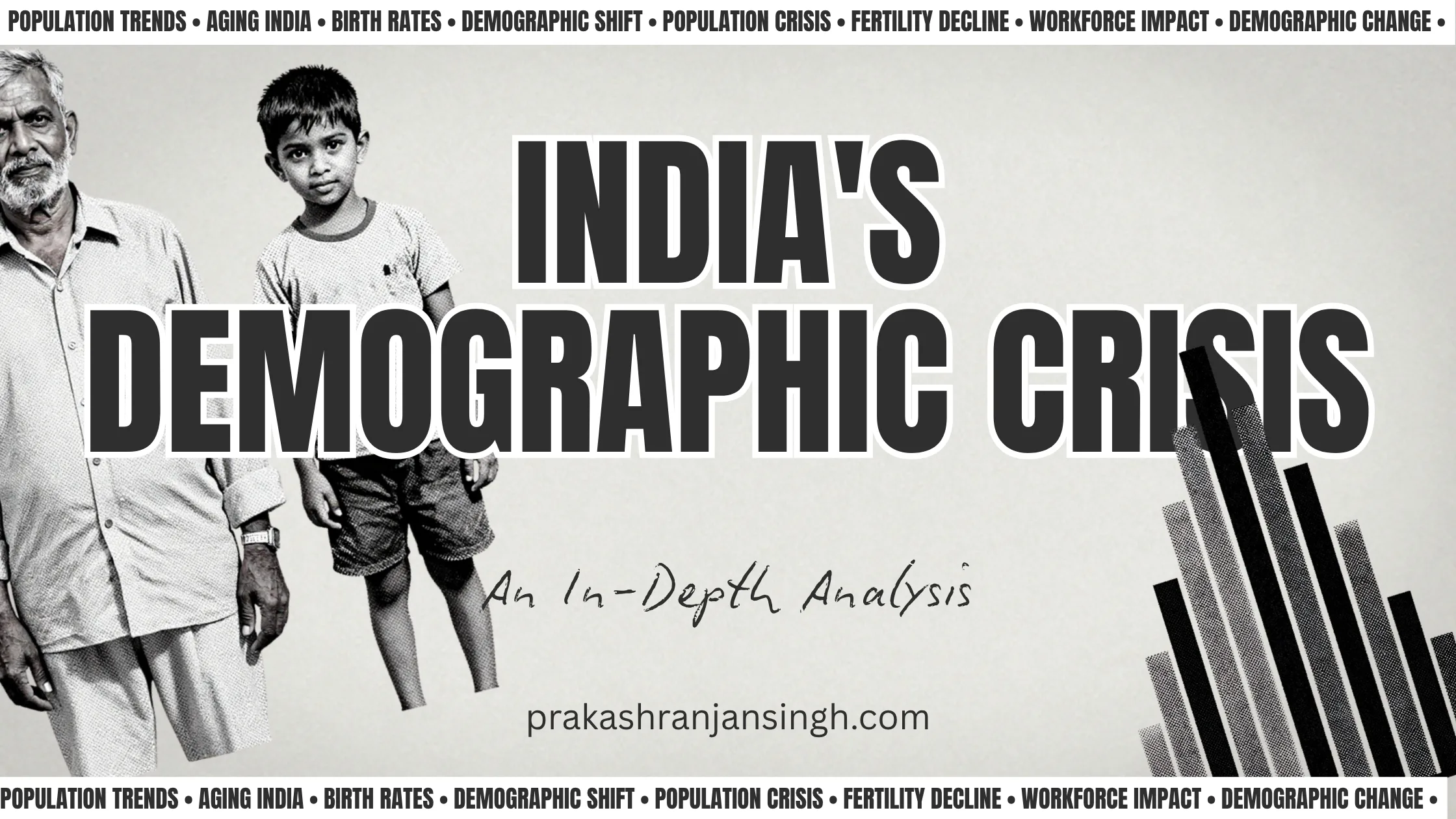
For decades, India has proudly celebrated its demographic dividend. A young population, abundant workforce, entrepreneurial spirit, and rising aspirations have been projected as the foundation of India’s journey toward becoming a developed nation and a global superpower by 2047. However, beneath the optimism lies a growing demographic challenge that policymakers, social thinkers, and citizens can no longer afford to ignore.
Key Takeaways
- India’s demographic dividend is at risk as fertility rates fall to or below replacement level in many states, risking shrinking workforces and rising dependency burdens like Japan, South Korea, and Europe.
- Japan, South Korea, and several European nations already show shrinking workforces, rising pension burdens, and growing dependency ratios from prolonged below-replacement fertility.
- The most actionable fix: affordable housing, quality childcare, tax incentives, flexible work arrangements, and stronger maternal/paternal benefits to make family formation more attractive.
Table of Contents
Why Are Young Indians Having Fewer Children?
Across urban India, a new social trend is rapidly emerging. Increasing numbers of young couples are choosing to have only one child, while many are deciding not to have children at all. Simultaneously, a significant section of the younger generation is postponing marriage and commitment indefinitely or rejecting the institution altogether. While these choices are often defended as matters of personal freedom, career priorities, financial pressures, or lifestyle preferences, the collective impact on the nation could be profound.
India’s fertility rate has already fallen close to or below the replacement level in many states. Replacement fertility refers to the average number of children needed to maintain a stable population across generations. Once a nation remains below this level for a prolonged period, population ageing accelerates and the proportion of working-age citizens gradually declines.
India Demographic Crisis: Is It Already Underway?
The experiences of countries such as Japan, South Korea, and several European nations provide a warning. These countries are now struggling with shrinking workforces, rising pension burdens, increasing healthcare expenditures, and a growing dependency ratio. Fewer young workers are required to support a rapidly expanding elderly population. Economic growth slows, innovation weakens, and governments face mounting fiscal pressures.
India risks entering a similar cycle if current demographic trends continue unchecked — this is exactly how India’s demographic crisis could unfold if left unaddressed.

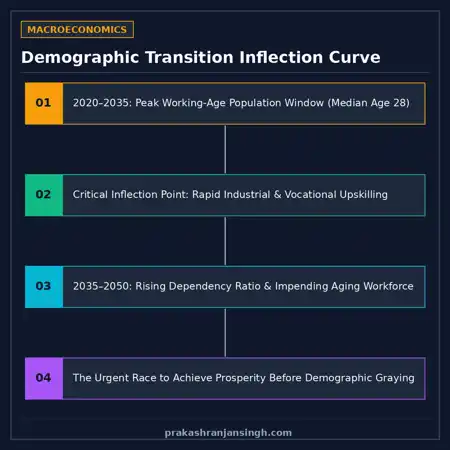
A nation does not become a superpower merely through technology, infrastructure, or military strength. Human capital remains the most important strategic asset, a point that matters today because, according to the PLFS Annual Report 2025 released by MoSPI, unemployment among those aged 15-29 was still 9.9% in 2025 even as the workforce grows. Young people drive consumption, entrepreneurship, innovation, productivity, and national defense. A declining youth population could reduce economic dynamism and weaken India’s competitive advantage in the global economy.
What Happens to Family and Social Support?
The issue extends beyond economics. The weakening of family structures may create broader social consequences. Traditionally, Indian society has relied on strong family networks for emotional support, elderly care, child upbringing, and community cohesion. As family sizes shrink and marriage rates decline, loneliness, social isolation, and mental health challenges may become increasingly common. Elderly citizens may find themselves without adequate family support, creating additional pressure on public welfare systems.
Many young Indians cite economic uncertainty (see my post on the jobs-debt-technology trap), high housing costs, demanding careers, expensive education, and concerns about work-life balance as reasons for avoiding marriage or parenthood. These concerns are genuine and deserve attention. However, the solution cannot simply be demographic decline. A nation that sacrifices future generations in pursuit of short-term economic comfort may eventually face long-term stagnation.
What Should Policymakers Do Now?
The challenge before policymakers is not to interfere with personal freedom but to create conditions that make family formation more attractive and sustainable. Affordable housing, quality childcare, tax incentives for families, flexible work arrangements, improved maternal and paternal benefits, and stronger support systems for working parents can help reverse declining fertility trends.
Equally important is a broader cultural conversation. Society must recognize that raising children is not merely a private choice but also a contribution to the nation’s future. Every generation inherits a country from those who came before it and bears responsibility for those who will come after.
India stands at a demographic crossroads. The decisions made by today’s youth and policymakers will shape the nation for decades to come. If the trend of declining marriages and shrinking families continues without thoughtful intervention, India could face a future marked by labour shortages, rising dependency burdens, and diminished human capital.
The dream of becoming a developed and influential nation by 2047 requires more than economic reforms and technological progress. It requires a vibrant, confident, and growing younger generation capable of carrying the nation forward. Ignoring the demographic warning signs today may prove costly tomorrow.
The question before India is simple yet profound: Can a nation sustain its ambitions if it gradually runs short of the very people needed to achieve them?
India Fertility Rate Below Replacement Level: What the 2024 Data Shows
Since this piece was first written, the warning became a measured fact. The Sample Registration System Statistical Report 2024, published by the Office of the Registrar General and Census Commissioner in May 2026, puts India’s Total Fertility Rate at 1.9 children per woman, below the 2.1 replacement level. The national average hides a wide spread: Bihar had the highest rate at 2.9, followed by Uttar Pradesh (2.6), Madhya Pradesh (2.4) and Rajasthan (2.3), while Delhi had the lowest at 1.2. Rural India recorded 2.1 and urban India 1.5. An India fertility rate below replacement level therefore means almost every state is already below it, with only a handful of northern states still above, as The Wire’s reading of the report also notes. The EAC-PM report discussed below puts annual births at about 2.32 crore and warns that they may keep declining.
This isn’t a distant risk anymore — it’s the current baseline this article’s demographic-crisis warning was built on.
How Is India Responding? EAC-PM’s U-Turn and Andhra Pradesh’s Cash Incentives
Policy is starting to catch up with the data. In September 2026, a report by the Economic Advisory Council to the Prime Minister, prepared under Sanjeev Sanyal, reportedly recommended that India end its decades-old population-control programmes altogether — ending incentive payments to ASHA workers for family-planning targets, dropping “population control” language from official documents, and restructuring schemes like Mission Parivar Vikas that were built around a shrinking-is-good assumption that no longer fits the data.
At the state level, Andhra Pradesh is moving in the opposite direction. With a state fertility rate of 1.5, Chief Minister N. Chandrababu Naidu proposed in March 2026 a cash incentive of ₹25,000 at delivery for parents with two or more children, along with a month of leave for government employees for a second and third child, and said the state would bring in a Population Management Policy. Later media reports describe further benefits in a draft policy, but I have not verified those details from an official document, so treat them as proposals — a real-world test of exactly the kind of family-formation incentive this article originally called for.
These are early, contested moves — the RSS has separately pushed for three-child families, and critics warn Andhra Pradesh’s incentives could reward births without fixing the underlying cost-of-living pressures driving the decline in the first place — but they confirm the core argument of this piece: India’s window to act on its demographic dividend is closing, not hypothetical.
Frequently Asked Questions
What is the India demographic crisis?
India’s fertility rate was 1.9 children per woman in 2024, below the 2.1 replacement level, according to the Sample Registration System. Left unaddressed, a prolonged shortfall accelerates population ageing and shrinks the share of working-age citizens, which is the core of the demographic crisis argument.
Has India fertility rate fallen below replacement level yet?
Yes. The Sample Registration System Statistical Report 2024, released in May 2026, put India’s national Total Fertility Rate at 1.9 against the 2.1 replacement level, with Bihar highest at 2.9 and Delhi lowest at 1.2. In September 2026 the Economic Advisory Council to the PM reportedly recommended ending population-control incentives, and Andhra Pradesh has proposed cash incentives for a second or third child.
Why is India’s fertility rate falling below replacement level?
Urban India recorded a fertility rate of 1.5 in 2024 against 2.1 in rural areas. The article points to economic uncertainty, high housing costs, demanding careers, expensive education and work-life concerns, along with delayed marriage and fewer children among young couples. The causes are debated, and the article argues policy should make family formation more sustainable.
What happens to countries that let fertility fall too low?
Japan, South Korea, and several European nations show what follows: shrinking workforces, rising pension burdens, increasing healthcare costs, and a growing dependency ratio, since fewer young workers must support a larger elderly population.
What can policymakers do to address it?
Affordable housing, quality childcare, tax incentives for families, flexible work arrangements, and improved maternal and paternal benefits can help make family formation more attractive and sustainable without interfering with personal freedom.
Related Reading
- The Invisible Burden of Unfulfilled Social Responsibilities: Why Strong Families Build Strong Nations
- Nationalism: The Strength That Makes a Nation Great
- India’s Youth Power: From Emotional Mobilization to Nation Building
- Cost of Living: Changing Human Psychology in Modern Era
- India’s Forgotten Goldmine: Why Agriculture Must Become the Engine of Economic Growth



Leave a Reply