


Is technology controlling our lives? In part, and it is a real risk: a handful of tech companies now hold market valuations exceeding entire nations’ economic output, controlling the cloud infrastructure, AI models, and algorithms billions depend on daily, and history shows this concentration pattern isn’t new — it’s the same challenge oil, railways, and telecom once posed, solved through competition law and accountable regulation, not by halting innovation.
Technology is advancing at an unprecedented pace. Artificial intelligence, cloud computing, biotechnology, robotics, quantum computing, and space technology are transforming every aspect of human life. These innovations are making healthcare more effective, businesses more productive, education more accessible, and communication almost instantaneous. There is little doubt that technology has become one of the greatest drivers of human progress.
However, every technological revolution also raises an important question: Who controls the technology that increasingly controls our lives?
Key Takeaways
- A handful of tech companies now hold market valuations exceeding entire nations’ economic output, controlling the cloud infrastructure, AI models, and algorithms billions depend on daily.
- This concentration pattern isn’t new – it mirrors the same challenge oil, railways, and telecom once posed before regulation caught up.
- The answer is strong competition policy and accountable, transparent AI governance – not halting innovation.
Table of Contents
Is Technology Controlling Our Lives? Why Power Is So Concentrated
Today, much of the world’s cutting-edge technological research and innovation is concentrated within a handful of powerful global corporations. These companies possess enormous financial resources, attract the world’s best scientific talent, and invest billions of dollars annually in research and development. Their products and services have become deeply integrated into our daily lives—from the smartphones we use and the search engines we rely on to cloud infrastructure, artificial intelligence, social media platforms, and digital payment systems.
This concentration of technological power presents both opportunities and risks.
On the positive side, large technology companies have accelerated innovation at a speed that many governments alone could not achieve. Artificial intelligence is helping doctors detect diseases earlier, autonomous systems are improving industrial efficiency, renewable energy technologies are advancing rapidly, and digital platforms have enabled millions of entrepreneurs to reach global markets. During the COVID-19 pandemic, technology companies played a crucial role in enabling remote work, online education, and digital communication.
Yet history teaches us that whenever economic or technological power becomes concentrated, societies must carefully examine the long-term consequences.
How Much Influence Do These Companies Actually Wield?
Several technology companies today have market valuations that exceed the annual economic output of many developing nations. Such financial strength allows them to influence markets, shape consumer behavior, acquire promising competitors, and invest heavily in future technologies. Their platforms determine what billions of people read, watch, purchase, and discuss every day through sophisticated algorithms.
Artificial intelligence further amplifies this influence. Recommendation systems can shape public opinion, consumer preferences, and even political discourse. While these systems are designed primarily to maximize user engagement and business objectives, they can unintentionally create information bubbles, reinforce biases, and reduce exposure to diverse viewpoints.
Another concern is the growing dependence of governments and businesses on privately owned digital infrastructure. Cloud services, cybersecurity systems, satellite communications, AI models, and digital marketplaces are increasingly managed by a relatively small number of corporations. If critical infrastructure becomes overly dependent on a few private entities, societies may become vulnerable to commercial decisions, cyberattacks, or geopolitical conflicts.
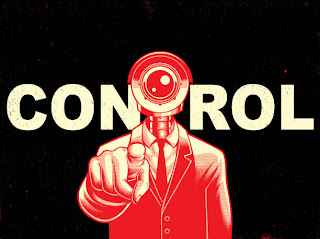
Has Society Faced This Kind of Technology Concentration Before?
History offers valuable lessons. The Industrial Revolution created enormous prosperity but also led to monopolies and poor labor conditions before regulations were introduced. Similar concerns arose in sectors such as oil, railways, telecommunications, and finance. Eventually, governments developed competition laws, consumer protection measures, and regulatory frameworks to balance innovation with public interest.
Technology should not be viewed as an exception.
This does not imply that any single company will inevitably “take over the world.” Modern economies remain shaped by competition, national governments, international cooperation, regulators, researchers, civil society, and consumers. However, if technological power continues to concentrate without adequate oversight, the influence of a few organizations over economic, social, and even political systems could continue to grow.
What Safeguards Would Actually Help?
The challenge before humanity is therefore not to stop technological progress but to ensure that its benefits are shared broadly and governed responsibly.
Several safeguards deserve serious attention: strong competition policies to prevent excessive market concentration, transparent and accountable AI systems, robust data privacy and cybersecurity laws, public investment in scientific research and open innovation, international cooperation on the governance of advanced technologies, digital literacy so citizens understand how algorithms influence decisions, and ethical standards that place human welfare above purely commercial objectives.
Technology must remain a tool that serves humanity rather than a force that humanity simply adapts to. Innovation should empower individuals, strengthen democratic institutions, and improve quality of life—not create excessive dependence on a handful of organizations.
The future of civilization will not be determined solely by how advanced our technologies become. It will also depend on whether humanity possesses the wisdom, institutions, and collective responsibility to ensure that technological power remains accountable, transparent, and aligned with the interests of society as a whole.
The greatest challenge of the twenty-first century may not be creating more powerful technologies—it may be ensuring that no technology, and no institution controlling it, becomes more powerful than humanity itself.
How Concentrated Is Cloud Infrastructure Today?
Cloud computing is a good place to measure concentration, because banks, government departments, start-ups and AI companies all run on it. According to Synergy Research Group, in the first quarter of 2026 Amazon held 28% of the worldwide cloud infrastructure services market, Microsoft 21% and Google 14%. Together that is 63% of a market worth about $128.6 billion in a single quarter, as reported by Data Center Dynamics.
This is not a claim that these companies are misusing their position. It is a statement of dependency. In banking we call this concentration risk: when too many critical processes sit with one supplier, a single outage, price change or geopolitical dispute can reach everyone at once. The Reserve Bank of India’s Master Direction on outsourcing of IT services, which came into effect on 1 October 2023, asks regulated entities to manage this kind of concentration risk with their service providers. The same discipline is worth applying to the wider economy, a point that connects to the jobs, debt and technology trap I wrote about earlier.
Big Tech Dominance in India: What Safeguards Already Exist?
India is not starting from zero. Four pieces are already in place, and one is still pending.
- Competition enforcement: in October 2022 the Competition Commission of India imposed a penalty of Rs 1,337.76 crore on Google in the Android case for abusing its dominant position. The Supreme Court declined interim relief, and Google paid the full amount.
- Data protection: the Digital Personal Data Protection Act, 2023 became fully operational with the DPDP Rules, 2025 notified on 14 November 2025, giving citizens rights to access, correct and erase their data. Rules provide an 18-month window for phased compliance and a Data Protection Board; the maximum penalty is Rs 250 crore.
- Public payment rails: NPCI has set a cap of 30% on the share of UPI transaction volume any single third-party app can handle, with the deadline extended to 31 December 2026. It shows a regulator limiting concentration on a system the public depends on.
- Sector rules for banks: the RBI outsourcing direction mentioned above.
- Pending: a draft Digital Competition Bill, which would regulate very large platforms before harm occurs, was proposed in 2024. At the last report I could verify (June 2025), it had been deferred, so I would not treat it as law.
On Big Tech dominance in India, the gap, in my view, is not the absence of rules but the speed of enforcement. A competition case that takes years can end after the market has already moved on. That is why the first safeguard in this article, strong and timely competition policy, matters as much as new laws.
What 5 Practical Steps Keep You in Control of Technology?
Policy is slow, so if you worry that technology is controlling our lives, individuals and small businesses can reduce their own dependence today. Here are five steps I would suggest.
- Keep a copy of what matters outside one provider. Photos, documents and contacts should exist in at least two places.
- Prefer services that let you export your data in open formats. If leaving is hard, you are already locked in.
- If you run a business, write an exit plan for each critical vendor. Note what you would move, how long it would take and what it would cost. This is standard business-continuity practice in banks.
- Use public digital rails where they exist. Accepting UPI from any app avoids tying a shop to a single wallet.
- Cross-check what your feed shows you. Recommendation systems are built to hold attention, so compare news and advice from more than one source.
Frequently Asked Questions
How much influence do today’s largest tech companies actually wield?
Several technology companies have market valuations that exceed the annual economic output of many developing nations, letting them influence markets, acquire competitors, and shape what billions of people read, watch, and buy through their algorithms. Their recommendation systems can also shape public opinion and even political discourse.
Has society faced this kind of technological concentration before?
Yes – the Industrial Revolution created similar concerns around monopolies and poor labor conditions, and sectors like oil, railways, telecommunications, and finance faced the same pattern before competition laws and regulatory frameworks were introduced to balance innovation with public interest.
What safeguards would actually help address this concentration?
Strong competition policies to prevent excessive market concentration, transparent and accountable AI systems, robust data privacy and cybersecurity laws, and digital literacy so citizens understand how algorithms influence their decisions.
How concentrated is the global cloud market?
According to Synergy Research Group, Amazon, Microsoft and Google together held about 63% of the cloud infrastructure services market in the first quarter of 2026 (28%, 21% and 14%), in a market worth roughly $128.6 billion for the quarter.
What laws does India have to check Big Tech dominance?
The Competition Commission of India enforces the Competition Act, as in the Rs 1,337.76 crore penalty on Google in the Android case. The Digital Personal Data Protection Act, 2023 and its 2025 Rules protect personal data, and NPCI caps any single third-party UPI app at 30% of volume. A draft Digital Competition Bill had not been enacted at the last report I could verify.

Leave a Reply