


Will AI replace entry-level jobs? The evidence is still early, but the leadership pipeline crisis is real: AI is automating the very entry-level, repetitive tasks that have always taught beginners how to become experts and eventually leaders, and if that apprenticeship pipeline shrinks without deliberate redesign, organizations risk a future shortage of experienced leadership, institutional memory, and mentorship — unless training pathways are rebuilt around working with AI, not just replaced by it.
Artificial Intelligence (AI), robotics, and automation are transforming the global economy at an unprecedented pace. They are increasing productivity, reducing operational costs, improving accuracy, and enabling innovation across industries. However, alongside these remarkable benefits, an important long-term challenge deserves greater attention: the possible erosion of entry-level employment, which has traditionally served as the foundation for developing skilled professionals, experienced managers, innovators, and future leaders.
Throughout history, expertise has not emerged overnight. Every accomplished engineer, doctor, scientist, banker, entrepreneur, judge, teacher, or administrator began as a novice, gradually acquiring knowledge through years of practical experience. If technology increasingly performs the routine tasks that once introduced people to their professions, society may eventually face a shortage of experienced professionals capable of leading organizations, making complex judgments, and mentoring future generations.
This concern is not merely about employment; it is about preserving humanity’s system for cultivating knowledge, leadership, creativity, and institutional memory.
Key Takeaways
- AI is automating the entry-level, repetitive tasks that have always taught beginners how to become experts and eventually leaders.
- Entry-level roles have traditionally taught organizational culture, professional ethics, decision-making, and resilience – experiences that formal education alone cannot always replace.
- Rebuild training pathways around working with AI, not just replacing juniors with it – expand apprenticeships and design AI-assisted training rather than AI-only automation.
Table of Contents
- Leadership Pipeline Crisis: How Does Human Expertise Actually Develop?
- Why Do Entry-Level Jobs Matter So Much?
- Is AI Shrinking the Apprenticeship Model?
- Will AI Replace Entry-Level Jobs? What Does the Data Say?
- What Does This Mean for Future Leadership?
- What Are the Psychological Consequences?
- Could This Also Affect Creativity and Innovation?
- What Are the Broader Economic Implications?
- Is This All Risk, or Are There Real Opportunities Too?
- How Can Employers Keep Entry-Level Jobs Useful in the AI Era?
- What Should Policymakers Actually Do?
Leadership Pipeline Crisis: How Does Human Expertise Actually Develop?
Research in psychology, neuroscience, and organizational behavior consistently shows that expertise develops through repeated practice, problem-solving, feedback, and real-world experience.
The journey from beginner to expert generally follows several stages: learning fundamental concepts, performing supervised routine tasks, handling increasingly complex situations, developing independent judgment, mentoring others, and becoming a strategic leader. Each stage builds upon the previous one. Removing the earliest stages could weaken the entire developmental pathway.
Unlike AI systems, human intelligence develops through continuous adaptation, emotional learning, social interaction, ethical reasoning, and accumulated experience.
Why Do Entry-Level Jobs Matter So Much?
Many entry-level roles involve repetitive work that AI can increasingly automate. Yet these positions have traditionally served purposes beyond productivity. They help individuals understand organizational culture, learn professional ethics, develop communication skills, build decision-making abilities, gain confidence, learn teamwork, observe experienced mentors, and develop resilience through mistakes. These experiences cannot always be replaced by formal education alone.
The professional workforce functions like a flowing river: students become trainees, trainees become junior professionals, junior professionals become specialists, specialists become managers, managers become executives, and executives become national leaders.
If the inflow of trainees declines substantially without effective alternatives, fewer people may accumulate the experience needed for future leadership roles.
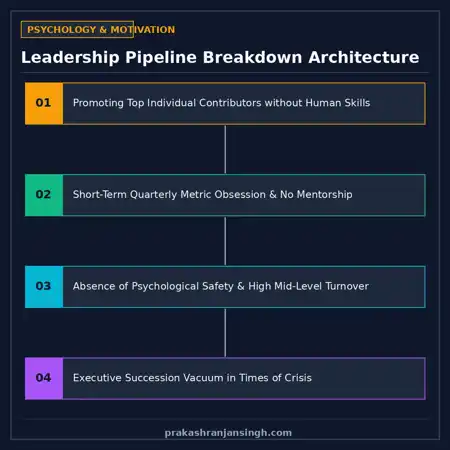

Is AI Shrinking the Apprenticeship Model?
Historically, apprenticeship has been central to professional development — junior lawyers drafted documents, junior accountants prepared financial records, junior software engineers fixed bugs, junior bankers processed transactions, junior journalists covered local stories, and junior researchers collected data.
Increasingly, AI systems can perform many of these routine tasks. While this boosts efficiency, it may also reduce opportunities for beginners to learn through practical work unless organizations deliberately redesign training pathways.
Will AI Replace Entry-Level Jobs? What Does the Data Say?
Early evidence points in the same direction, though it is not conclusive. A January 2026 Dallas Fed analysis found that the share of workers aged 20 to 24 in the most AI-exposed occupations fell from 16.4% in November 2022 to 15.5% in September 2025. It also cites a Stanford study of payroll records covering about 25 million workers, which found a 13% employment decline since 2022 for ages 22 to 25 in the most exposed jobs.
The Dallas Fed researchers say the drop comes mainly from fewer young people entering these occupations rather than from layoffs, and they caution that causation is not established and the effect on overall unemployment is small so far. That is exactly why the leadership pipeline crisis is a slow-moving risk: the missing beginners show up as quiet non-hiring, not as headline job losses.
In India, a June 2026 Cognizant and Pearson survey of 750 HR leaders reported that AI already performs about 37% of entry-level tasks in India, against 33% globally. Most respondents expect entry-level roles to shift toward supervising AI within five years, and nearly all also expect new entry-level roles to appear. These are employer expectations, and Cognizant co-conducted the study, so treat them as indicative. For the wider job picture, see our look at how AI layoffs are reshaping careers.
What Does This Mean for Future Leadership?
Leadership is rarely developed in classrooms alone. Successful leaders typically possess technical competence, emotional intelligence, crisis management experience, team leadership, ethical judgment, and long-term strategic thinking — qualities refined through years of practical responsibility.
If fewer people gain that experience, organizations could face a narrower pool of future leaders. Whether this becomes a widespread shortage depends on how education, employers, and governments adapt.
What Are the Psychological Consequences?
Employment provides more than income. Psychologists recognize that work contributes to identity, self-esteem, social belonging, purpose, achievement, and personal growth.
If large numbers of young people struggle to enter meaningful careers, some may experience increased uncertainty, frustration, or reduced confidence. However, outcomes will vary widely depending on economic conditions, education, social support, and the availability of new forms of work.
Could This Also Affect Creativity and Innovation?
Creativity flourishes when individuals encounter diverse challenges. Routine work often teaches process improvement, customer behavior, operational efficiency, and practical problem solving. Many groundbreaking innovations originated from people who deeply understood everyday work.
If fewer individuals gain practical exposure, some forms of innovation could diminish. At the same time, AI may also enable new kinds of creativity by allowing people to focus more on higher-level design, research, and invention.
What Are the Broader Economic Implications?
Economic growth depends upon several forms of capital: physical, financial, technological, and human. Human capital remains one of the strongest drivers of long-term productivity.
If technological progress significantly outpaces investment in developing human capabilities, economies could experience slower leadership development, greater skill mismatches, higher inequality, reduced social mobility, and slower diffusion of expertise. Conversely, if societies successfully retrain workers and redesign education, AI could increase productivity while supporting continued economic growth.
Experienced professionals preserve organizational knowledge — historical mistakes, crisis management, ethical standards, customer relationships, and industry evolution. This “institutional memory” is transmitted through mentoring and collaboration. A weakened pipeline of experienced workers could make it harder for organizations to preserve this knowledge over generations.
Many developed countries already face aging populations. As experienced workers retire, younger generations must replace them. If fewer young professionals enter and progress through traditional career paths, succession planning may become more difficult in sectors such as healthcare, engineering, public administration, education, and finance.
Is This All Risk, or Are There Real Opportunities Too?
Technology has historically displaced some jobs while creating others. AI is expected to generate demand for roles involving AI supervision, human-AI collaboration, cybersecurity, robotics maintenance, data governance, ethics and compliance, healthcare, renewable energy, advanced manufacturing, and creative industries. The challenge is ensuring that these new roles include structured pathways for beginners to gain experience.
How Can Employers Keep Entry-Level Jobs Useful in the AI Era?
Employers do not have to wait for policy. Four practical steps can keep the apprenticeship function alive even when AI handles the routine work:
- Pair AI output with human review. Let juniors check, correct, and explain what AI produces, so they learn the underlying craft.
- Rotate juniors through real decisions. Give beginners supervised ownership of small but genuine outcomes early in their careers.
- Assign named mentors. Make mentoring part of a senior person’s job, not an optional extra.
- Track skill progression. Measure what new hires can do independently over time, not just how much work gets done.
What Should Policymakers Actually Do?
To preserve human expertise while embracing AI, governments, educational institutions, and businesses could consider expanding apprenticeship and internship programs, designing AI-assisted training rather than AI-only automation, investing in lifelong learning and reskilling, rewarding companies that create structured entry-level opportunities, embedding leadership development into education, encouraging mentorship between experienced professionals and young employees, measuring human capital development alongside productivity gains, and supporting entrepreneurship and innovation among young people.
Artificial Intelligence represents one of humanity’s greatest technological achievements. Its ability to improve productivity, healthcare, education, science, and economic efficiency is extraordinary. Yet technological progress should not come at the cost of weakening the human systems that cultivate experience, wisdom, leadership, and creativity.
The future challenge is not choosing between humans and AI, but designing economies where AI amplifies human potential rather than replacing the developmental journey through which professionals become experts and experts become leaders.
If governments, industries, and educational institutions consciously preserve opportunities for learning, mentoring, and practical experience, AI can become a powerful partner in human progress. If these pathways are neglected, societies may eventually face a shortage of experienced leadership, slower human capital formation, and increased economic pressures.
The leadership pipeline crisis will therefore be decided not simply by how intelligent our machines become, but by whether our institutions continue to nurture the intelligence, judgment, creativity, and leadership of the people who will shape the future.
Frequently Asked Questions
What is the leadership pipeline crisis?
The leadership pipeline crisis is the risk that AI automates the entry-level tasks through which beginners learn their professions, leaving fewer people with the experience needed to become senior professionals and leaders later.
Will AI replace entry-level jobs?
Early evidence points that way but is not conclusive. A January 2026 Dallas Fed analysis found the share of workers aged 20 to 24 in the most AI-exposed occupations fell from 16.4% to 15.5% between November 2022 and September 2025, mainly because fewer young people entered them. The authors say causation is not established and the overall effect on unemployment is small so far.
Why do entry-level jobs matter so much for developing future leaders?
Entry-level roles help people understand organizational culture, learn professional ethics, build decision-making abilities, and develop resilience through mistakes – experiences formal education alone cannot always replace.
Is AI actually shrinking the apprenticeship model?
In many fields it can. Junior lawyers, accountants, software engineers, and researchers have traditionally learned through routine tasks that AI can now increasingly perform, so organizations need to deliberately redesign training pathways.
What should policymakers and companies do to prevent this shortage?
Expand apprenticeship and internship programs, design AI-assisted training rather than AI-only automation, assign named mentors, invest in lifelong learning and reskilling, and measure human capital development alongside productivity.

Leave a Reply