

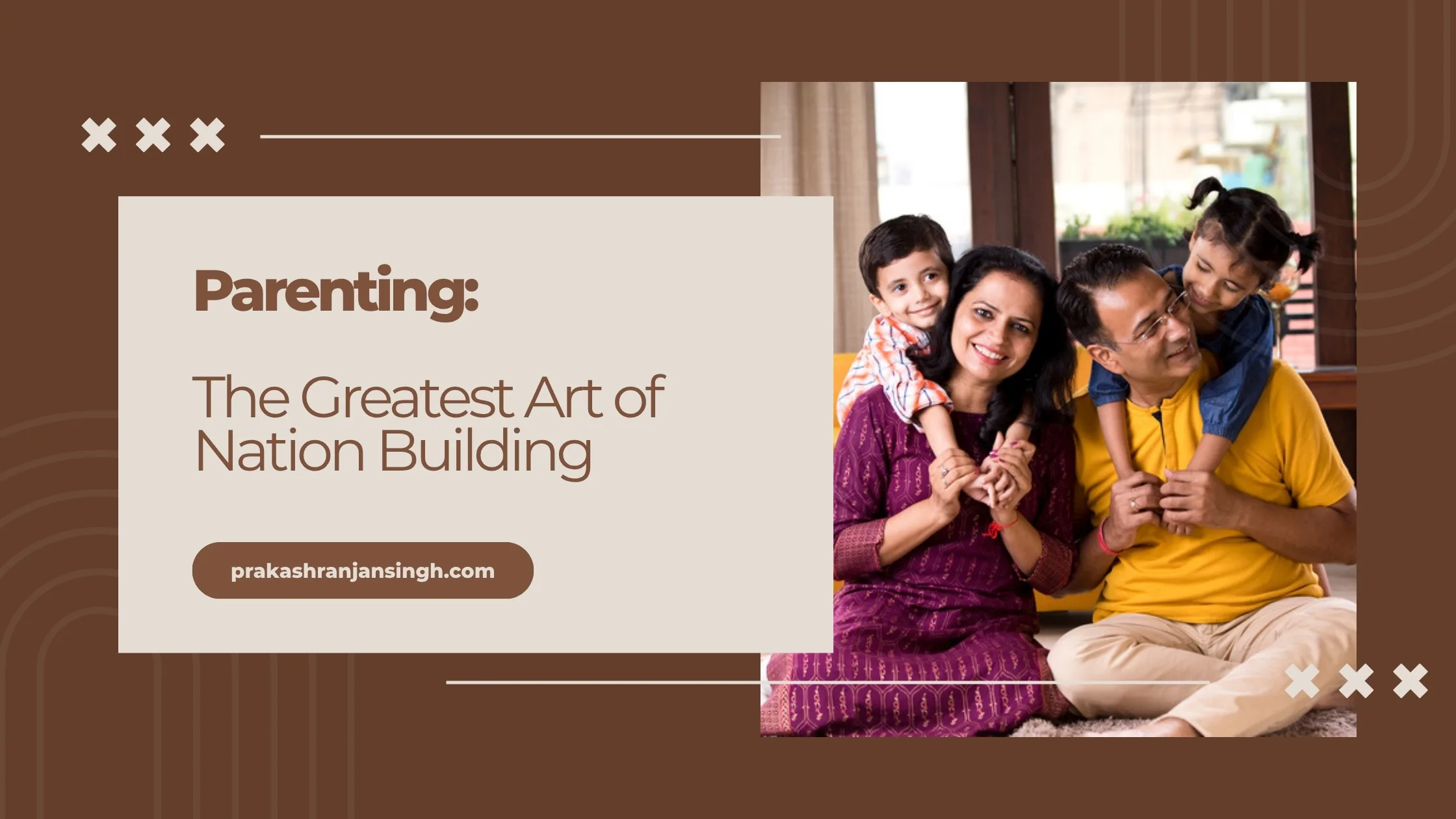
How to raise responsible children in India comes down to three things: authoritative parenting (warmth with clear, explained limits), modelling the behaviour you want to see, and a few small daily habits such as ten minutes of undivided listening. The World Health Organization also lists harsh parenting as a risk to children’s mental health and supportive homes as protective.
A nation’s future takes shape long before schools or workplaces — it starts inside homes, where the greatest art of nation building begins as parents become a child’s first teachers: research shows that a child’s personality, emotional intelligence, and moral values are heavily shaped by the quality of parenting, making strong, balanced parenting an investment in the nation itself, not just the family.
A nation’s future is not shaped only in its schools, universities, or workplaces. It is shaped much earlier—inside homes, where parents become the first teachers, mentors, and role models. Parenting is perhaps the most important art in human life. It demands patience, emotional maturity, self-control, consistency, and unconditional love. Every parent has the power to influence not only the future of their child but also the future of society.
Scientific research consistently shows that a child’s personality, emotional intelligence, confidence, and moral values are greatly influenced by the quality of parenting received during childhood. Therefore, better parenting is not merely a family responsibility; it is an investment in building a stronger and more compassionate nation.
Key Takeaways
- A child’s personality, emotional intelligence, and moral values are heavily shaped by the quality of parenting, making strong parenting an investment in the nation, not just the family.
- “Authoritative parenting” – combining warmth with reasonable discipline – helps children flourish more than excessive control or complete freedom without guidance.
- Children learn far more from observation than instructions, so parents who model honesty, kindness, and empathy pass those qualities on more effectively than lectures or punishment.
Table of Contents
- Why Is Treating Every Child as an Individual the Greatest Art of Nation Building?
- Why Does Emotional Safety Matter So Much?
- How Has Modern Parenting Become More Difficult?
- Do Children Learn More From Words or From Watching?
- What About Children’s Mental Health?
- 4 Parenting Styles Compared: Why Warmth With Limits Works
- How to Raise Responsible Children: 6 Daily Habits of Nation-Building Parents
- Children’s Mental Health, Screens and Where to Get Help
Why Is Treating Every Child as an Individual the Greatest Art of Nation Building?
One of the first responsibilities of parents is to understand their children as unique individuals. Every child has different abilities, interests, fears, and emotional needs. Instead of comparing children with others, parents should discover their strengths and encourage them to develop their own potential. Acceptance creates confidence, while constant comparison creates insecurity.
Children inevitably make mistakes as they grow. Mistakes should be treated as opportunities for learning rather than reasons for humiliation. Parents who respond with patience and guidance instead of anger help their children develop responsibility and resilience. Sharing personal experiences of success, failure, and life’s lessons often has a much greater impact than punishment or lengthy lectures.
Why Does Emotional Safety Matter So Much?
Perhaps the greatest gift parents can offer is emotional safety. Children should feel that they can discuss any issue—whether related to studies, friendships, relationships, or personal failures—without fear of rejection. When children fear harsh judgment, they begin hiding important aspects of their lives. Open communication builds trust, and trust becomes the strongest protection against harmful influences.
How Has Modern Parenting Become More Difficult?
Modern parenting has become more challenging than ever. Today’s children are exposed to social media, misinformation, unhealthy peer pressure, online gaming addiction, and extreme ideological influences. Many of these dangers silently shape their thinking and behavior. Parents cannot protect children simply by imposing restrictions; they must become active participants in their children’s lives, understand the digital world, and discuss its benefits and risks with honesty.
Psychologists, building on Diana Baumrind’s classic research on parenting styles, recommend an “authoritative parenting” style, which combines warmth with reasonable discipline. Children flourish when parents establish clear values and boundaries while also listening to their opinions and respecting their emotions. Excessive control may create rebellion, while complete freedom without guidance may create confusion. The healthiest environment balances love with responsibility.
Do Children Learn More From Words or From Watching?
Children learn far more from observation than from instructions. If parents demonstrate honesty, kindness, discipline, respect, gratitude, and empathy in their own lives, children naturally imitate these qualities. Character is not taught through speeches; it is transmitted through everyday actions. This quiet, daily example is the greatest art of nation building in practice.
Quality time is another essential ingredient of successful parenting. Eating together, reading books, playing games, travelling, discussing current events, and simply listening without distractions strengthen emotional bonds. Even a short period of undivided attention each day can significantly improve a child’s emotional well-being.
Parents should also nurture critical thinking rather than blind obedience. Encouraging children to ask questions, solve problems independently, and make age-appropriate decisions prepares them for the complexities of adult life. A confident child is less likely to be misled by negative influences.
What About Children’s Mental Health?
Another important aspect of parenting is protecting children’s mental health. Anxiety, loneliness, and academic pressure are becoming increasingly common. Parents should watch for changes in behavior, sleep, eating habits, or social interactions and seek professional support whenever necessary. Asking for help is a sign of wisdom, not weakness.
Above all, children need unconditional love. They should know that while their behavior may sometimes require correction, their worth as individuals never depends on their achievements, examination results, or failures. Such unconditional acceptance builds self-esteem and emotional security that lasts a lifetime.
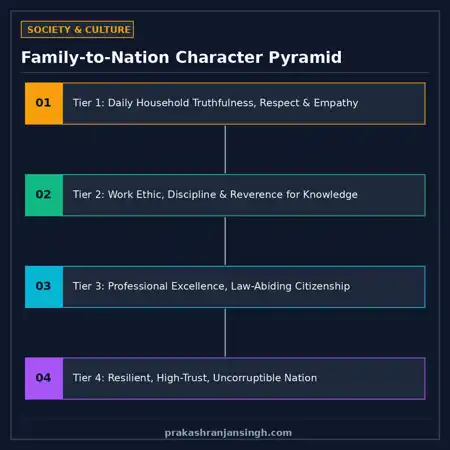
Strong families create responsible citizens. Responsible citizens build ethical institutions. Ethical institutions build prosperous nations. Therefore, parenting is not merely about raising successful children—it is about creating compassionate human beings who contribute positively to society.
4 Parenting Styles Compared: Why Warmth With Limits Works
The psychologist Diana Baumrind described the main parenting styles in the 1960s, and later researchers added a fourth. Knowing which one you lean towards is the first step to changing it.
- Authoritarian: high control, low warmth. “Do it because I said so.” Children may obey in front of you but learn to hide things, or rebel later.
- Permissive: high warmth, few limits. Children feel loved but struggle with self-control and with hearing the word no.
- Neglectful: little warmth and little structure. This is the most worrying style, because the child is left to work everything out alone.
- Authoritative: warmth together with clear, reasonable limits that are explained, not just announced. Across decades of research this style is most consistently linked with better emotional and social outcomes, although culture and context always matter.
As a banker, I often think of it this way. Authoritarian parenting is rules without a relationship. Permissive parenting is a relationship without rules. Authoritative parenting works like a good credit policy: the limits are clear, the reasons are explained, and exceptions are handled with understanding.
How to Raise Responsible Children: 6 Daily Habits of Nation-Building Parents
Big values grow out of small routines. These six habits cost nothing and are within reach of any family, and they are a practical answer to how to raise responsible children in India.
- Ten minutes of undivided listening. Put the phone away and ask one open question about the day. Do not fix, only listen.
- One shared meal without screens. The table is where children learn conversation, patience and gratitude.
- Praise effort, not only marks. “You worked hard on this” teaches a child to value the process, not just the result.
- Admit your own mistakes. When a parent says “I was wrong, I am sorry”, the child learns accountability better than from any lecture.
- Agree on screen rules together. Children copy what they see, so the rules should apply to adults too. Talk about what they watch, including the pull of social media on young minds.
- Give small responsibilities. Managing a little pocket money, a chore or a younger sibling builds the habits of saving, duty and care.
Children’s Mental Health, Screens and Where to Get Help
The World Health Organization estimates that about 1 in 7 adolescents aged 10 to 19 lives with a mental health condition, and many of these go unrecognised and untreated. It also notes that suicide is the third leading cause of death among people aged 15 to 29. Importantly, WHO recognises harsh parenting as a risk factor and supportive family environments as protective. In other words, a calm home is not a luxury; it is prevention.
Watch for changes that last more than a couple of weeks: withdrawal, sleeplessness, falling grades, loss of appetite, irritability or avoiding friends. Do not respond with anger or comparison. Start with a gentle conversation, and involve a counsellor or doctor if needed. India’s free Tele-MANAS mental health helpline, 14416, runs 24 hours a day in 20 languages.
The digital world adds a legal layer too. Under the Digital Personal Data Protection Rules notified on 14 November 2025, companies handling a child’s personal data must obtain verifiable consent from a parent or guardian. Those provisions are scheduled to come into force 18 months after notification. This is another reason to know which apps your child uses and what they share. For the wider question of screens and thinking, see the AI paradox.
If every parent practices patience instead of anger, communication instead of fear, guidance instead of punishment, and understanding instead of comparison, the next generation will grow into emotionally healthy, morally responsible, and socially aware citizens. In this way, the true art of parenting becomes the foundation of a great nation.
Frequently Asked Questions
Why does emotional safety matter so much in parenting?
Children should feel they can discuss any issue, whether studies, friendships or failures, without fear of rejection. When children fear harsh judgment they begin hiding important aspects of their lives, while open communication builds the trust that becomes the strongest protection against harmful influences.
Do children learn more from what parents say or what they do?
Children learn far more from observation than instructions. If parents demonstrate honesty, kindness, discipline, and empathy in their own lives, children naturally imitate these qualities. Character is transmitted through everyday actions, not speeches.
What parenting style helps raise responsible children?
Psychologists recommend an authoritative parenting style that combines warmth with reasonable discipline. Excessive control may create rebellion, while complete freedom without guidance may create confusion, so the healthiest environment balances love with responsibility.
What are the main parenting styles?
Building on Diana Baumrind’s research, the four commonly described styles are authoritarian (high control, low warmth), permissive (high warmth, few limits), neglectful (little warmth and little structure) and authoritative (warmth with clear, explained limits).
Where can a parent in India get help for a child’s mental health?
Start with a calm conversation, then involve a school counsellor, paediatrician or mental health professional. India’s free Tele-MANAS helpline, 14416, offers tele-counselling 24 hours a day in 20 languages.
Related Reading
- Patriotism and Youth: India and China Comparative Analysis
- India’s Youth Power
- Cyber Fraud in the Digital Age
- The Cry We Have Stopped Hearing Why India Needs a Psychological Revolution on Relationships, Consent and Human Dignity
- The Psychology of Influence: Why Unemployed Youth Are Vulnerable to Manipulation and Why Society Must Respond

Leave a Reply