

Nationalism vs patriotism is a question every Indian faces today, and recent Middle East military tensions confirm an old truth about nationalism and national unity: a nation’s real strength isn’t just weapons, economy, or technology — it’s the unity, resilience, and patriotism of its people, and India’s greatest asset in an increasingly competitive world will be citizens who put the nation first over caste, religion, or regional identity.
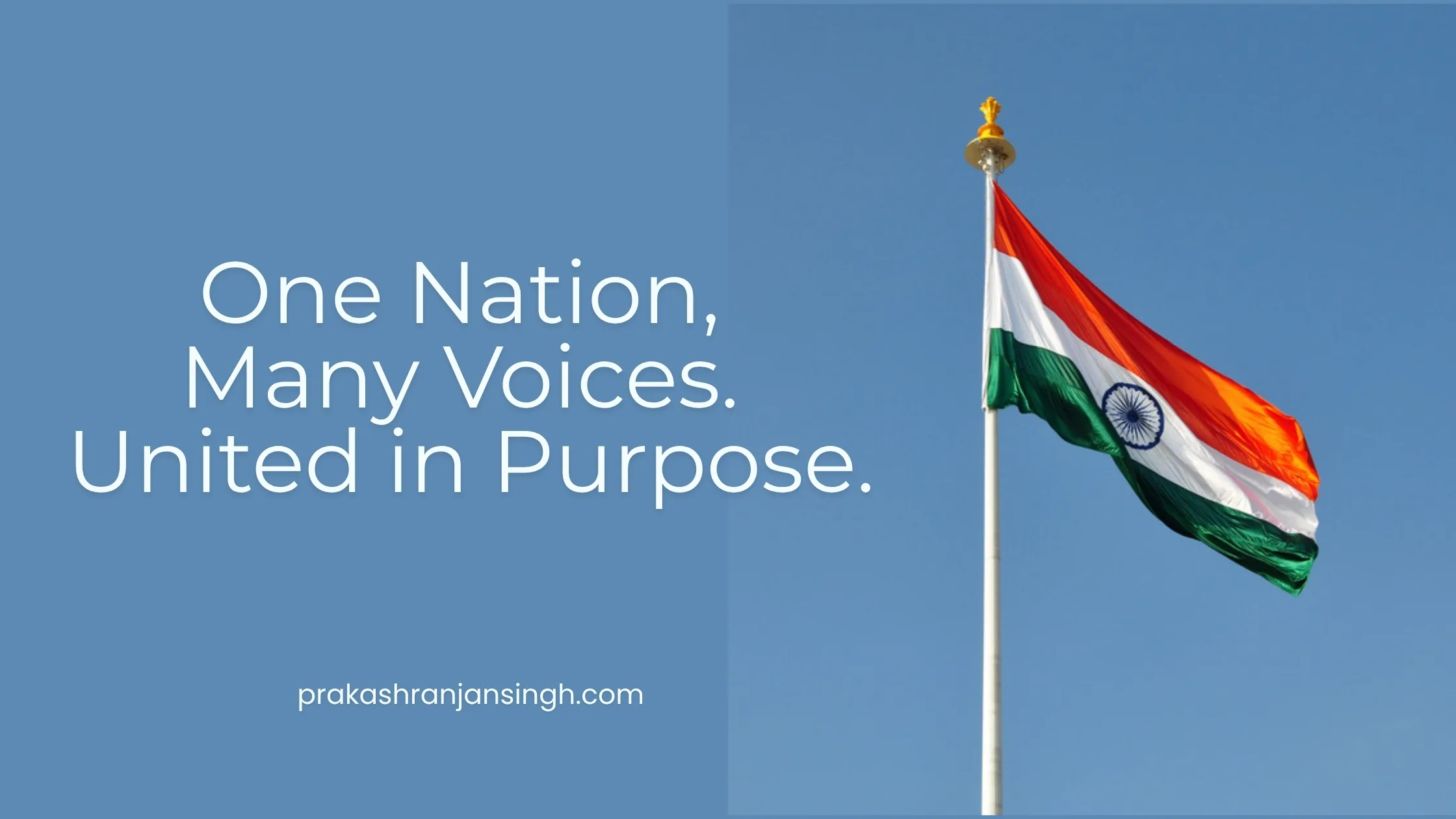
Recent military tensions in the Middle East have once again reminded the world that the true strength of a nation does not lie only in its weapons, economy, or technology. Its greatest strength lies in the unity, resilience, and patriotism of its people. Whenever citizens stand together in difficult times, they become the strongest pillar of national security and sovereignty.
The recent conflict involving Iran, Israel, and the United States has demonstrated that military power alone cannot determine the outcome of a geopolitical confrontation. Equally important are the determination of a nation’s people, their willingness to endure hardships, and their emotional attachment to their country’s identity and independence. Whatever opinions one may hold about the governments involved, it is evident that national unity plays a significant role in shaping a country’s ability to withstand external pressure.
Key Takeaways
- A nation’s real strength isn’t just weapons, economy, or technology — it’s the unity, resilience, and patriotism of its people, as recent Middle East tensions confirmed.
- The Iran-Israel-United States conflict showed that military power alone cannot determine the outcome of a geopolitical confrontation — national unity plays a decisive role.
- The most actionable fix: India’s youth uniting under the identity of being Indian first, over caste, religion, or regional identity.
Table of Contents
History repeatedly teaches us that nationalism and national unity make nations great when citizens place the country’s interests above personal differences. Countries that have risen from war, economic crises, or natural disasters have done so because their people remained united and committed to rebuilding their nation. Patriotism has always been the invisible force behind visible achievements.
Nationalism vs Patriotism: What Is the Difference?
People often use the two words as if they meant the same thing, but thinkers have long tried to separate them. George Orwell, in his 1945 essay Notes on Nationalism, wrote that nationalism “is not to be confused with patriotism”. He described patriotism as devotion to a particular place and a particular way of life, one you believe to be the best but have no wish to force on other people, and as defensive by nature. Nationalism, in his view, is inseparable from the desire for power.
That is a warning aimed at aggressive nationalism, and it is worth taking seriously. India’s own tradition has voiced similar caution: Rabindranath Tagore, in his 1917 lectures on nationalism, was openly wary of treating the nation as a political and commercial machine.
My own reading, which the rest of this essay follows, is that the two do not have to be opposites. What I call true nationalism is patriotism joined to a sense of duty: love for one’s country, respect for its Constitution and care for fellow citizens, without hatred of anyone else. The Constitution itself states this as duty. Article 51A, the fundamental duties, asks every citizen to uphold and protect the sovereignty, unity and integrity of India, and to promote harmony and the spirit of common brotherhood among all the people of India, transcending religious, linguistic and regional or sectional diversities.
Why Do Nationalism and National Unity Matter Even More for India?
India has an even greater reason to embrace this spirit. Our civilization is one of the oldest in the world, a fact reinforced by Harvard Medical School’s genetics research, built upon thousands of years of knowledge, spirituality, science, and cultural diversity. Yet our greatest strength has never been our diversity alone—it has been our ability to remain united despite our differences.
Nationalism does not mean hatred towards any other country. Nor does it mean blind support for every decision of those in power. True nationalism means loving one’s country, respecting its Constitution, protecting its sovereignty, fulfilling one’s duties honestly, and working for the welfare of fellow citizens. It is a positive force that inspires responsibility rather than division.
What Does Everyday Patriotism Actually Look Like?
Every Indian can contribute to nation-building in simple yet meaningful ways. Performing one’s professional duties honestly, paying taxes faithfully, respecting the armed forces, protecting public property, preserving the environment, promoting social harmony, helping the poor, educating children, and voting responsibly are all acts of patriotism. A nation progresses when millions of ordinary citizens perform these extraordinary duties every day.
The youth of India have a particularly important role. Instead of becoming divided by caste, religion, language, or regional identities, they should unite under the identity of being Indian first. They should acquire knowledge, develop skills, innovate, create employment, and strengthen India’s position in science, technology, manufacturing, agriculture, healthcare, and national defence. The future of India depends more on the character of its youth than on its natural resources.
India’s freedom was not achieved overnight. It was earned through the sacrifices of countless freedom fighters, soldiers, social reformers, and ordinary citizens who placed the nation above themselves. Their legacy reminds us that every generation has a responsibility to strengthen the nation for the next.

What Will It Take to Compete Globally in This Century?
The twenty-first century is becoming an era of intense global competition. Economic power, technological leadership, cyber security, artificial intelligence, energy security, and social stability will determine which nations lead the world. India can achieve these goals only if its citizens remain united, disciplined, and committed to the national interest.
Nationalism is not merely an emotion expressed during times of war. It is a lifelong commitment demonstrated through honesty, hard work, discipline, compassion, and service to society. A strong nation is built not only by brave soldiers guarding its borders but also by honest teachers shaping young minds, dedicated farmers feeding the country, skilled workers building infrastructure, responsible entrepreneurs creating jobs, ethical public servants delivering justice, and conscientious citizens fulfilling their civic responsibilities.
When the spirit of nationalism lives in the hearts of the people, no challenge is too great, no obstacle is insurmountable, and no dream is beyond reach. A united nation can overcome adversity, protect its sovereignty, and build lasting prosperity.
Let us therefore pledge to strengthen India’s unity, uphold its democratic values, respect every fellow citizen, and dedicate ourselves to the progress of our motherland. A nation becomes truly great not only because of its military or economic strength, but because its people stand together with a shared purpose, unwavering commitment, and deep love for their country.
What Is True Nationalism? Four Tests to Tell It From Jingoism
Because the word is used for very different things, a simple test helps. These four tests are my own, not an official definition, and healthy nationalism should pass all of them:
- It includes. It asks for loyalty to the country above caste, religion, language or region, and never makes one group the owner of the nation.
- It does not need an enemy. It can love India deeply without hating another country or community.
- It accepts criticism. Loving one’s country does not mean blind support for every decision of those in power. It means asking for honesty and improvement.
- It shows up in conduct. Honest work, taxes paid, public property protected and a vote cast with thought. Duties count for more than slogans.
Jingoism fails these tests. It is loud, aggressive and keen on an enemy, and it asks for applause rather than effort. The habits that pass the tests are formed early, in the way parents raise their children, and the energy to practise them is what India’s youth can bring when it moves from emotional mobilisation to real nation-building.
Jai Hind.
Frequently Asked Questions
What is the difference between nationalism and patriotism?
George Orwell, in his 1945 essay Notes on Nationalism, described patriotism as devotion to a particular place and way of life that is defensive by nature, and nationalism as inseparable from the desire for power. In this essay, true nationalism means the positive form: love for the country, respect for its Constitution and care for fellow citizens, without hatred of others.
What is true nationalism?
True nationalism means loving one’s country, respecting its Constitution, protecting its sovereignty, doing one’s duties honestly and working for the welfare of fellow citizens. It does not mean hatred towards any other country, or blind support for every decision of those in power.
What do recent Middle East tensions teach about national strength?
The Iran-Israel-United States conflict demonstrated that military power alone cannot determine the outcome of a geopolitical confrontation. The determination of a nation’s people and their emotional attachment to their country’s identity matter just as much.
What does everyday patriotism actually look like?
Performing one’s professional duties honestly, paying taxes faithfully, respecting the armed forces, protecting public property, preserving the environment, and voting responsibly are all acts of patriotism that ordinary citizens can practice daily.
What will India need to compete globally this century?
Economic power, technological leadership, cyber security, artificial intelligence and social stability will decide which nations lead. India can achieve these goals only if its citizens remain united, disciplined and committed to the national interest.
Related Reading
- The Invisible Burden of Unfulfilled Social Responsibilities: Why Strong Families Build Strong Nations
- Hindu Civilization at a Crossroads: The Need for Reform, Awareness, and Cultural Confidence
- India at a Demographic Crossroads: Is the Nation Sleepwalking into a Human Capital Crisis?
- Are We Truly Free? Freedom of Nation Vs Freedom of a Mind and The Science Behind It
- The Psychology of Influence: Why Unemployed Youth Are Vulnerable to Manipulation and Why Society Must Respond

Leave a Reply