

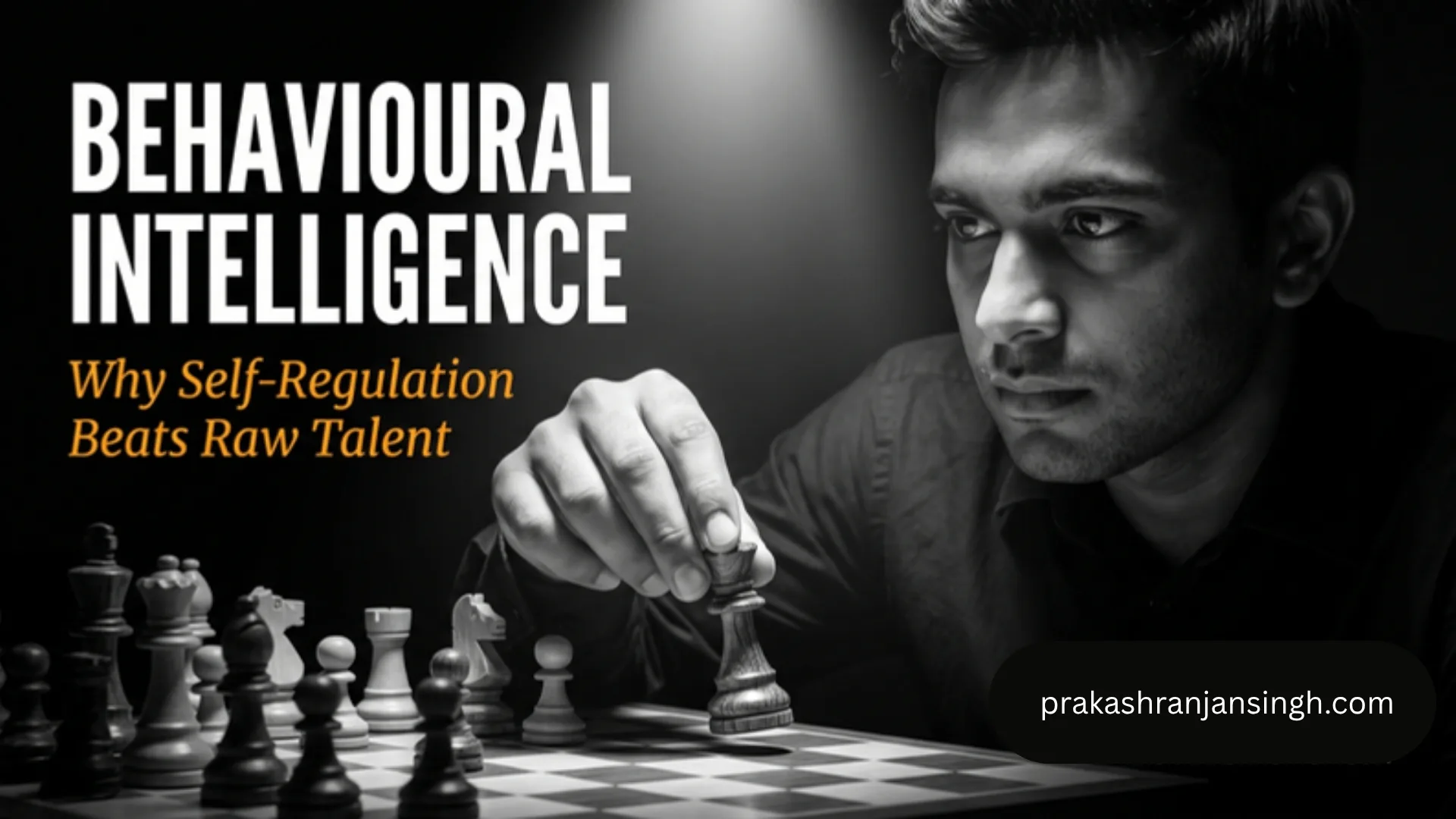
India’s biggest untapped resource for Vision 2047 isn’t minerals or land — it’s the behavioural potential of its people, visible during disasters and crises when ordinary citizens organise relief, calm tensions, and coordinate logistics, and identifying that talent responsibly means a voluntary civic-recognition platform with strong privacy safeguards, not more surveillance.
What is a civic recognition platform for India? It is a voluntary, citizen-owned record of verified volunteer work, such as disaster relief or mentoring, that follows a person from one district, college or employer to another. India already has MY Bharat, Aapda Mitra and the NSS; the missing piece is a trusted, portable record, built on the five privacy-safe design rules set out below.
India’s march towards Vision 2047 is often discussed in terms of economic growth, infrastructure, defence, digital transformation, and artificial intelligence. Yet one of the country’s most valuable resources remains largely unexplored—not minerals, not land, but the behavioural potential of its people.
Today, governments maintain extensive databases containing identity, taxation, education, health, and welfare information. These systems help deliver public services more efficiently. However, they tell us who people are, not necessarily how they contribute to society.
This raises an intriguing question: Can behavioural intelligence help governments and civil society identify leadership, community service, and organisational talent while fully respecting democratic rights and privacy?
Key Takeaways
- India’s greatest untapped resource for Vision 2047 is the behavioural potential of its people, not minerals or land.
- During the COVID-19 pandemic, countless ordinary citizens became extraordinary volunteers arranging oxygen, food, and hospital beds—civic leadership rarely captured in any formal database.
- The safer path is a voluntary, transparent civic-recognition platform with strong privacy safeguards, not indiscriminate surveillance of citizens.
Table of Contents
Behavioural Intelligence: Why Every Public Movement Is a Living Laboratory
Whenever a large gathering takes place—whether during disaster relief, a social campaign, a religious event, an election rally, or a public protest—we observe fascinating differences in human behaviour.
Some people instinctively take responsibility and organise others. Some negotiate and calm tensions. Some excel at communication, while others quietly manage logistics, healthcare, food distribution, or crowd discipline.
Behavioural science has long recognised that people display different personality traits, motivations, and decision-making styles under pressure. Modern psychology, organisational behaviour, and leadership research all suggest that crisis situations often reveal qualities that routine office work may never expose.
The COVID-19 pandemic, for example, showed countless ordinary citizens becoming extraordinary volunteers—arranging oxygen cylinders, delivering food, coordinating hospital beds, and supporting strangers through digital networks. Their contribution was rarely captured in any formal database, yet it demonstrated exceptional civic leadership.
Can AI Detect Patterns Without Detecting Character?
Recent advances in artificial intelligence, computer vision, natural language processing, and network analysis have made it possible to study large-scale behavioural patterns from lawfully collected data.
AI may be able to identify indicators such as leadership and coordination, teamwork and cooperation, crisis response capability, communication skills, volunteer engagement, and organisational efficiency. These insights could help identify people interested in serving during disasters, public health campaigns, environmental initiatives, or local governance.
However, AI has important limitations. It recognises patterns rather than intentions. A person’s behaviour in one emotionally charged event does not define their character or future conduct. Human behaviour is shaped by context, stress, relationships, and changing life circumstances. Behavioural data should therefore support human judgement—not replace it.
What Would a National Talent Registry Actually Look Like?
Instead of creating systems that monitor citizens indiscriminately, India could explore voluntary and transparent mechanisms for recognising civic talent.
Imagine a national platform where citizens choose to showcase verified contributions such as disaster response, community service, mentoring, environmental work, or public problem-solving. Combined with education, professional experience, and demonstrated service, this could help governments and civil society identify capable volunteers and future leaders.
Such an approach would encourage participation rather than suspicion and would reward contribution rather than conformity.
What Can India Learn From Other Countries?
Many countries already use behavioural insights in limited and carefully governed ways. The United Kingdom’s Behavioural Insights Team has used behavioural science to improve public policy, including tax compliance, health programmes, and public services. Governments around the world also analyse volunteer participation during emergencies to improve disaster preparedness.
These examples show that behavioural science can strengthen governance when used transparently and with appropriate safeguards. They also demonstrate that public trust is essential: citizens are more willing to participate when they understand the purpose of data collection and know that their rights are protected.
What Ethical Line Must India Never Cross?
The promise of behavioural intelligence must be balanced by constitutional values.
Peaceful participation in protests, expressing political opinions, or supporting a social cause are legitimate democratic activities. These should never, by themselves, be used to label citizens as “risky” or “undesirable.”
Any assessment of unlawful behaviour must rely on credible evidence, due process, and the rule of law—not on political beliefs or lawful civic participation.
Strong safeguards are therefore essential: transparency about what data is collected, independent oversight, robust privacy and data protection, the ability for citizens to access and correct records, protection against discrimination, and strict legal accountability for misuse. Without these safeguards, behavioural analytics could undermine the very democracy it aims to strengthen.
Does India Already Have the Building Blocks? MY Bharat, Aapda Mitra and NSS
A national civic recognition platform in India would not start from zero. India already has several volunteer pathways, and the lesson from my banking years is that new systems work best when they plug into existing ones.
The Ministry of Youth Affairs and Sports launched the MY Bharat (Mera Yuva Bharat) platform in October 2023 to give young people a digital doorway to volunteering, skill-building and civic participation. The National Disaster Management Authority runs the Aapda Mitra scheme, which trains community volunteers to respond in the first hours of a flood, cyclone or earthquake. The National Service Scheme and the National Cadet Corps have, for decades, built habits of service in students.
What is missing is a trusted, portable record. A volunteer who spent three weeks running a relief camp in one district usually cannot show that experience to a recruiter, a college or a local administration elsewhere. Behavioural intelligence, if designed well, is really about closing that gap: turning invisible service into verified, voluntary, citizen-owned credentials.
What Do the Constitution and Privacy Law Say?
Any such system must start from constitutional ground. In 2017, a nine-judge Bench of the Supreme Court in Justice K.S. Puttaswamy (Retd.) v. Union of India held that privacy is a fundamental right under Article 21. In 2018, the Court upheld Aadhaar’s use for welfare and tax purposes but read down its use by private companies, stressing proportionality and data minimisation.
The Digital Personal Data Protection Act, 2023 now requires consent and a stated purpose for processing personal data, and gives people rights to access, correct and erase their data. It also contains exemptions that allow the State to process data in specified situations, which is why critics ask for strong independent oversight. For a behavioural-talent platform, the safest interpretation is the strictest one: collect only what a citizen chooses to submit, use it only for the stated purpose, and delete it when asked.
5 Design Rules for a Civic Recognition Platform in India
- Opt-in only. No citizen should be enrolled, scored or ranked without a clear, revocable choice.
- Verified, not inferred. Credentials should be confirmed by the NGO, institution or local authority that actually saw the work, rather than guessed from social-media behaviour.
- Purpose limitation. Data given for volunteer matching must not be reused for policing, taxation or political profiling.
- Positive recognition only. The platform should record contributions, never create “risk scores” or negative labels.
- Human review and public audit. A person, not an algorithm, makes any decision that affects a citizen, and independent auditors publish regular reports on how the system is used.
These five rules separate a platform that empowers citizens from a surveillance tool wearing a friendly name. If a proposal cannot meet even these basics, it should not be built.
India has one of the world’s youngest populations. Yet much of its civic talent remains invisible because there is no systematic way to recognise it.
The future of governance may not lie in building larger databases, but in creating smarter, fairer systems that connect willing citizens with meaningful opportunities to serve their communities.
The goal should not be to classify people as “good” or “bad.” Instead, it should be to identify strengths, encourage public participation, and ensure that talent from every village, town, and city has an opportunity to contribute to nation-building.
As India advances towards Vision 2047, artificial intelligence and behavioural science will undoubtedly influence public administration. The real challenge is not whether these technologies can analyse human behaviour—it is whether they can be governed in a way that strengthens democracy, protects privacy, and respects constitutional freedoms.
India’s greatest national asset is not merely its population, but the potential within its people. If behavioural intelligence is developed with transparency, accountability, and public trust, it could become a powerful tool for recognising civic leadership and strengthening the partnership between citizens and the state.
The future of governance should not be about watching citizens more closely. It should be about empowering them to contribute more meaningfully.
Frequently Asked Questions
What is behavioural intelligence in the context of governance?
It refers to using AI, computer vision, and network analysis on lawfully collected data to study large-scale patterns like leadership, coordination, and volunteer engagement during crises or public events. The goal is to identify civic talent that formal identity and welfare databases don’t capture.
Can AI reliably judge a person’s character from their behaviour?
No. AI recognises patterns rather than intentions, and a person’s behaviour in one emotionally charged event does not define their character or future conduct. Behavioural data should support human judgement, not replace it.
What safeguards would a national talent registry need?
Essential safeguards include transparency about what data is collected, independent oversight, robust privacy and data protection, the ability for citizens to access and correct records, protection against discrimination, and strict legal accountability for misuse. Peaceful protest or political opinion should never, by itself, be used to label citizens as risky.
Is behavioural intelligence the same as surveillance?
It does not have to be. Surveillance monitors people without a meaningful choice, while a voluntary civic-recognition platform records only verified contributions that citizens choose to submit, never creates risk scores, and lets people correct or delete their records.
What does Indian law say about privacy in such a system?
The Supreme Court held in Puttaswamy (2017) that privacy is a fundamental right under Article 21, and the Digital Personal Data Protection Act, 2023 requires consent and a stated purpose for processing personal data, with rights to access, correct and erase it. The Act also contains exemptions for the State in specified situations, so independent oversight remains important.
Leave a Reply